The best IoT connectivity for alarm and building management systems (BMS) in Sweden is a 4G or LTE-M SIM that can use several Swedish networks, keeps traffic on a private APN, and is managed in a platform that alerts you when a device goes silent. Since the 2G and 3G shutdowns in 2025, the provider choice comes down to how many networks the SIM can use, how alarm traffic is protected, and who answers when something breaks. Com4 supports data-based alarm transmission on multi-network SIMs with access to 750+ networks in 190+ countries, private APN, its own Nokia 5G SA-based mobile core and the Polaris connectivity management platform.
An intruder alarm that can't reach the alarm receiving centre is worse than no alarm at all, because everyone assumes it works. In Sweden, thousands of communicators lost their network in 2025, when Tele2 and Telenor switched off 2G and 3G and Telia and Tre switched off 3G. Telia's 2G network is the last one left, and it is planned to close at the end of 2027.
If you build, install or operate fire alarms, intruder alarms or building management systems in Sweden, this guide compares the connectivity providers you are most likely to meet, and what to check before you choose. We're Com4, so we've put ourselves first. Everything we say about other providers comes from their own public pages and press releases, checked in November 2026.

What to look for in alarm and BMS connectivity
- No dependency on 2G or 3G. Choose communicators and routers on 4G, LTE-M or 5G. LTE-M is usually the best replacement for 2G alarm units, because it handles small, frequent messages and reaches deep indoors.
- More than one Swedish network. A SIM locked to one operator is a single point of failure. A multi-network SIM can move to another network if one has an outage or weak coverage at the site.
- A path that fits EN 50136. The SIM is part of the alarm transmission path. Ask how the provider supports your supervision intervals and, for higher categories, a second independent path.
- Private networking. A private APN, VPN and fixed IPs keep alarm panels, communicators and BMS controllers off the public internet.
- Monitoring you can act on. Every SIM's status, data use and last connection in one place, with alerts and an API to feed your own systems or the alarm receiving centre.
- Support that fits your service promise. Know the support hours, the escalation path and how you will hear about network incidents.
IoT connectivity providers for alarm and BMS systems in Sweden
1. Com4
Com4 is a Nordic IoT connectivity provider and part of Wireless Logic. Com4 supports data-based alarm transmission over 4G, LTE-M and 5G, on multi-network SIMs that can switch between networks when one fails. Traffic can run over a private APN with VPN and fixed IPs, through Com4's own mobile core based on Nokia 5G SA. SIMs ship pre-activated, so installers can mount and test on site straight away, and every SIM is managed in Polaris, Com4's connectivity management platform. SGP.32 eSIMs and satellite NTN are available for long-lived or hard-to-reach sites. Read more on our fire and intruder alarm and building management pages.
Good fit for: Alarm manufacturers, installers and BMS integrators who want multi-network SIMs, private networking and one Nordic partner for every site.
Worth checking: Com4's support team works from 08:00 to 16:00 on all business days, so agree how out-of-hours incidents are handled before you go live.
2. Telia
Telia is one of Sweden's main mobile operators and the only one still running 2G, which it plans to keep until the end of 2027. Telia's IoT offer includes managed connectivity on its own networks and Telia Global IoT Connectivity, built on a Telia eSIM with pre-integrated operators.
Good fit for: Deployments that want to stay with one large Swedish operator, or that need a little more time on 2G while devices are replaced.
Worth checking: A single home network in Sweden, and a plan for every device still on 2G before the end of 2027.
3. Tele2 IoT
Tele2 IoT launched its own LTE-M network in Sweden in 2020 and says it works with 670+ network partners in more than 190 countries. It has a partnership with the security company EBS for alarm communicators and lone worker solutions, and in March 2026 it launched a commercial SGP.32 solution with IDEMIA Secure Transactions and Cisco.
Good fit for: Large alarm or BMS programmes that want an operator-run LTE-M network and Cisco-based connectivity management.
Worth checking: Tele2 switched off 2G and 3G in Sweden in 2025, so every device must be on 4G or LTE-M.
4. Telenor IoT
Telenor IoT, Telenor Group's IoT unit based in Sweden, says it has roaming agreements with 500+ networks in 200 countries and lists Verisure among its enterprise customers. It began delivering standardised SGP.32 SIMs in April 2026.
Good fit for: International alarm and security brands that already work with Telenor across several countries.
Worth checking: Telenor switched off 2G and 3G in Sweden in 2025, together with Tele2.
5. Onomondo
Onomondo is a Danish IoT connectivity provider that runs its own core network. It offers non-steered connectivity on 680+ networks in 180+ countries and launched its own SGP.32 eSIM IoT Remote Manager (eIM) in September 2026.
Good fit for: Product companies that want a developer-friendly platform and full control over which network a device uses.
Worth checking: How alarm traffic is protected and supervised end to end, and the support model in Swedish business hours.
6. 1NCE
1NCE, a strategic partner of Deutsche Telekom, sells a prepaid IoT Lifetime Flat that covers a device for up to ten years for a one-off fee, with connectivity in 173 countries.
Good fit for: Low-data devices where a fixed, prepaid price matters most.
Worth checking: Whether the included data allowance covers frequent supervision messages over a long alarm lifetime.
Alarm and BMS connectivity providers compared
| Type | Network approach | SGP.32 (Nov 2026) | Good fit for | |
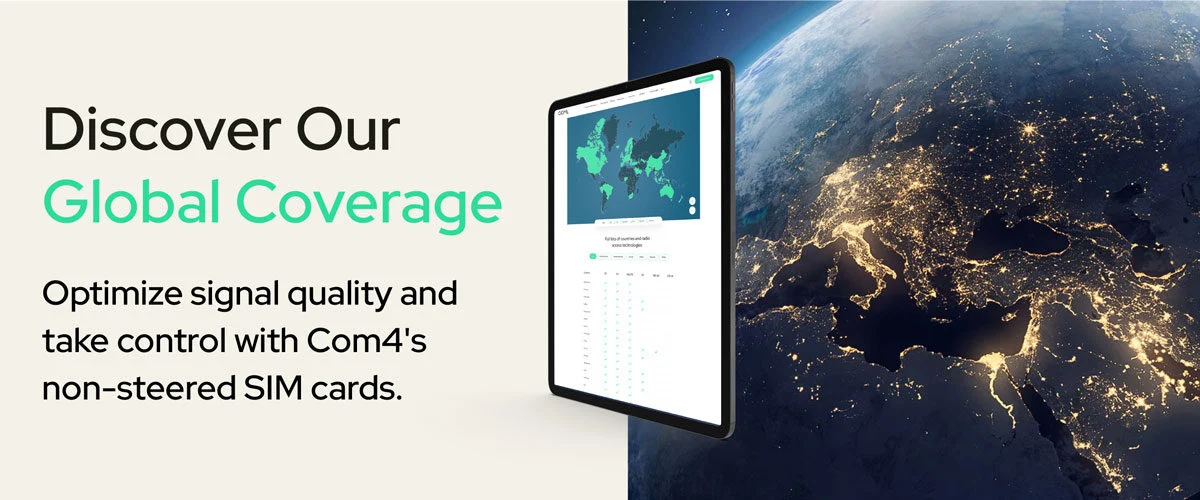
| Com4 | Nordic specialist, part of Wireless Logic | Multi-network SIMs, 750+ networks, own Nokia 5G SA core | Available | Multi-network alarms and BMS, one Nordic partner |
| Telia | Swedish operator | Own Swedish network, 2G until end of 2027 | Check with Telia | Single-operator deployments |
| Tele2 IoT | Swedish operator | Own LTE-M network, 670+ partners | Commercial since March 2026 | Large LTE-M programmes |
| Telenor IoT | Operator group IoT unit | 500+ roaming networks | Delivering since April 2026 | International security brands |
| Onomondo | Global specialist | Own core, 680+ networks, non-steered | Available, own eIM | Developer-led product companies |
| 1NCE | Global specialist | Prepaid lifetime flat, 173 countries | Check with 1NCE | Low-data, price-led devices |
Facts about other providers come from their own websites and press releases, checked in November 2026. Offers change, so confirm the details with each provider.
Building management systems: a slightly different question
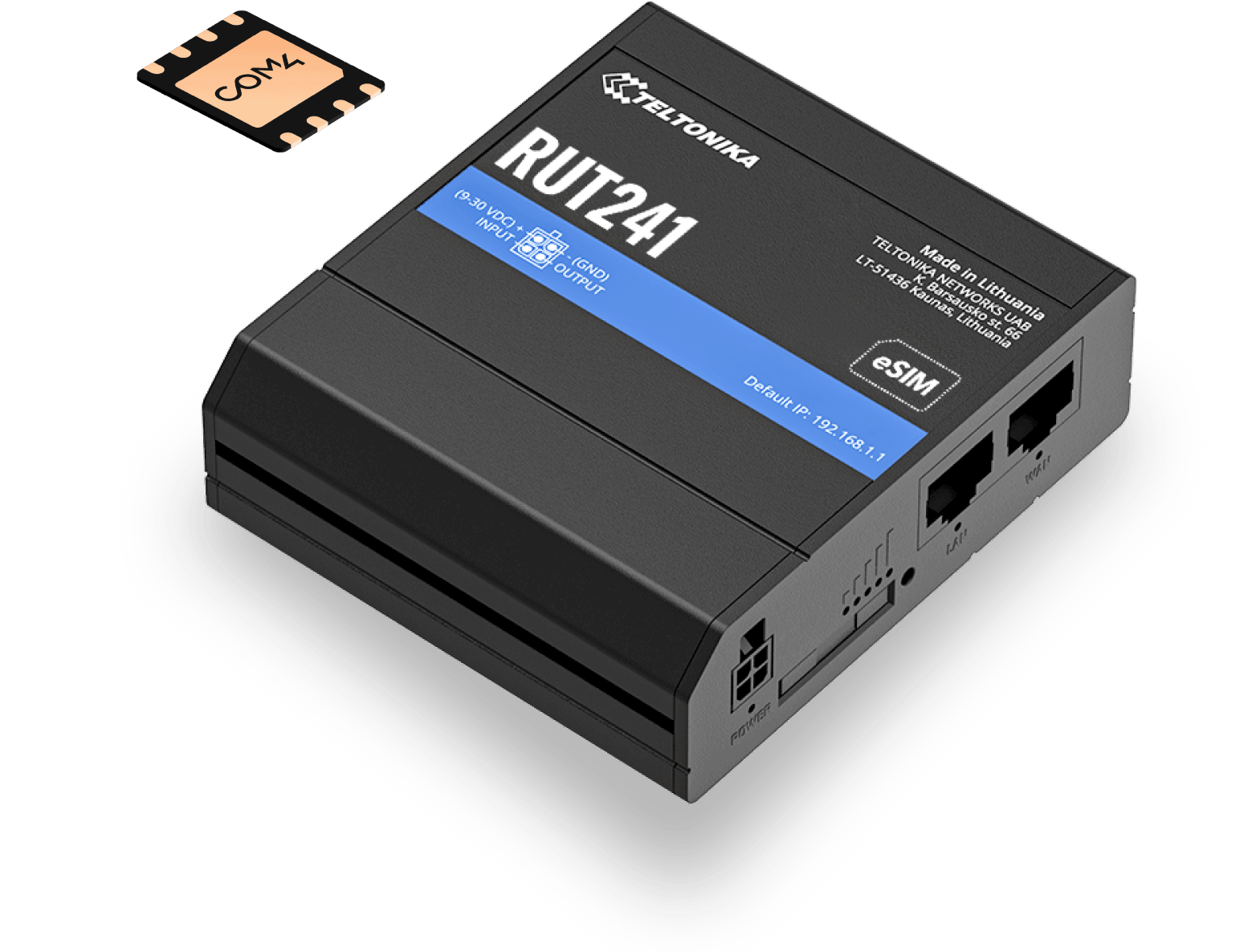
For a BMS, the question is less about alarm categories and more about who controls the connection. Running HVAC, energy and access control over the tenant's or facility's IT network means firewall rules, change requests and shared security risk. A dedicated cellular connection gives integrators and property owners their own secure path to every controller and gateway, working from the day the equipment is installed. An industrial 4G router with an IoT eSIM, a private APN and a VPN to your platform is the usual setup. Com4 offers a Teltonika industrial router with Com4 eSIM for exactly this.
A checklist for your next provider call
- Which Swedish networks can the SIM use, and how fast does it switch if one fails?
- Does the SIM or module depend on 2G or 3G anywhere in your installed base?
- How does the provider support your EN 50136 category, supervision interval and second path?
- Private APN, VPN and fixed IPs: included or extra?
- Can you see each SIM's last connection and get an alert when a communicator goes silent?
- Do SIMs arrive pre-activated for installers?
- Is SGP.32 eSIM available for devices that will stay on the wall for 10 years or more?
- What are the support hours, and how are incidents escalated and communicated?
The short version
Since 2025, Swedish alarm and BMS connectivity has to run on 4G, LTE-M or 5G, and Telia's 2G is the last fallback, until the end of 2027. The safest setup is a multi-network SIM, a private APN and a platform that tells you when a device stops talking. Choose the provider by how many networks you can use, how alarm traffic is protected and who picks up the phone.
An alarm is only as reliable as the network behind it.
If you're replacing 2G communicators or planning a new alarm or BMS rollout in Sweden, Com4 can test our SIMs on your hardware at your own sites. Start with a free IoT test kit, read about LTE-M as a 2G replacement, or book a talk with our team.