Hit your targets.
Switch to next-gen NB-IoT
NB-IoT is an affordable cellular LPWAN technology that offers long battery life with the best signal penetration.
Enable your IoT device to remain connected in hard-to-reach areas like subterranean, indoor, and rural locations, although handovers between different cell towers are not supported, allowing for mass IoT deployments with cell sites capable of supporting thousands of connections.
Transform your business and embrace NB-IoT
NB-IoT is a versatile and reliable LPWAN technology that offers long battery life, better coverage and penetration, high scalability, improved security features, and cost-effective solutions for IoT deployments.
Benefits
Battery efficient
One of the primary advantages of NB-IoT is its long battery life, making it ideal for applications that require long-term and uninterrupted connectivity. NB-IoT also provides better coverage and penetration than other cellular technologies, making it a suitable option for IoT devices that need to stay connected in challenging and remote environments such as underground or rural areas.
Mass deployments
NB-IoT also offers high scalability, with each cell site capable of supporting thousands of connections, making it suitable for mass IoT deployments. Additionally, NB-IoT offers better security features than other LPWAN technologies, ensuring that sensitive data transmitted between devices is kept secure and private.
Cost-effective
With its low power consumption and wide area coverage, businesses can enjoy significant cost savings on both data and device management.
Plan and execute a frictionless move to NB-IoT with Com4
Smart Meters
Smart meters, which may be located deep inside a building, can benefit from the enhanced sensitivity of NB-IoT, as it is designed to support low-power IoT applications that only require small data transfers with long latencies.
Industrial sensors
NB-IoT is well-suited for a variety of settings, including smart cities, industrial, agricultural, and residential areas, especially when monitoring attributes that change slowly, such as temperature and humidity. In such cases, NB-IoT's low-power, low-bandwidth capabilities enable long battery life and efficient data transfer.
Secure connectivity with NB-IoT
NB-IoT relies on the same security features as LTE based networks, making it ideal for applications that require secure communication. Its advanced security features ensure that data transmitted between devices is protected and secure.
NB-IoT vs LTE-M: which one fits your device?
NB-IoT and LTE-M are both cellular LPWA technologies standardised by 3GPP. Both run on licensed spectrum in operators' 4G and 5G networks, and both are built for low power. The right choice depends on three things: whether your device moves, how much data it sends, and where it is installed.
| NB-IoT | LTE-M | |
|---|---|---|
| Best for | Fixed devices that send small, infrequent messages, such as smart meters, environmental sensors and parking sensors | Devices that move or need more data, such as asset trackers, fleet telematics, wearables and alarm panels |
| Indoor and underground coverage | The strongest of the two. Built to reach deep indoors, basements and underground | Good, and better than 2G or standard 4G |
| Mobility | Built for stationary devices. No handover between cells during a data session | Full mobility with handover between cells |
| Data rate | Low, up to around 150 kbit/s | Higher, up to about 1 Mbit/s |
| Latency | Seconds | Well under a second |
| Battery life | 10+ years possible with infrequent messages, using PSM and eDRX | Many years with PSM and eDRX, usually somewhat shorter than NB-IoT |
| Voice (VoLTE) | No | Yes |
| Firmware updates over the air | Possible, but slow for large files | Practical, thanks to the higher data rate |
| Roaming | Available on fewer networks. Check each market before you deploy | Available on more networks than NB-IoT |
| Replacing 2G and 3G | A good fit for fixed 2G devices with small data needs | The usual replacement for 2G and 3G devices, especially mobile ones |
Rule of thumb: if the device stays put, sends a few bytes a day and sits somewhere hard to reach, NB-IoT is usually the better choice. If it moves, needs voice or regular firmware updates, or will roam across borders, choose LTE-M.
Many modules support both, and Com4's global IoT SIM cards work on both technologies, so you can decide per device and per market. Check availability country by country on our coverage page, or read our LTE-M vs NB-IoT decision guide.
NB-IoT FAQ
What is NB-IoT?
NB-IoT (Narrowband IoT) is a cellular LPWA technology from 3GPP, built for devices that send small amounts of data and need to run for years on a battery. It uses a narrow 200 kHz channel inside operators' 4G and 5G networks, which gives it very good reach indoors and underground.
What is the difference between NB-IoT and LTE-M?
NB-IoT is optimised for fixed devices with tiny data volumes and the best possible coverage. LTE-M offers higher data rates, lower latency, full mobility and voice support. The comparison table above sets out the differences side by side.
Should I use NB-IoT or LTE-M for an asset tracker?
Usually LTE-M. Trackers move between cells, and LTE-M keeps the connection during handover. NB-IoT can work for trackers that only report when parked, and it is a useful fallback where LTE-M is not available.
How long can an NB-IoT battery last?
Ten years or more is possible for devices that send a few messages a day, thanks to the power-saving modes PSM and eDRX. Real battery life depends on how often the device transmits, the signal strength where it is installed and the battery itself.
Is NB-IoT part of 5G?
Yes. 3GPP includes NB-IoT and LTE-M in 5G as the technologies for massive IoT, and they run alongside 5G networks. Devices you deploy on NB-IoT today will not be made obsolete by 5G.
Does NB-IoT work when a device roams abroad?
In many countries, but NB-IoT roaming is available on fewer networks than LTE-M. Check each market before you deploy. Com4 can confirm NB-IoT and LTE-M availability per country, and modules that support both let the device fall back to LTE-M.
Can NB-IoT replace 2G?
For fixed devices with small data needs, such as meters and sensors, yes. Mobile devices and devices that need voice usually move to LTE-M instead. Read more about how to prepare for the 2G and 3G shutdowns.
Get your business ready for the future with NB-IoT
At Com4, we are committed to providing our customers with the best IoT solutions and support. Our team of IoT experts can help you assess your needs, recommend the best NB-IoT-compatible devices and modules, and provide implementation and optimization support. With our help, you can take advantage of the latest IoT technology trends and replace outdated 2G and 3G technologies with more advanced and reliable LPWAN technologies.
Resources
Stay Connected with the Latest in IoT
LoRaWAN vs NB-IoT: Which Connectivity Is Right for You?
LoRaWAN and NB-IoT are low-power wide-area network (LPWAN) technologies. Both connect devices that...
Energy Harvesting in IoT: Sources, Benefits, & Uses
Picture a fleet of 10,000 sensors spread across bridges, farms, warehouses and city streets. Even...
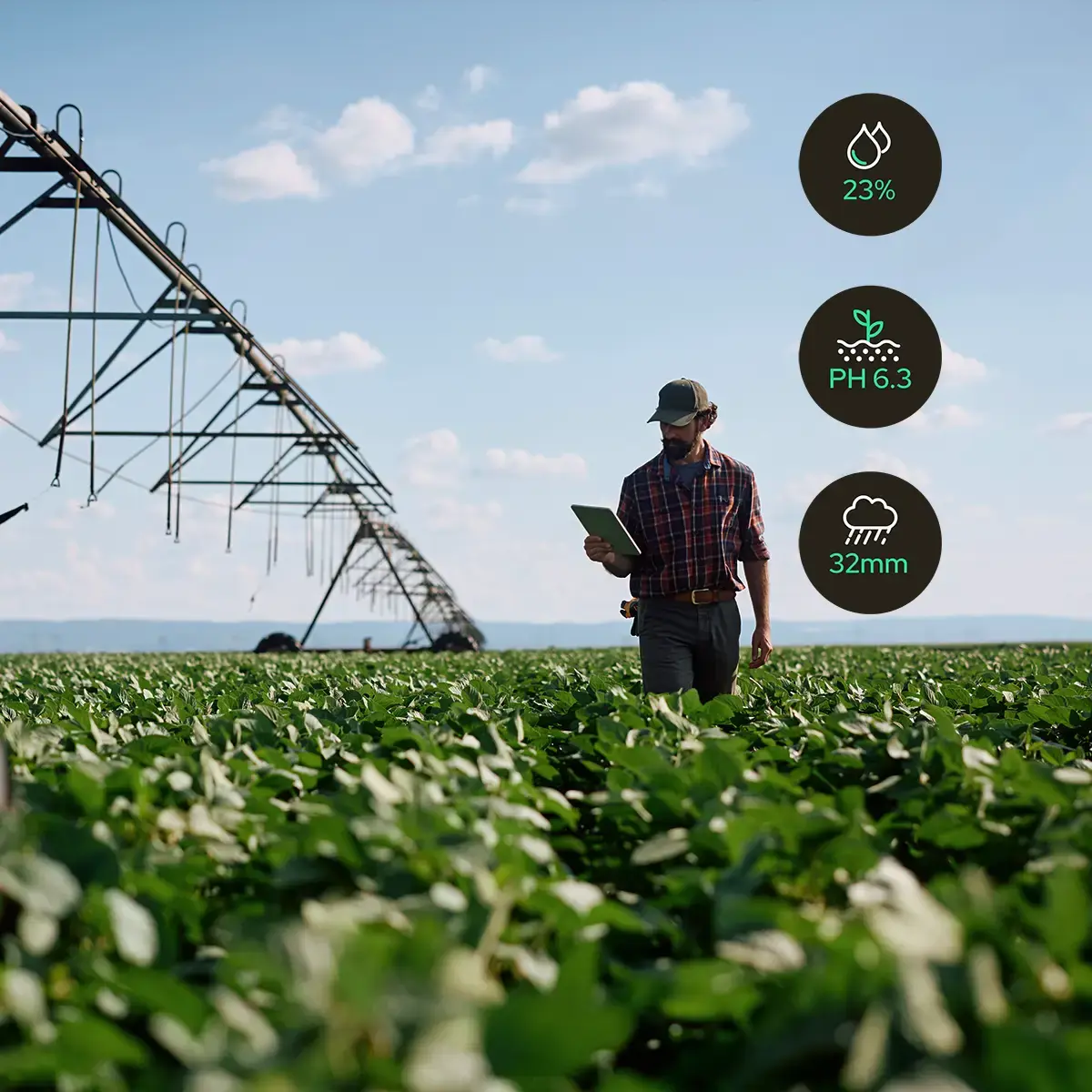
IoT Connectivity Subscriptions & SIM Cards: A Business Guide
Get it wrong, and you end up with dead zones, unpredictable bills, and a device fleet you can't...