
IoT edge devices are hardware units that process data close to where it is generated, before anything reaches the cloud. Examples include smart sensors, gateways, industrial PCs, and on-site servers.
These devices generate large volumes of readings and video. Some of this data, such as repeated sensor values, carries no new information, so sending all of it to the cloud wastes bandwidth. Edge devices filter this data on site and handle decisions that cannot wait for a distant server, while the cloud stores long-term data and manages the fleet.
The IoT industry is expanding quickly, connecting more machines, meters, and vehicles across industries. IoT Analytics projected 21.1 billion connected IoT devices by the end of 2025, counting active nodes and gateways.
As this ecosystem grows, collaboration becomes increasingly important, reflected in Com4's membership in the AIoTI (Alliance for IoT and Edge Computing Innovation) to advance IoT and edge computing across Europe.
This article explains their benefits, functions, types, how they work, use cases, and security.
What Are IoT Edge Devices & Edge Computing?
Edge computing places processing and storage near the data source instead of only in a central data centre. ISO/IEC TR 23188 defines “near” by latency rather than physical distance, so a server on site and a server in the mobile operator’s network can each act as the edge.
Not every IoT device is an edge device. An IoT device is a connected object that produces data. An edge device has the memory and processing power to handle that data in near real time, for example by filtering, buffering, analysing, or triggering a local action.
A temperature probe that only forwards raw readings is an IoT device. The gateway that filters its readings and raises a local alarm is an edge device.
Benefits of Processing IoT Data at the Edge
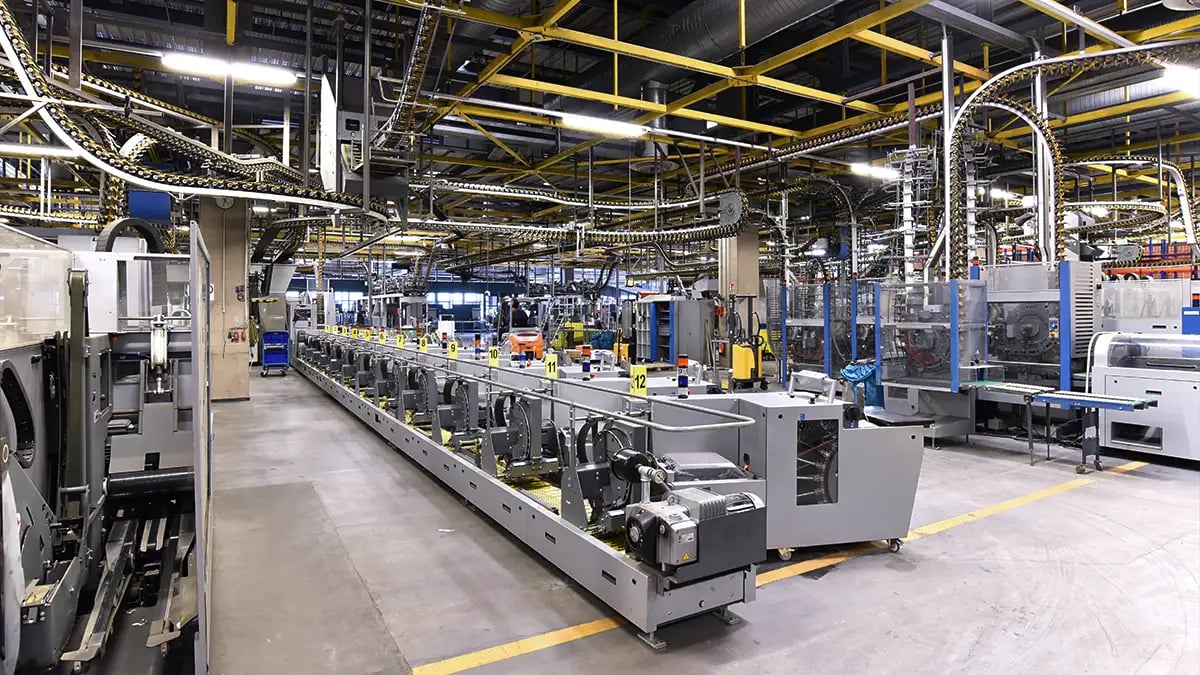
Edge processing helps businesses in following six ways:
-
Faster responses: An edge device triggers safety stops and quality checks on site. This matters because a delayed stop command from a remote server can put a worker at risk.
-
Lower data costs: A traffic camera can count vehicles on the device and send only the totals, so the business pays to transmit a few numbers instead of hours of video.
-
Operation during outages: Local rules keep running when the connection drops, so a gateway on a fishing vessel logs cargo temperature at sea and uploads it once the vessel is back in coverage.
-
Better data privacy: A patient monitor can analyse heart readings on the device and share only abnormal results, which keeps raw health data off the network and supports GDPR data minimisation.
-
AI-powered decisions: With machine learning models running on the device, an edge camera can recognise conditions that fixed rules cannot detect, such as an empty store shelf, and alert staff immediately.
-
Interoperability: An edge gateway translates between industrial protocols and modern IoT formats, so a plant can connect older Modbus controllers and new wireless sensors to one dashboard.
Edge also adds hardware to patch and secure, so it pays off most where the network path is long or unstable.
Key Functions of IoT Edge Devices
A smart sensor performs the first two functions, while a gateway or edge server handles most of them:
-
Acquire: It reads data over industrial field protocols such as Modbus or OPC UA and adds units and timestamps.
-
Reduce: It drops unchanged values, averages samples, and compresses data before upload.
-
Decide: It runs threshold rules, interlocks, or control loops that cannot wait for the cloud.
-
Infer: It runs a trained model to flag anomalies or classify images.
-
Secure: It separates the field network from the WAN and encrypts outgoing traffic.
-
Connect: It sends data upstream over Ethernet, Wi-Fi, or cellular networks such as LTE-M, NB-IoT, or 5G.
An edge device processes data on its own hardware, but it still depends on its network connection. Without a reliable uplink, it cannot receive new models, firmware updates, or remote commands from the cloud.
Types of IoT Edge Devices
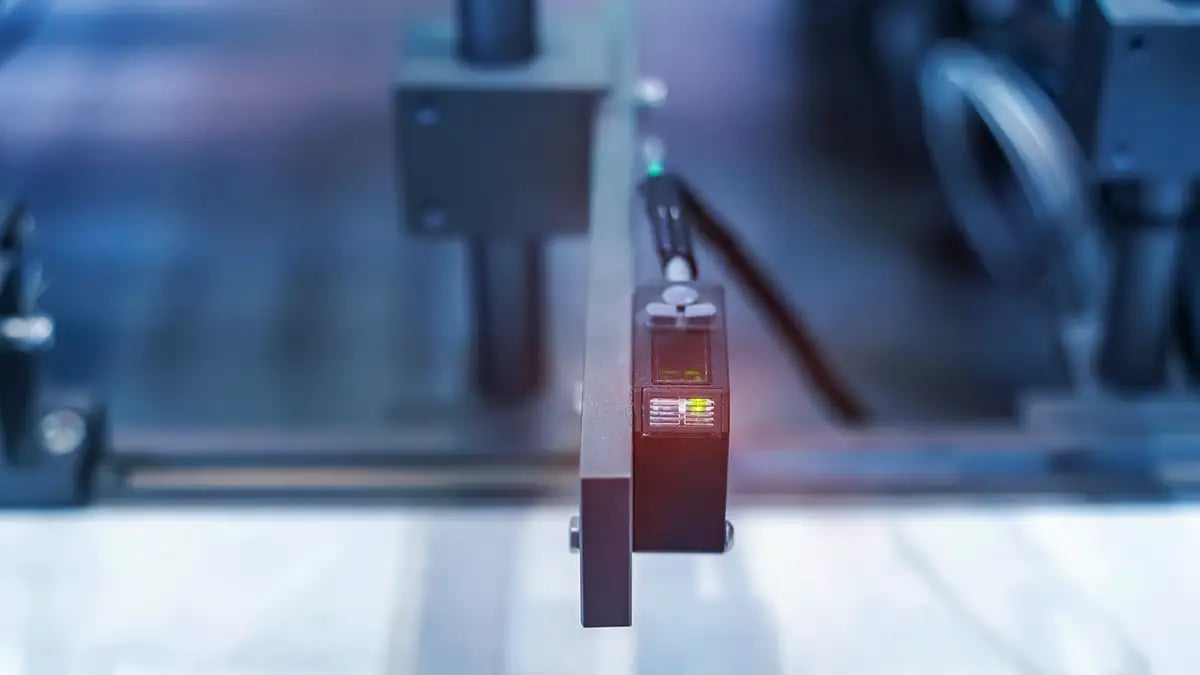
The types below run from the smallest hardware at the asset to servers inside the mobile network:
-
Smart sensors: A microcontroller in the sensor filters readings before transmitting, for example, by sending one summary value instead of the full vibration waveform.
-
Edge gateways: A gateway collects data from many field devices. A basic IoT gateway only translates and forwards that data, whereas an edge gateway also runs local rules on it.
-
Edge servers and industrial PCs: Multi-core machines in a cabinet, store, or substation combine data from several gateways or cameras and run heavier analytics.
-
AI edge devices: Smart cameras and gateways with a dedicated AI processor run detection and inspection models on site.
-
Network edge (MEC): Multi-access edge computing places servers inside the mobile operator’s network, so many outdoor 5G devices can share one low-latency application.
A single site can combine several of these types. A plant can run smart sensors on its motors, an edge gateway on each production line, and an edge server for camera analytics.
How Do IoT Edge Devices Work?
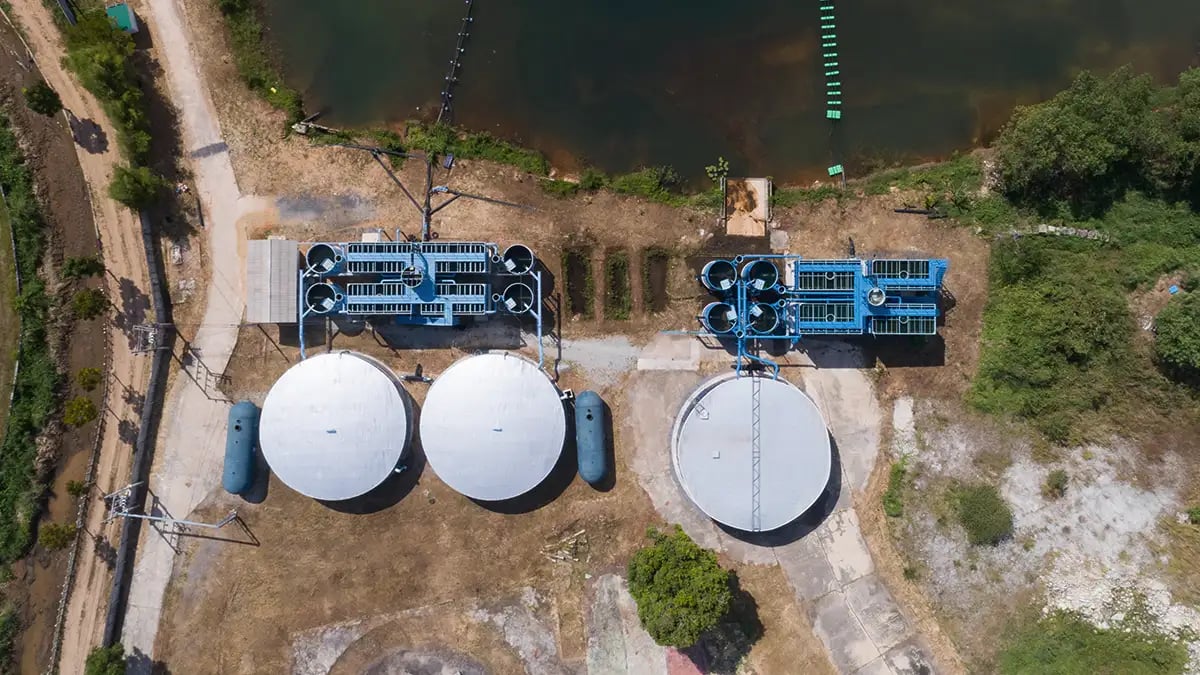
A remote water pumping station shows how an edge device handles data from the sensor to the cloud:
-
Collect: Sensors on the pump measure pressure, temperature, and vibration, and send each reading to an edge gateway in the station’s control cabinet.
-
Prepare: The gateway timestamps every reading, converts it to standard units, and drops values that have not changed since the last one.
-
Decide: A local rule checks each reading against safe limits, so if pressure spikes, the gateway shuts the pump down without waiting for the cloud.
-
Send: The gateway sends a short summary every few minutes, plus an alert whenever it acts, over an encrypted cellular connection.
-
Update: The cloud stores the history, retrains models on data from every station, and pushes new versions and settings back to the gateway. Where the processing runs also affects response time.
In a Norwegian 5G trial, a power-line temperature model on Telenor’s MEC node responded in 44.62 ms at the 99th percentile, against 47.69 ms in the nearest Azure region and 78.49 ms in Sweden. None of the three met the roughly 8 ms needed for strict grid control.
Use Cases for IoT Edge Devices
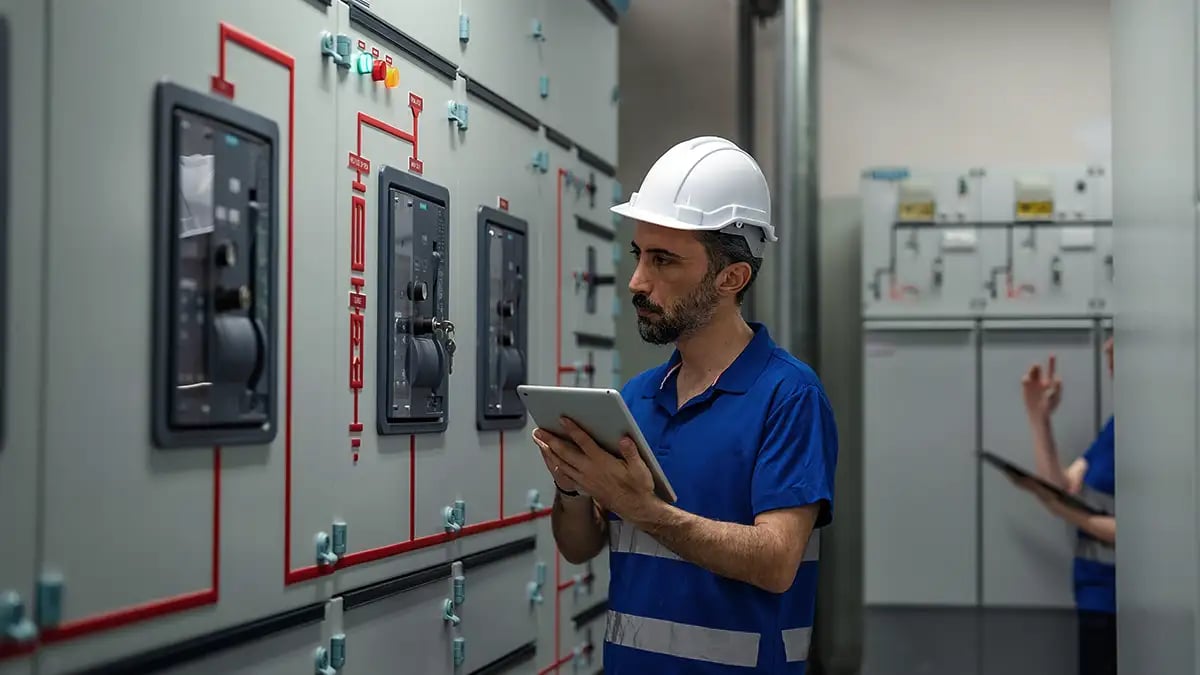
These four use cases show what an edge device decides on-site and what it sends to the cloud:
Predictive Maintenance
A gateway on a production line reads motor vibration, current, and temperature. A local model flags bearing wear and sends an alert with a data window, while the cloud retrains the model on fleet history.
Grid Monitoring
Gateways at substations and other remote utility assets keep running local rules when the wide-area link drops. They queue readings during the outage and upload them once the link returns.
Machine Vision Safety
An edge PC analyses camera footage, detects a person entering a machine’s danger zone, and triggers a local stop. Only the event clip goes to the cloud, instead of hours of continuous video.
Connected Vehicles and Fleets
Autonomous vehicles fuse camera, radar, and GPS data on board, because a cloud round trip is too slow for collision avoidance. A gateway on a truck raises driver alerts and stores cargo data through coverage gaps.
Each of these deployments also needs an uplink suited to its location, from Ethernet in a factory to cellular on a truck that crosses borders.
The Role of AI & Machine Learning
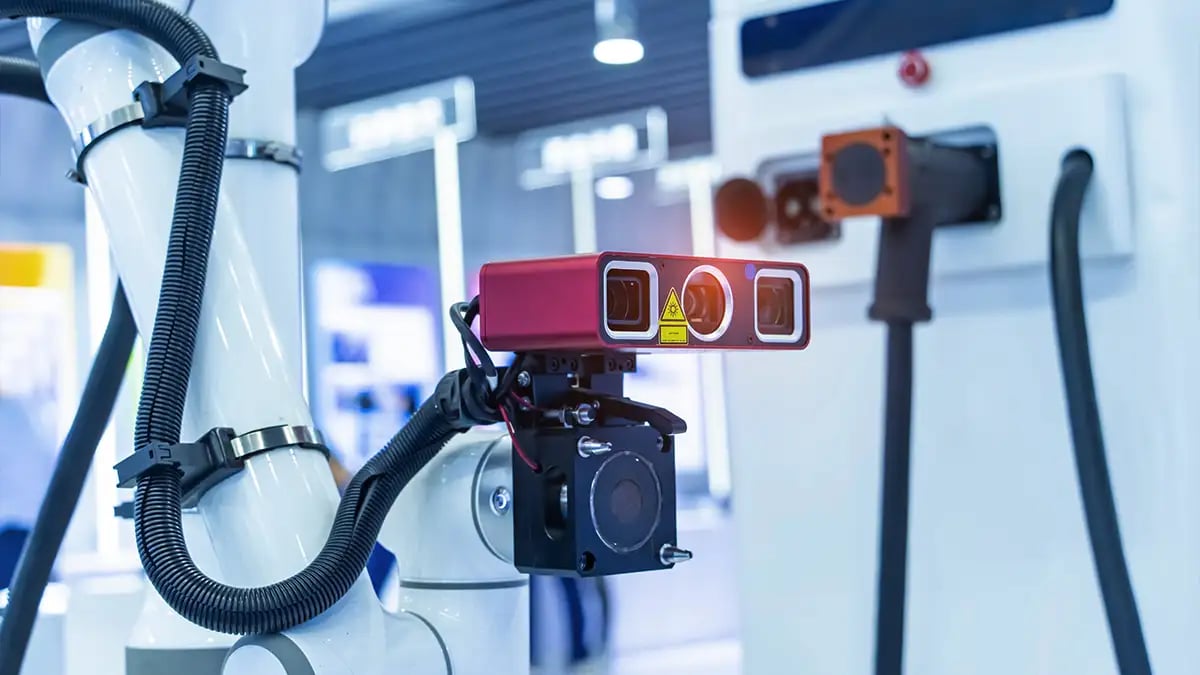
Edge AI applies a trained model to live data on the device, while training stays in the cloud or a lab where data and GPUs are concentrated.
In smart agriculture, cameras along the spray boom feed onboard processors that distinguish weeds from crops as the machine moves. Individual nozzles target the weeds, and the spraying data is sent to the cloud afterwards to build weed maps for future seasons.
Models are compressed before deployment so they fit on gateways, cameras, or microcontrollers. Their accuracy also falls as operating conditions change, so each device needs a signed update path and a way to roll back to the previous version.
When Should Businesses Use IoT Edge Devices?
Edge devices add hardware to maintain at each site, so use them only where local conditions require it:
| Condition | Use an edge device | Cloud processing is enough |
| Response time | Action needed faster than a cloud round trip | Decision can wait until the next day |
| Data volume | Video or high-rate vibration data | Small periodic readings, such as meters |
| Connectivity | Frequent outages | Stable coverage |
| Data location | Raw data must stay on site | Data can leave the site |
| Operations | Team can patch remote hardware | No team to maintain distributed devices |
If a model changes often and devices cannot receive updates reliably, having a central setup is simpler.
Security: The Biggest Pain Point

Edge devices often are fitted in cabinets and vehicles with little supervision, and many have a direct path into operational networks. A compromised gateway can give an attacker a route into plant equipment.
Attackers target shared default passwords, unsigned firmware, open debug ports, and flat networks with no separation between field devices and the WAN. Industrial gateways should follow IEC 62443, the security standard for industrial control systems.
The following controls address these gaps:
-
Give every device a unique identity and certificate.
-
Accept only signed firmware, verified at boot.
-
Encrypt traffic and separate the field network from the WAN.
- Assign an owner for patching each gateway over its full service life.
Com4’s IoT security services add private APN and IPsec connections, so device traffic stays off the public internet.
Edge processing also reduces exposure, because less raw data crosses the WAN, though data stored on the device still needs encryption.
Conclusion
Edge devices determine which IoT data is acted on locally and which goes to the cloud. That choice sets response time, data costs, and how a site behaves when its connection drops.
Start with the decisions that cannot wait for a cloud round trip, then choose the smallest device tier that can make them. Keep history, model training, and fleet management in the cloud.
Com4’s global IoT SIM cards connect edge gateways in multiple countries over LTE-M, NB-IoT, 4G, 5G, or satellite. Polaris CMP activates and monitors each SIM remotely. Order a Free IoT Test Kit or talk with our experts to check connectivity at your sites.