
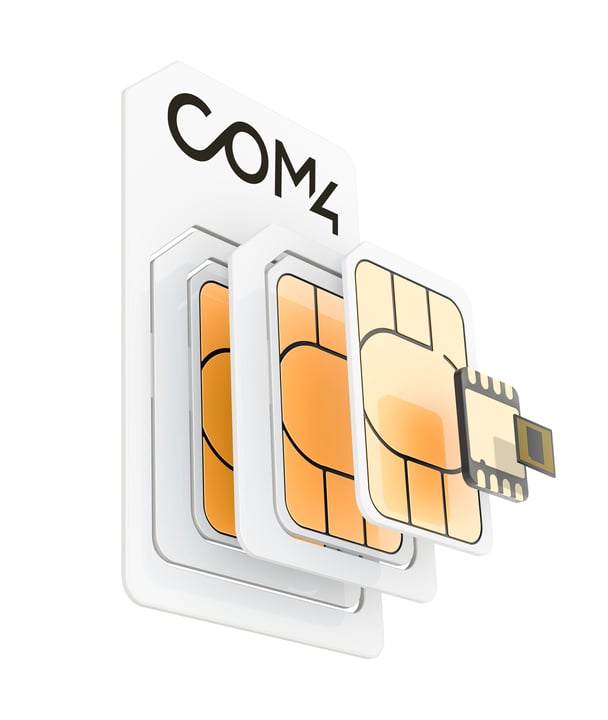
These delays cost more than just time. They affect your revenue projections, strain customer relationships, and can push back entire product launches. Com4 helps organizations eliminate these bottlenecks with operator-independent global SIM solutions that ship pre-activated and ready to connect.
This guide breaks down the root causes of global IoT SIM card delays and gives you a practical playbook for preventing them. You'll learn how to optimize your logistics, streamline provisioning workflows, and manage your SIM lifecycle at enterprise scale.
Key Takeaways: Prevent Global IoT SIM Ordering Delays in 2026
- International shipping regulations, customs clearance, and local carrier requirements are the primary sources of global IoT SIM delays.
- Pre-activated, operator-independent SIM cards eliminate carrier negotiation delays and reduce provisioning time from weeks to days.
- Effective SIM lifecycle management requires real-time visibility, automated provisioning, and proactive inventory planning across all deployment regions.
- Com4's global SIM solutions connect to 750+ networks in 190+ countries, reducing dependency on single-carrier agreements.
- Batch provisioning errors and misaligned activation policies account for up to 40% of deployment delays in multi-country rollouts.
What Causes Global IoT SIM Card Ordering Delays?
Understanding the root causes of SIM ordering delays is your first step toward preventing them. Most delays fall into one of five categories: logistics, regulatory compliance, carrier negotiations, provisioning errors, or inventory mismanagement.
Each category presents unique challenges depending on your deployment regions and scale. The following sections break down each delay source and explain what you can do to address it.
International Shipping and Customs Clearance
Physical SIM cards crossing international borders face multiple inspection points. Customs authorities in certain countries classify SIM cards as telecommunications equipment, which triggers additional documentation requirements.
You may need to submit import licenses, demonstrate regulatory compliance, or pay import duties that vary significantly by country. Some shipments get held for weeks while paperwork is verified.
The solution is to work with connectivity providers who maintain local SIM inventory in your target markets or who offer eSIM and iSIM alternatives that eliminate physical shipping entirely.
Local Carrier Requirements and KYC Regulations
Many countries require Know Your Customer (KYC) verification before activating SIM cards. These regulations exist to prevent fraud and ensure regulatory compliance, but they add significant time to your deployment timeline.
In some markets, you'll need to register each SIM card individually with local authorities. This process can take anywhere from a few days to several weeks, depending on the country's regulatory framework.
Working with an operator-independent provider allows you to handle KYC requirements through a single relationship rather than negotiating with carriers in each country individually.
Carrier Negotiations and Roaming Agreements
Traditional IoT deployments require you to establish relationships with carriers in each country where you operate. Negotiating rates, coverage terms, and technical specifications with multiple carriers is time-consuming.
Even after agreements are in place, you may face delays when carriers update their network configurations or change their roaming policies. These changes can affect your devices without warning.
Carrier-agnostic SIM solutions remove this dependency by connecting your devices to multiple networks in each country, ensuring connectivity even when one carrier has issues.
Batch Provisioning Errors and Activation Failures
Large-scale deployments involve thousands or even millions of SIM cards. When provisioning happens in batches, a single configuration error can affect your entire shipment.
Common provisioning errors include incorrect APN settings, mismatched IMSI profiles, and activation timing misalignments. These errors often go undetected until devices fail to connect in the field.
Pre-deployment testing and validation significantly reduce these errors. A proper testing lab environment lets you identify configuration issues before they affect your production deployment.
Inventory Management and Demand Forecasting
Running out of SIM inventory at the wrong time creates immediate deployment delays. However, over-ordering ties up capital and increases your risk of holding obsolete inventory as technology evolves.
Accurate demand forecasting requires visibility into your device production schedules, customer deployment timelines, and regional growth patterns. Many organizations lack the systems to track this data effectively.
Modern connectivity management platforms offer inventory analytics that help you maintain optimal stock levels across all regions without manual tracking.
How to Build a Delay-Proof SIM Provisioning Workflow
Your provisioning workflow determines how quickly new devices can connect to your network. A well-designed workflow minimizes manual steps, automates repetitive tasks, and includes checkpoints to catch errors early.
The following framework helps you build a provisioning process that scales with your deployment needs.
Step 1: Map Your Deployment Regions and Requirements
Start by documenting every country where you'll deploy devices. For each region, identify the local regulatory requirements, preferred carriers, and any specific technical standards you need to meet.
Create a compliance checklist for each country that includes KYC requirements, import documentation, and any certification processes. This documentation prevents surprises later in your deployment.
Your mapping should also include network coverage data. Some regions have limited LTE-M or NB-IoT coverage, which affects your connectivity options.
Step 2: Select Your SIM Technology and Form Factor
Your SIM technology choice directly affects your provisioning flexibility. Traditional plastic SIM cards require physical handling and shipping. eSIMs can be provisioned remotely but require compatible hardware. iSIMs are built into your device chipsets and offer the fastest provisioning.
Consider your device lifecycle when making this decision. If you expect to deploy the same devices for five or more years, future-proof technologies like iSIM reduce your long-term management burden.
Com4 supports all SIM form factors including traditional SIM, eSIM, and iSIM solutions with GSMA SGP.32 compliance, giving you flexibility as your requirements evolve.
Step 3: Establish Pre-Activation Protocols
Pre-activated SIM cards connect to networks immediately upon installation. This eliminates the activation delay that often catches deployment teams off guard.
Work with your connectivity provider to establish pre-activation protocols that match your deployment timeline. Specify the networks each SIM should connect to, the data plans to apply, and any security configurations required.
Pre-activation is especially valuable for remote deployments where sending a technician to troubleshoot activation issues would be costly or impractical.
Step 4: Implement Automated Provisioning Systems
Manual provisioning doesn't scale. As your deployment grows, you need systems that can configure thousands of SIMs without human intervention.
API-based provisioning allows your existing systems to communicate directly with your connectivity management platform. When a new device enters production, your system can automatically request SIM activation and apply the correct configuration.
Automated provisioning also reduces errors. Human operators make mistakes when entering data repeatedly, but properly configured systems apply settings consistently every time.
Step 5: Create a Testing and Validation Stage
Every SIM should pass through a validation stage before deployment. This testing confirms that the SIM connects to the intended networks, that data flows correctly, and that any security features work as expected.
Your validation process should simulate real-world conditions as closely as possible. Test across multiple network types, verify roaming functionality, and confirm that failover mechanisms work when primary networks are unavailable.
End-to-end testing labs reduce field failures significantly. The investment in pre-deployment validation pays for itself by avoiding costly troubleshooting after devices are in production.
SIM Lifecycle Management at Enterprise Scale
Managing global IoT SIM cards doesn't end after provisioning. Your SIM lifecycle management strategy determines how efficiently you operate over the long term.
Effective lifecycle management covers activation, monitoring, optimization, and eventual decommissioning of your SIM assets.
Real-Time Visibility and Monitoring
You can't manage what you can't see. Real-time visibility into your SIM fleet shows you which devices are connected, how much data they're consuming, and whether any are experiencing connectivity issues.
Modern connectivity management platforms display this information in dashboards that highlight anomalies automatically. If a device suddenly starts consuming unusual amounts of data, you'll know immediately rather than discovering the issue on your monthly bill.
Com4's connectivity management platform gives you real-time analytics and automation capabilities, letting you monitor millions of connections from a single interface.
Usage Optimization and Cost Control
IoT data consumption varies significantly across use cases. A temperature sensor might transmit a few kilobytes daily, while a video surveillance camera streams gigabytes. Matching your data plans to actual usage prevents overspending.
Data pooling arrangements let you share allocation across devices. If some devices use less than expected while others use more, pooling balances your consumption without requiring plan changes for individual SIMs.
Pay-as-you-go pricing models offer additional flexibility for variable workloads. You pay for what you use rather than committing to fixed allocations that may not match your actual needs.
Security Management Across the SIM Fleet
Each SIM in your fleet represents a potential security vulnerability. Compromised SIMs can be used for unauthorized data access, DDoS attacks, or fraudulent usage that appears on your bill.
Implement security controls at the SIM level, including private APNs that isolate your traffic from public internet, VPN tunnels that encrypt data in transit, and device authentication that prevents unauthorized SIMs from connecting.
Regular security audits help you identify vulnerabilities before attackers exploit them. Your connectivity provider should offer penetration testing and security assessment services as part of their managed offerings.
Handling SIM Replacements and Upgrades
Physical SIM cards occasionally fail or need replacement. Having a process for rapid replacement minimizes downtime when failures occur.
Remote SIM provisioning (RSP) technologies like eSIM and iSIM reduce replacement needs by allowing you to update profiles over the air. If a carrier relationship ends or network coverage changes, you can switch your devices to new networks without physical intervention.
Plan for technology upgrades as well. Networks evolve, and SIMs that work today may not support tomorrow's standards. Building upgrade paths into your lifecycle management ensures your deployment remains functional as technology advances.
Decommissioning and Recycling
When devices reach end of life, their SIMs need proper decommissioning. This includes deactivating the SIM to stop billing, wiping any stored credentials, and either recycling or securely destroying the physical card.
Failure to decommission SIMs properly results in ongoing charges for inactive devices. Large organizations often discover they're paying for thousands of SIMs connected to devices that no longer exist.
Your connectivity management platform should track device status and flag SIMs that haven't transmitted data within expected intervals. These alerts help you identify decommissioning candidates before costs accumulate.
How to Choose an IoT Connectivity Provider for Global Deployments
Your connectivity provider relationship significantly impacts your ability to prevent delays and manage SIM lifecycles effectively. Not all providers offer the same capabilities, especially for multi-country deployments.
Network Coverage and Carrier Relationships
Verify that your provider offers coverage in all your target markets. Ask specifically about network quality, not just availability. Coverage maps often show theoretical coverage that doesn't match real-world performance.
Providers with relationships across multiple carriers in each country give you redundancy. If one network has an outage, your devices can failover to alternatives without manual intervention.
Com4 connects devices to 750+ networks across 190+ countries, ensuring you have coverage options regardless of where you deploy.
Provisioning Speed and Flexibility
Ask potential providers about their typical provisioning timelines. How quickly can they deliver pre-activated SIMs? What's their process for rush orders when you need connectivity faster than usual?
Flexibility matters as much as speed. Can you easily change data plans, update APN configurations, or switch networks without lengthy support tickets? Providers with self-service management platforms give you more control.
Technology Roadmap and Future-Proofing
IoT connectivity technology continues to evolve. 5G networks are expanding, LPWA technologies like LTE-M and NB-IoT are maturing, and satellite connectivity is becoming practical for IoT applications.
Choose a provider whose technology roadmap aligns with your long-term needs. Ask about their support for emerging standards, their plans for eSIM and iSIM technologies, and how they're preparing for next-generation networks.
Support and Expertise
Global deployments inevitably encounter issues that require expert assistance. Evaluate your provider's support capabilities, including availability (24/7 vs. business hours), response times, and the technical depth of their support team.
Providers with dedicated IoT expertise can help you troubleshoot connectivity issues faster than general telecommunications support teams. Look for providers who assign dedicated account managers or technical contacts to enterprise customers.

Common Mistakes That Cause IoT SIM Deployment Delays
Even experienced teams make mistakes that delay their deployments. Recognizing these common pitfalls helps you avoid them in your own projects.
Underestimating Regulatory Complexity
Telecommunications regulations vary dramatically across countries. What works in one market may be prohibited in another. Teams that assume their home-country processes will work globally often face unexpected delays.
Invest time upfront in understanding regulatory requirements for each target market. This research prevents surprises during deployment and helps you build realistic timelines.
Relying on Single-Carrier Agreements
Single-carrier relationships create dependency risks. If your carrier experiences network issues, changes their pricing, or exits a market, your entire deployment is affected.
Multi-carrier strategies through operator-independent providers give you resilience. Your devices connect to the networks available rather than being locked to a single carrier's infrastructure.
Ignoring Scalability Requirements
Processes that work for hundreds of devices often break down at thousands or millions. Teams that don't plan for scale find themselves manually managing SIMs when they should be focusing on growth.
Design your workflows for your target scale from the beginning. The automation and systems you need for a million devices should be in place before you reach that point.
Skipping Pre-Deployment Testing
Pressure to meet launch deadlines sometimes leads teams to skip testing. This shortcut almost always costs more time in the long run when field issues require emergency fixes.
Build testing time into your project plans as a non-negotiable requirement. The delays caused by inadequate testing far exceed the time invested in proper validation.
Poor Communication Between Teams
SIM deployment involves multiple teams: procurement, engineering, operations, and often external partners. When these teams don't communicate effectively, orders get duplicated, requirements get missed, and timelines slip.
Establish clear ownership and communication channels for your SIM deployment process. Regular status meetings and shared tracking systems keep everyone aligned.
Building Your Global IoT SIM Strategy: A Practical Checklist
Use this checklist to evaluate your current SIM strategy and identify areas for improvement.
Pre-Deployment Planning
- Document regulatory requirements for all target markets
- Identify network coverage options and preferred carriers
- Calculate SIM inventory requirements with buffer stock
- Select SIM technology (traditional, eSIM, iSIM) based on use case
- Establish relationships with connectivity providers
- Create provisioning workflow documentation
Provisioning and Activation
- Implement pre-activation protocols to eliminate field delays
- Set up automated provisioning via API integration
- Configure proper APN, security, and network settings
- Establish testing and validation procedures
- Create rollback procedures for failed provisioning
Ongoing Management
- Deploy real-time monitoring for connectivity status
- Set up usage alerts and cost optimization rules
- Implement security controls (private APN, VPN, authentication)
- Create SIM replacement and upgrade procedures
- Establish decommissioning processes for end-of-life devices
Continuous Improvement
- Track deployment metrics (time to activation, error rates, costs)
- Review and update regulatory compliance documentation
- Evaluate new technologies and provider offerings
- Conduct regular security assessments
- Gather feedback from deployment teams and optimize workflows
The Future of Global IoT SIM Management
IoT SIM technology continues to evolve rapidly. Understanding emerging trends helps you make decisions today that remain valid as technology advances.
eSIM and iSIM Adoption
Remote SIM provisioning eliminates many physical logistics challenges. eSIM and iSIM technologies let you provision devices anywhere in the world without shipping physical cards.
GSMA standards like SGP.32 are making remote provisioning more interoperable. Devices built to these standards can switch between providers and networks without hardware changes.
As device manufacturers increasingly support these technologies, the friction of global SIM deployment will decrease significantly.
Satellite and Hybrid Connectivity
LEO satellite constellations are making satellite connectivity practical for IoT applications. Devices in remote locations can now connect where cellular networks don't reach.
Hybrid solutions that combine cellular and satellite connectivity offer resilience for critical applications. If cellular networks fail, devices automatically failover to satellite links.
Com4's official partnership as a global Starlink reseller positions them to offer these hybrid solutions as satellite IoT connectivity matures.
AI-Driven Network Optimization
Machine learning algorithms are beginning to optimize network selection and traffic routing automatically. These systems analyze connectivity patterns and adjust configurations to improve performance and reduce costs.
Expect connectivity management platforms to incorporate more AI capabilities, reducing the manual effort required to manage large SIM fleets effectively.
5G and LPWA Expansion
5G networks continue expanding, offering higher bandwidth and lower latency for IoT applications that need them. Meanwhile, LPWA technologies like LTE-M and NB-IoT are reaching broader coverage.
Your SIM strategy should account for these network evolutions. Choose providers and SIM technologies that support current and emerging network standards.
Taking Control of Your Global IoT SIM Deployment
Global IoT SIM ordering delays are preventable. By understanding the root causes—logistics complexity, regulatory requirements, carrier dependencies, provisioning errors, and inventory mismanagement—you can build processes that eliminate them.
The key is preparation and partnership. Document your requirements, automate your workflows, and work with connectivity providers who understand global deployment challenges. Pre-activated, operator-independent SIM solutions dramatically reduce your dependency on individual carriers and shipping logistics.
Your SIM lifecycle management strategy matters as much as your initial deployment. Real-time visibility, usage optimization, security controls, and proper decommissioning processes keep your IoT fleet running efficiently over time.
Start by evaluating your current processes against the checklist in this guide. Identify the gaps that cause delays in your deployments, and prioritize improvements that will have the greatest impact on your timelines and costs.