
.jpeg?width=720&height=720&name=fleet-hero-3%20(1).jpeg)
For enterprise IoT decision makers comparing telecom providers, global telecom coverage is the headline claim almost every vendor makes. The real work is in the details maps don't show. Here are eight checks worth running before you commit to a global IoT connectivity partner.
1. Look past the coverage map to real-world testing
Coverage maps show theoretical reach, not verified performance. Ask any provider you're evaluating for field test data, uptime statistics by region, and references from customers operating in the specific countries where your devices will run. A telecom provider comparison built on maps alone is a comparison of marketing, not networks.
2. Confirm multi-network and multi-IMSI redundancy
A single-network SIM is a single point of failure. Multi-IMSI and eSIM (SGP.32) capability let a device switch automatically between multiple mobile network operators in a given country if one network degrades or an operator changes its roaming terms. For deployments spanning dozens of markets, this redundancy is what keeps devices online when any one carrier relationship changes.
3. Understand how roaming actually works, not just that it's included
International roaming sounds simple until you look at how it's delivered. Some providers route traffic through a single home network abroad; others use local breakout, where traffic exits onto in-country infrastructure for lower latency and better resilience. Ask exactly how your data moves in each region, not just whether roaming is technically supported.
4. Check regulatory compliance on permanent roaming
Several countries have tightened rules on "permanent roaming," restricting how long IoT devices can operate on a foreign SIM before requiring a local one. A provider with only an average telecom provider comparison sheet might not flag this until you're mid-rollout. A true partner should already know which markets require local IMSIs and build that into your deployment plan from day one.
5. Verify support for every radio standard your devices need, now and later
Global connectivity solutions should span 2G, 3G, 4G, and 5G standalone (SA), plus the LPWA standards that matter for low-power IoT: NB-IoT, LTE-M, and 5G RedCap. Networks are being sunset market by market, so ask not just what's supported today, but what the provider's migration plan is as 2G and 3G phase out in different regions over the next few years.
6. Ask about satellite and NTN coverage for the gaps terrestrial networks can't fill
Maritime shipping, remote energy sites, and rural agriculture assets often sit outside any cellular footprint. Non-Terrestrial Network (NTN) connectivity via LEO satellite, including services like Starlink, closes that gap without a separate contract or a second SIM to manage. This is one of the clearest differentiators between a genuinely global telecom coverage provider and one that stops at cellular.
7. Test the connectivity management platform, not just the network
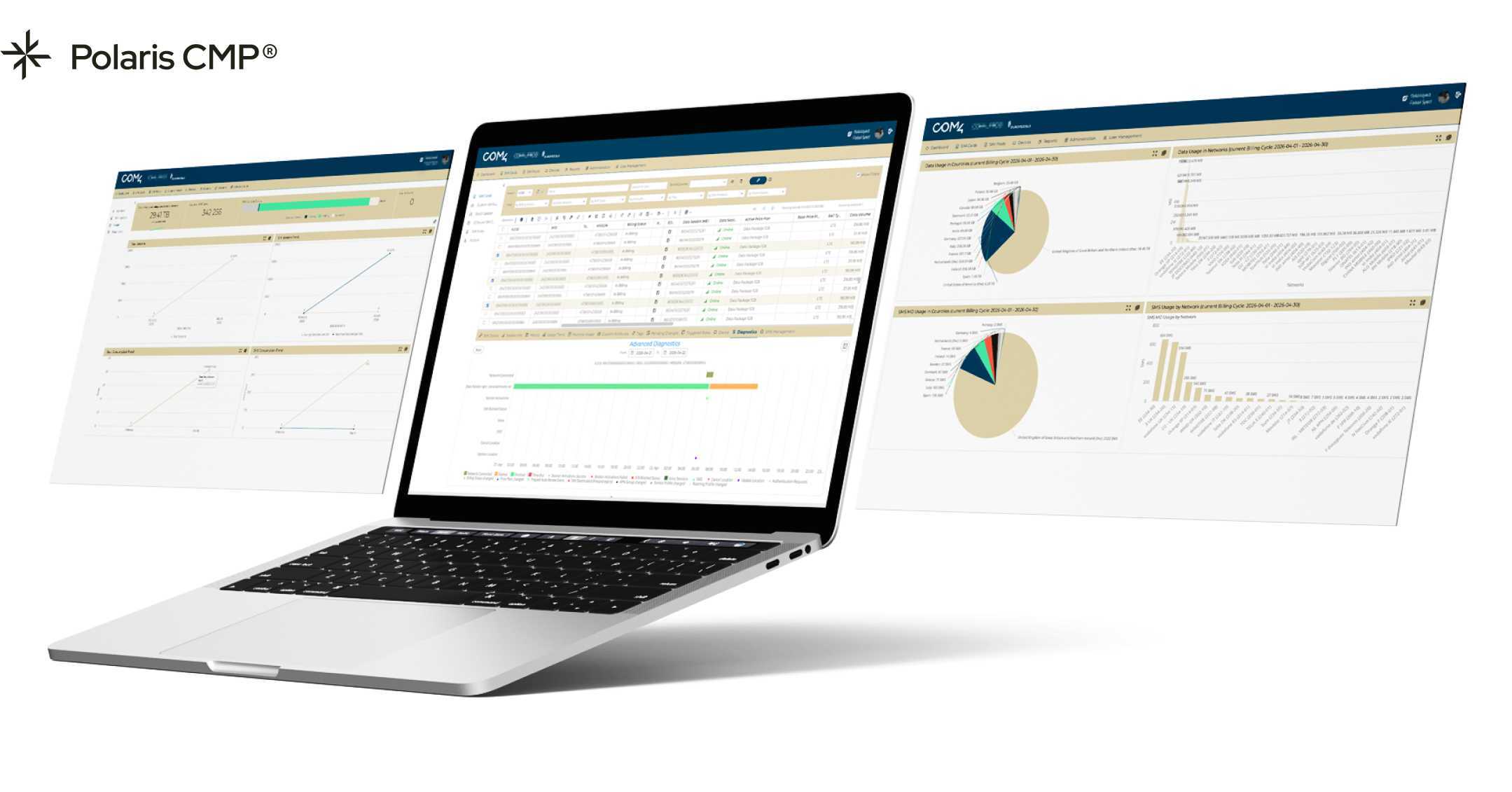
Coverage is only half the picture. You need real-time visibility into device status, usage, and lifecycle across every market, from one platform, not a patchwork of operator portals. A strong connectivity management platform turns a global SIM estate into something your team can actually monitor and control, rather than a black box you find out about when the invoice arrives.
8. Look at security, data residency, and compliance market by market
Private APNs, encrypted connectivity, and clear data residency practices should be standard, not an add-on. As deployments span more countries, so do the regulatory regimes governing where and how device data can be stored and transmitted. Confirm your provider can meet those requirements in every market you operate in, not just the ones where it's easiest.
Beyond the map
None of this shows up on a coverage map, and most of it doesn't show up in a basic telecom provider comparison either. It's also worth remembering that global IoT connectivity is a different category from consumer travel SIM cards or standard business mobile plans: enterprise deployments need lifecycle management, redundancy, and compliance built in from the start, not retrofitted after a rollout stalls.
Run these eight checks before you sign, and you'll know whether a provider's global telecom coverage claim holds up in the field, not just on a map.




-1.webp)