Picture a fleet of 10,000 sensors spread across bridges, farms, warehouses and city streets. Even if every battery lasts five years, that is around 2,000 battery swaps a year. Each one means a site visit, a technician’s time and a device that may go quiet before anyone notices.
For many IoT projects, the battery, not the sensor or the network, sets the real limit on cost and scale. Energy harvesting changes that equation. Instead of relying only on stored energy, the device collects small amounts of power from its surroundings: light, heat, movement, airflow or radio waves.
Here’s how it works, which sources are worth considering, where it fits and how to pair it with the right connectivity.
Before We Go into IoT, What Is Energy Harvesting?
Energy harvesting (also called energy scavenging or ambient power) is the process of capturing small amounts of energy that already exist in the environment and turning it into usable electricity.
Think of a solar calculator or a self-winding watch. In IoT, the same idea powers sensors and trackers that need only microwatts to milliwatts and spend most of their life asleep.
The key point is that harvested energy is small and often intermittent. Energy harvesting works best when the device is designed around that reality from day one.
How Does Energy Harvesting Help IoT Devices?
- Longer device lifetime. A harvester can top up a battery or supercapacitor continuously, so the device can run for years longer, sometimes for its entire service life.
- Lower maintenance costs. Fewer battery swaps mean fewer site visits, which is often the biggest saving in hard-to-reach places like wind turbines or bridges.
- Deployments that were not practical before. Sensors can go where wiring is impossible.
- Less waste. The US alone uses over three billion batteries a year, according to FORCE Technology. With tens of billions of connected devices on the way, cutting battery use is a real sustainability win.
Energy Sources to Harvest to Power IoT Devices
The table shows commonly cited, order-of-magnitude figures for each source. Real output depends heavily on the environment.
| Source | Typical harvested power | Best for |
|---|---|---|
| Outdoor light | ~10 mW/cm² | Outdoor sensors, trackers, smart city assets |
| Indoor light | ~10–100 µW/cm² | Building sensors, retail, offices |
| Thermal (industrial) | ~1–10 mW/cm² | Pipes, motors, engines, process equipment |
| Thermal (body heat) | ~25 µW/cm² | Wearables |
| Vibration (machinery) | ~100 µW/cm² | Pumps, compressors, rail, vehicles |
| RF (ambient Wi-Fi/cellular) | <1 µW/cm² | Very low-power tags, niche long-life devices |
Figures are typical benchmarks widely used in energy-harvesting literature; your own measurements on site always beat a table.
Solar
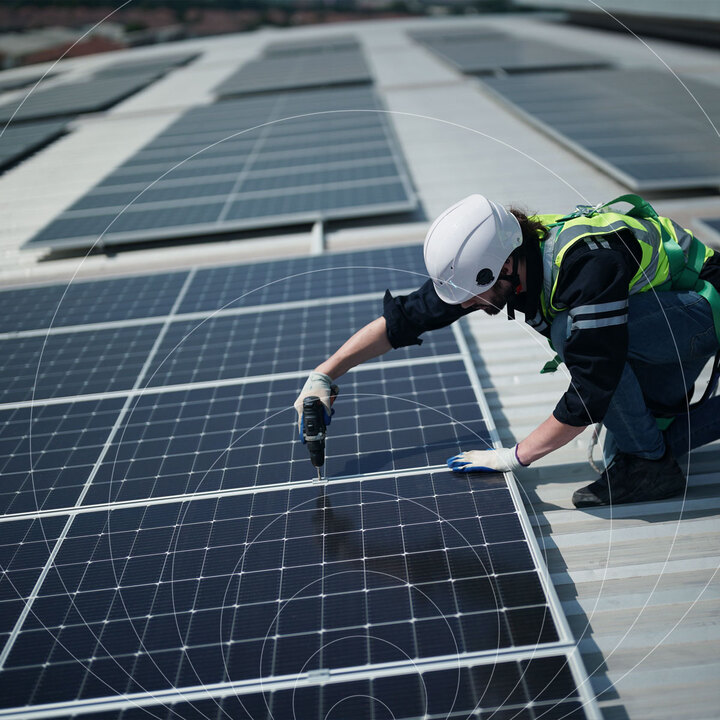
Light is the most mature and widely used source. Direct sunlight delivers about 1 kW/m², while typical indoor lighting delivers only a tiny fraction of that and yields microwatts rather than milliwatts (FORCE Technology).
Two practical points stand out. First, indoors, a cheap amorphous silicon cell can outperform an expensive crystalline one, because it handles low, artificial light better. Second, in the Nordics, design for December, not June. A solar-powered sensor in Tromsø must survive weeks of polar night, so storage and duty cycling matter as much as panel size.
Thermoelectric
Thermoelectric generators (TEGs) turn a temperature difference into electricity. They are only around 2–5% efficient but can work with differences of just a few degrees. They need boost circuitry, as the raw output is often in the tens of millivolts. Warm pipes, motors, exhaust systems and district heating networks are natural candidates. The main drawback is that you often need a heatsink to keep the temperature difference, which adds bulk.
Flow and Wind
Small turbines and flow-driven harvesters capture energy from moving air or water: ventilation ducts, pipelines, rivers or exposed outdoor structures. Recent research reviews put wind harvesting power density in the range of 10–200 mW/cm³ (Du et al., 2025). They work best where flow is predictable.
Vibration and Kinetic
Machines, vehicles, bridges and rail tracks all vibrate. Piezoelectric harvesters are compact and affordable but produce less power. Electromagnetic harvesters deliver more but are larger and more expensive. Kinetic “impact” harvesters, such as a lever that presses a coil, can generate enough energy to power a simple sensor and one wireless transmission. This is how self-powered light switches work.
RF / Electromagnetic
RF harvesting captures energy from radio signals such as Wi-Fi, cellular or dedicated RF transmitters. Ambient RF power is very limited and highly dependent on the environment. FORCE Technology estimates that matching the energy of a small coin cell could take over ten years (source). RF is most useful with a dedicated transmitter nearby, or for very low-power tags. This is also the foundation for Ambient IoT (see the FAQ).
Hybrid Multi-Source
Hybrid systems combine two or more sources, for example solar plus thermal, or vibration plus wind, so the device keeps running when one source drops. Researchers have shown that triboelectric–electromagnetic hybrid harvesters can produce peak power from a few milliwatts up to around 85 mW in wind tests (Du et al., 2025). The trade-off is that more harvesters mean a bigger device and more complex power management.
How Does Energy Harvesting in IoT Work?
An energy-harvesting IoT device has five core building blocks that work together:
- Harvester (transducer). The solar cell, thermoelectric generator, piezo element or antenna that converts ambient energy into electricity.
- Power management IC (PMIC). Converts the raw, fluctuating output into stable voltage. Good PMICs use maximum power point tracking (MPPT) to get the most out of the harvester as conditions change.
- Energy storage. A supercapacitor, rechargeable battery, or both. Storage bridges the gap between when energy is available and when the device needs it, for example at night.
- The sensor and microcontroller. The IoT sensor measures temperature, vibration, location, moisture or whatever the application needs. Low-power sensors are what make energy harvesting viable in the first place, as every microwatt saved reduces battery dependence.
- The radio. Sends the data to the cloud. In most designs, this is the most energy-hungry part of the device.
The process is a simple cycle: harvest → store → wake → measure → transmit → sleep. The device sleeps most of the time while the harvester fills the storage, then wakes, takes a reading, sends it and sleeps again.
For scale: Silicon Labs’ battery-free reference design draws under 300 nA asleep and needs just 17 µJ to wake (Silicon Labs).
Is Energy Harvesting Right for Your IoT Device?
Energy harvesting is a strong fit when:
- The device sends small amounts of data, infrequently (minutes to hours, not seconds)
- Battery replacement is expensive, risky or physically difficult
- There is a reliable ambient source at the installation site
- The device is meant to stay in the field for many years
It is a weaker fit when:
- The device streams data continuously (video, high-frequency telemetry)
- The device needs real-time, always-on connectivity
- The environment offers no dependable source (a dark, still, temperature-stable cabinet)
- Size and cost per unit are extremely tight
A useful rule of thumb: if your device can live with “report when there is energy,” harvesting is worth exploring. If it must report “no matter what,” plan for harvesting as a battery extender, not a battery replacement.
Real Use Cases for Energy Harvesting in IoT
- Smart cities. Solar-powered parking sensors, waste-bin fill-level sensors and air quality monitors on lamp posts and street furniture.
- Asset tracking and logistics. Solar-assisted trackers on containers, trailers and rail wagons that report location for years without a battery change.
- Industry and manufacturing. Vibration- and heat-powered sensors on motors, pumps and compressors for condition monitoring and predictive maintenance.
- Energy and utilities. Thermoelectric sensors on pipelines and district heating networks, and self-powered sensors on overhead power lines.
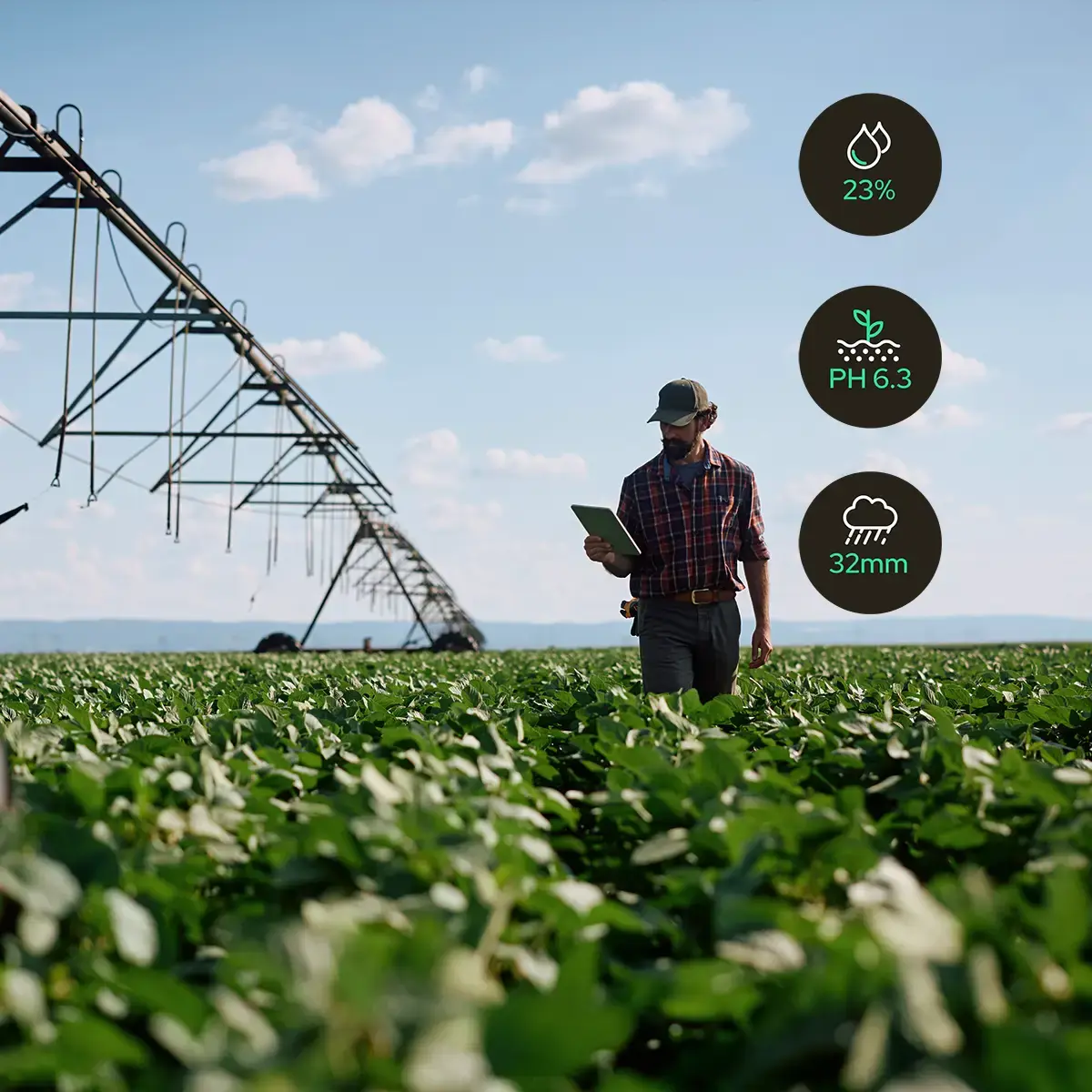
- Agriculture. Solar-powered soil moisture and weather stations spread across large fields.
- Smart buildings. Light-powered temperature, occupancy and CO₂ sensors.
- Water infrastructure. Researchers have even demonstrated a battery-free leak detector that harvests energy from the water itself and reports directly to the cloud over LTE-M, without a gateway (Nepal et al., 2026).
Connectivity Options for Energy-Constrained IoT Devices
The radio is usually the biggest power consumer in an energy-harvesting device. So choosing connectivity is not a separate decision. It is part of your energy budget.
LTE-M / NB-IoT
LTE-M and NB-IoT are cellular technologies designed for low-power IoT. Two features make them a good match for harvested energy:
- Power Saving Mode (PSM) lets the device sleep for hours or days while staying registered on the network, so it doesn’t waste energy reconnecting from scratch.
- Extended Discontinuous Reception (eDRX) lets the device listen for incoming messages only at long, agreed intervals.
There’s no gateway to install or power, and devices work across sites and countries. Modern cellular IoT modules are already designed to run solely from harvested energy, such as solar, with the duty cycle tuned to the predicted energy supply (Nordic Semiconductor).
LoRa / LoRaWAN
LoRaWAN uses very little energy per message and offers long range, which makes it attractive for tiny harvesters. The trade-off is infrastructure: you need gateways (and power and backhaul for them), and coverage depends on who deploys them. It works well for campus-style deployments, such as a farm, a port or an industrial site, where you control the gateways.
Not sure which fits your device? Com4’s network selector tool can help you compare options.
Key Challenges and Limitations of Energy Harvesting in IoT
Power Density and Intermittency
Ambient sources deliver small amounts of power and rarely deliver it continuously. The sun sets, machines stop and the wind drops. The device must store energy and plan its tasks around what is actually available, rather than assuming constant power.
Efficiency and Conversion Losses
Every step loses energy. Thermoelectric generators convert only around 2–5% of heat flow, and low-voltage outputs need boost converters that consume part of the energy they deliver. Power management must also track the harvester’s optimal operating point as conditions shift (FORCE Technology).
Size, Form Factor, and Integration
More power usually means a bigger harvester. Solar panels need surface area, thermal harvesters need heatsinks and hybrid systems add more parts. Research reviews note that combining several harvesters leads to larger devices and more complex power management, and that there is still no universal approach for integrating multiple sources (Du et al., 2025).
Energy Storage Lifetime
Rechargeable batteries degrade with charge cycles and suffer in the cold, which matters in Nordic winters. Supercapacitors handle far more cycles but store less energy. Storage often decides whether a device lasts 5 years or 15.
Upfront Cost and Design Complexity
A harvesting design costs more to develop and build than a simple battery-powered one. The business case comes from lower lifetime maintenance, so it needs to be calculated over the full deployment period, not per unit at purchase.
Regulatory Requirements in Norway: RED and the CRA
Energy harvesting doesn’t change your compliance obligations. If your device has internet-connected radio functionality, it may need to meet Norway’s cybersecurity requirements under the Radio Equipment Directive (RED).
According to Nkom, the Norwegian Communications Authority:
- RED cybersecurity requirements have applied in Norway since 1 August 2025 to internet-connected radio equipment placed on the market. The harmonised standards EN 18031-1, -2 and -3 can be used to show conformity.
- The Cyber Resilience Act (CRA) introduces broader requirements for all products with digital elements. Manufacturer reporting obligations apply from 11 September 2026.
- The CRA applies in full from 11 December 2027, when it replaces the RED cybersecurity requirements.
For product teams, this means security must be part of the design from the start, including on ultra-low-power devices where every extra microjoule for encryption and updates counts.
Recent Advances and Research Trends
Triboelectric and Hybrid Nanogenerators
Triboelectric nanogenerators (TENGs) generate electricity from friction and contact between materials, much like static electricity. They are cheap, flexible and scalable. In power-grid research, a single rotating TENG unit harvesting magnetic energy from transmission lines reached up to 1.5 kV open-circuit voltage and 6.67 mW output power. Hybrid designs that pair TENGs with thermoelectric or electromagnetic generators are already powering self-powered sensors for wind, line vibration and ice-thickness monitoring (Du et al., 2025).
Indoor Photovoltaics and Flexible Solar
New solar materials such as perovskites are being tuned specifically for indoor light. Saule Technologies’ flexible perovskite cells reached a certified 25.5% efficiency under 1,000 lux of LED light (PV Tech). A 2026 review in RSC Advances names perovskite and tandem cells, plus combined solar–thermoelectric systems, as key next steps, with stability and scalability the main hurdles (Anwar et al., 2026).
AI/ML Integration
Artificial intelligence is helping in two ways. On the device, lightweight machine-learning models predict how much energy will be available (for example, tomorrow’s sunlight) and adjust how often the device measures and transmits. In research, AI accelerates the discovery and optimisation of new harvesting materials. Both directions are flagged as key trends in recent reviews (Anwar et al., 2026).
Ambient IoT
3GPP’s Release 19 standardises Ambient IoT: ultra-low-power devices with around 1 µW peak power consumption that run on harvested energy and communicate directly with cellular base stations (3GPP). The first focus is indoor inventory and command use cases, with more advanced device types targeted for Release 20.
How to Get Started With Energy Harvesting for IoT?
Start From the Use Case and Environment
Define what the device needs to measure, how often and where it will live. Visit the site. Is there light? Heat? Vibration? How does that change across the day and the year?
Quantify the Energy Budget
Calculate daily energy needs (sleep + sensing + transmission) and compare them with what the harvester delivers on your worst day, not your average day.
Choose the Right Harvester(s)
Match the source to the environment: light for lit spaces, heat for warm surfaces, vibration for machines. Go hybrid only if one source isn’t reliable enough.
Size the Storage for the Dark Days
Size your supercapacitor or battery to carry the device through the longest expected gap in harvesting, such as a Nordic winter, a factory shutdown or a cloudy week.
Pick Low-Power Connectivity and Tune It
Choose a radio technology that suits your payload, mobility and coverage needs, then use PSM, eDRX and smart reporting intervals to cut energy use. Make firmware energy-aware so it adapts reporting frequency to the energy it has.
Prototype, Measure and Test in the Field
Lab numbers rarely survive real life. Measure actual consumption and test on site across seasons. Com4’s Test Lab and free IoT test kit let you test cellular connectivity on your own hardware before you scale.
Plan for Compliance and Lifecycle Management
Build in RED/CRA security requirements from the start, and plan how you will monitor and manage devices remotely once they’re deployed, for example with a connectivity management platform like Polaris CMP.
Conclusion
Energy harvesting won’t remove batteries from every IoT device, and it doesn’t need to. Its real value is in shifting the economics of large deployments: fewer site visits, longer device lifetimes and the freedom to put sensors where they could never go before.
The projects that succeed treat energy as a design constraint from day one: they measure the environment, budget every microjoule and choose connectivity to match.
If you are building an energy-constrained device and want to know which connectivity option will stretch your energy budget furthest, talk to Com4. We’ll help you test it on real networks before you commit.