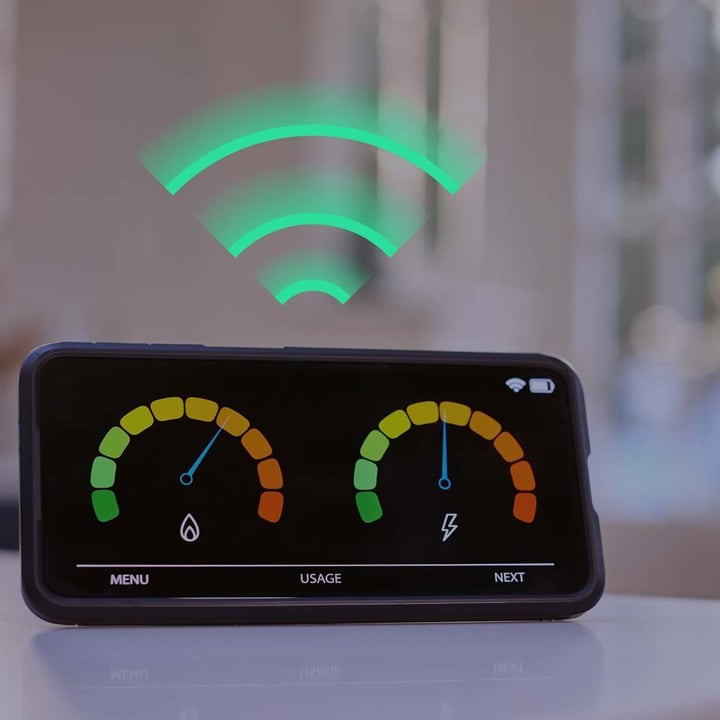
Short answer: The best IoT connectivity for a Nordic smart meter rollout is NB-IoT or LTE-M on a SIM that can use more than one network in each country, managed in a platform built for hundreds of thousands of SIMs, with an eUICC or SGP.32 option for meters that will stay on the wall for 15 years or more. Operators such as Telia, Telenor and Tele2 run strong national networks. Specialist providers add multi-network access and one setup across borders. Some of the largest smart metering companies in Norway work with Com4, which offers multi-network SIMs on 750+ networks in 190+ countries, SGP.32 eSIM, private APN and the Polaris connectivity management platform.
A smart meter is a long promise. It goes into a basement or a cabinet, it is read every 15 minutes, and it is expected to keep reporting for 15 years or more, through network upgrades, operator price changes and new regulation. The connectivity decision you make at rollout is one you live with until the next one.
The Nordics are a demanding place to make it. Norway set 1 January 2019 as the deadline for its first smart meter (AMS) rollout. Sweden required every meter in the low-voltage network to meet new functional requirements by 1 January 2025, which meant replacing millions of meters. Finland is moving to its second generation. And many meters sit where coverage is hardest: underground, behind concrete, or far from the nearest mast.
This guide compares the providers utilities and meter manufacturers most often consider, and explains when a specialist provider makes more sense than a mobile operator. We're Com4, so we've put ourselves first. Everything we say about other providers comes from their own public pages and press releases, checked in November 2026.
What to look for in smart meter connectivity
- Deep indoor coverage. NB-IoT and LTE-M reach further into basements and cabinets than 4G. Check coverage at real meter locations, not on a map.
- More than one network per country. A meter that can only use one operator is stuck if that network has a gap at the site or an outage. A multi-network SIM can use the strongest network at each meter.
- A lifetime plan. Meters outlive contracts. eUICC with SGP.32 lets you switch IoT profiles over the air instead of visiting every meter. Read is eUICC the best choice for connected devices?
- Provisioning at scale. Pre-activated SIMs, bulk activation and an API, so installers don't wait and your systems stay in sync.
- Security that meets NIS2. Energy companies are covered by NIS2 and pass security requirements on to suppliers. Private APN, VPN and SIM locking keep meters off the public internet.
- Predictable cost for small data. Meters send little data, often. Make sure the price model fits that pattern over 15 years.
Mobile operator or specialist IoT provider?
Many utilities start with the national operator they already know. That works well when every meter is in one country and the operator's network covers every site. It gets harder when a meter manufacturer sells across Norway, Sweden, Finland and Denmark, or when one operator's coverage leaves gaps in a rural area.
A specialist IoT provider buys access to several operators and puts them on one SIM, one contract and one platform. That gives you redundancy inside each country, one setup across borders and a single place to see every meter. The trade-off is that you depend on the specialist's agreements with each operator, so ask which networks are included, and whether NB-IoT and LTE-M are available on each of them.
IoT connectivity providers for Nordic smart meter rollouts
1. Com4
Com4 is a Nordic IoT connectivity provider and part of Wireless Logic. Some of the largest smart metering companies in Norway work with Com4. Com4's multi-network SIMs support NB-IoT and LTE-M and can use several networks in each country, with access to 750+ networks in 190+ countries. SGP.32 eSIMs are available for long-lived meters, SIMs ship pre-activated, and every SIM is managed in Polaris, Com4's connectivity management platform, with an API for your head-end system. Traffic can run over a private APN through Com4's own mobile core based on Nokia 5G SA. Read more on our energy and utilities page.
Good fit for: Utilities and meter manufacturers rolling out across several Nordic countries, or who want more than one network per meter.
Worth checking: Com4's support team works from 08:00 to 16:00 on all business days, so agree how out-of-hours incidents are handled for critical grid devices.
2. Telia
Telia runs national mobile networks in Sweden, Norway and Finland, with NB-IoT and LTE-M, and offers Telia Global IoT Connectivity on a Telia eSIM with pre-integrated operators.
Good fit for: Utilities that want to work directly with one large Nordic operator in their home market.
Worth checking: Whether a second network is available where Telia's coverage is weak at a meter site.
3. Telenor IoT
Telenor IoT is Telenor Group's IoT unit, with local operations in the Nordics and roaming agreements with 500+ networks in 200 countries. It began delivering standardised SGP.32 SIMs in April 2026.
Good fit for: Meter manufacturers with an existing Telenor relationship in Norway, Sweden or Denmark.
Worth checking: How NB-IoT and LTE-M roaming works in each market you sell into.
4. Tele2 IoT
Tele2 IoT runs its own LTE-M network in Sweden and says it works with 670+ network partners in more than 190 countries. Its connectivity management is built on Cisco IoT Control Center, and it launched a commercial SGP.32 solution with IDEMIA and Cisco in March 2026.
Good fit for: Swedish utilities that want an operator-run LTE-M network.
Worth checking: Coverage and partner networks outside Sweden for cross-border rollouts.
5. 1NCE
1NCE sells a prepaid IoT Lifetime Flat that covers a device for up to ten years for a one-off fee, with connectivity in 173 countries, and lists smart utilities as one of its main use cases.
Good fit for: Low-data meters where a fixed, prepaid price is the deciding factor.
Worth checking: A meter's lifetime is often longer than ten years, so plan what happens after the flat period ends.
6. Onomondo
Onomondo is a Danish IoT connectivity provider with its own core network, offering non-steered connectivity on 680+ networks in 180+ countries and its own SGP.32 eIM.
Good fit for: Meter and sensor makers who want a developer-led platform and control over network selection.
Worth checking: Support model and local presence for large utility tenders.
Smart meter connectivity providers compared
| Type | Networks per country | SGP.32 (Nov 2026) | Good fit for | |
| Com4 | Nordic specialist, part of Wireless Logic | Several, multi-network SIM | Available | Multi-country and redundant rollouts |
| Telia | Nordic operator | Own network in home markets | Check with Telia | Single-operator home-market rollouts |
| Telenor IoT | Operator group IoT unit | Own network plus roaming | Delivering since April 2026 | Existing Telenor customers |
| Tele2 IoT | Swedish operator | Own LTE-M in Sweden plus partners | Commercial since March 2026 | Swedish LTE-M rollouts |
| 1NCE | Global specialist | Roaming in 173 countries | Check with 1NCE | Low-data, price-led meters |
| Onomondo | Global specialist | Non-steered, 680+ networks | Available, own eIM | Developer-led meter makers |
Facts about other providers come from their own websites and press releases, checked in November 2026. Offers change, so confirm the details with each provider.
Direct cellular or concentrators?
Not every meter needs its own SIM. Many Nordic rollouts connect meters to a data concentrator over radio mesh or power line communication, and only the concentrator uses cellular. Direct cellular meters on NB-IoT or LTE-M remove that layer and make each meter independent, which is why they are becoming more common. Either way, cellular is the link that carries the data to the utility, so the questions above apply to both.
A checklist for your next provider call
- Which networks can the SIM use in each country, and are NB-IoT and LTE-M available on each?
- Can you test coverage at real meter locations, including basements and cabinets?
- Is SGP.32 eSIM available, and which IoT profiles can you switch to later?
- How are SIMs activated in bulk, and is there an API for your head-end system?
- Private APN, VPN and SIM locking: included or extra?
- How does the price model work for small, frequent messages over 15 years?
- What happens when a network in your market is shut down or changed?
- Who supports you during rollout, and what are the support hours?
The short version
Nordic smart meters need connectivity that reaches basements, survives a network outage and lasts longer than most contracts. NB-IoT or LTE-M on a multi-network SIM, with SGP.32 for the long term and a platform that handles every meter in one place, is the setup that keeps the most options open.
Choose connectivity that will outlast the meter's first contract.
If you're planning a smart meter rollout, Com4 can test our SIMs at your real meter sites. Start with a free IoT test kit or book a talk with our team.