
Bulgarian-lavender
CELLULAR IoT · GUIDE

LTE-M vs NB-IoT: when to use each

A straight answer to every question engineers, product managers, and procurement leads actually ask when choosing between the two cellular IoT standards.

The short answer: pick the platform that lets you run every SIM, on every network, from one place, and automate the boring parts.

An IoT SIM management platform (often called a connectivity management platform, or CMP) is where you activate, monitor, pause and retire the SIMs in your devices. Once a fleet grows past a few hundred SIMs, across several countries and networks, the platform matters as much as the SIM itself. This guide covers the capabilities worth testing before you sign, the questions to ask vendors, and how to plan a switch without downtime.

Key takeaways

  • Choose a platform that shows every SIM, on every network, in one portal and one API.
  • Automate the lifecycle and cost controls with rules, so SIMs pause before a fault becomes an invoice.
  • Require security controls, a written uptime SLA and SGP.32 eSIM support for long-lived devices.

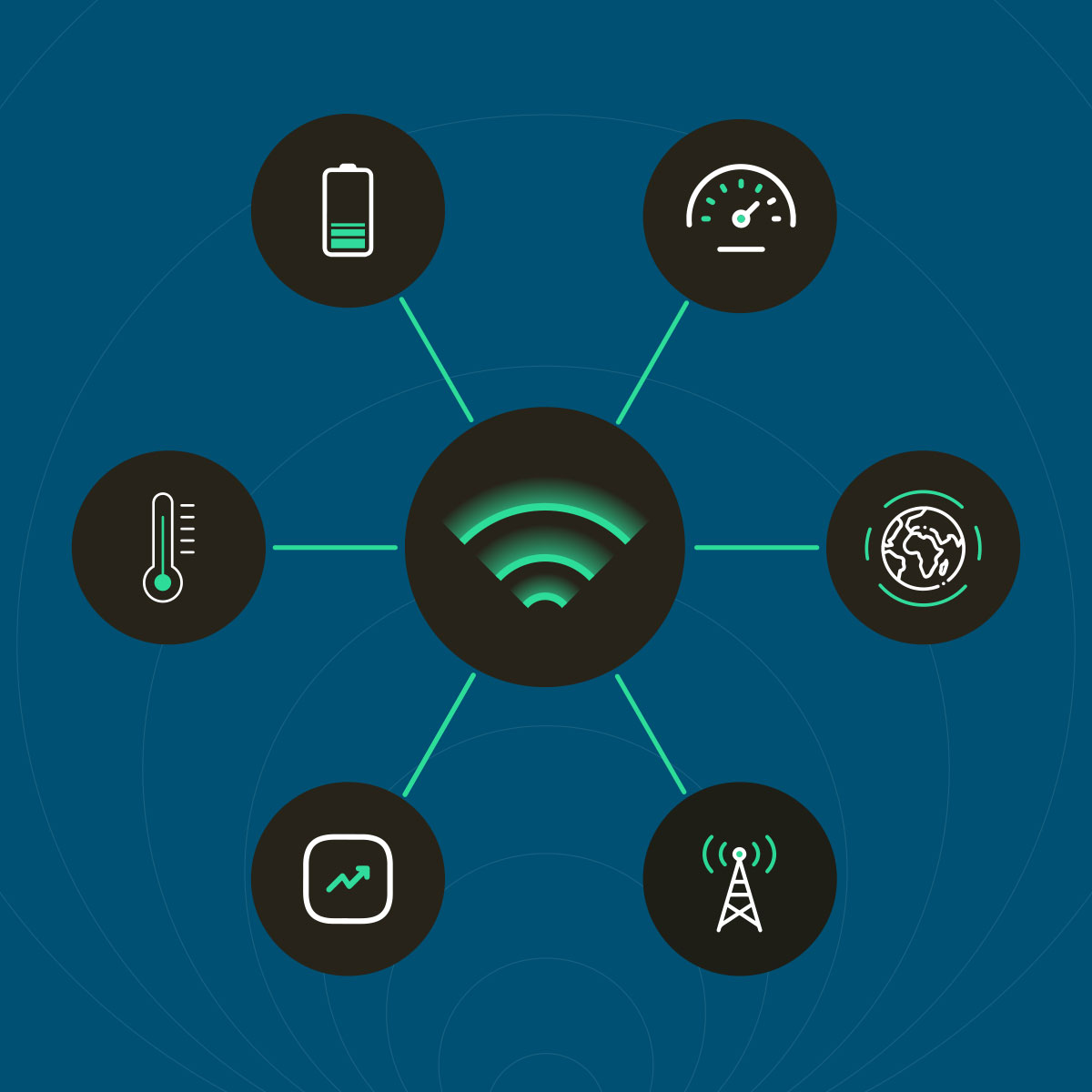
Six things a good platform should do

Global connectivity icon — LTE-M for moving and talking devices

Pick LTE-M

The device moves, talks, or sends bursts larger than 10 KB. Fleet and asset trackers, wearables with voice, medical alarms, EV charging controllers, POS terminals and lone-worker devices.

Battery icon — NB-IoT for stationary long-life devices

Pick NB-IoT

The device is stationary, sends tiny payloads and lives on a battery for years. Smart water and electricity meters, parking sensors, environmental sensors, smoke detectors, pipeline pressure sensors and street lighting.

Scalable icon — dual-mode module for multiple markets

Pick a dual-mode module

You are shipping to multiple markets and want one SKU. u-blox SARA-R5, Quectel BG77, Sierra HL78xx and Nordic nRF9160/9161 all run both LTE-M and NB-IoT in a single part, with 2G fallback on some SKUs.

At a glance

 LTE-MNB-IoT
Throughput~300 kbps – 1 Mbps20–125 kbps
Latency50–150 ms (down to ~10 ms)1.6–10 s (deep sleep: longer)
VoiceYes, VoLTENone
MobilityFull tower-to-tower handoverCell reselection only
Deep coverage+15 dB vs LTE+20 dB vs LTE
Battery life2–5 years typical10+ years realistic
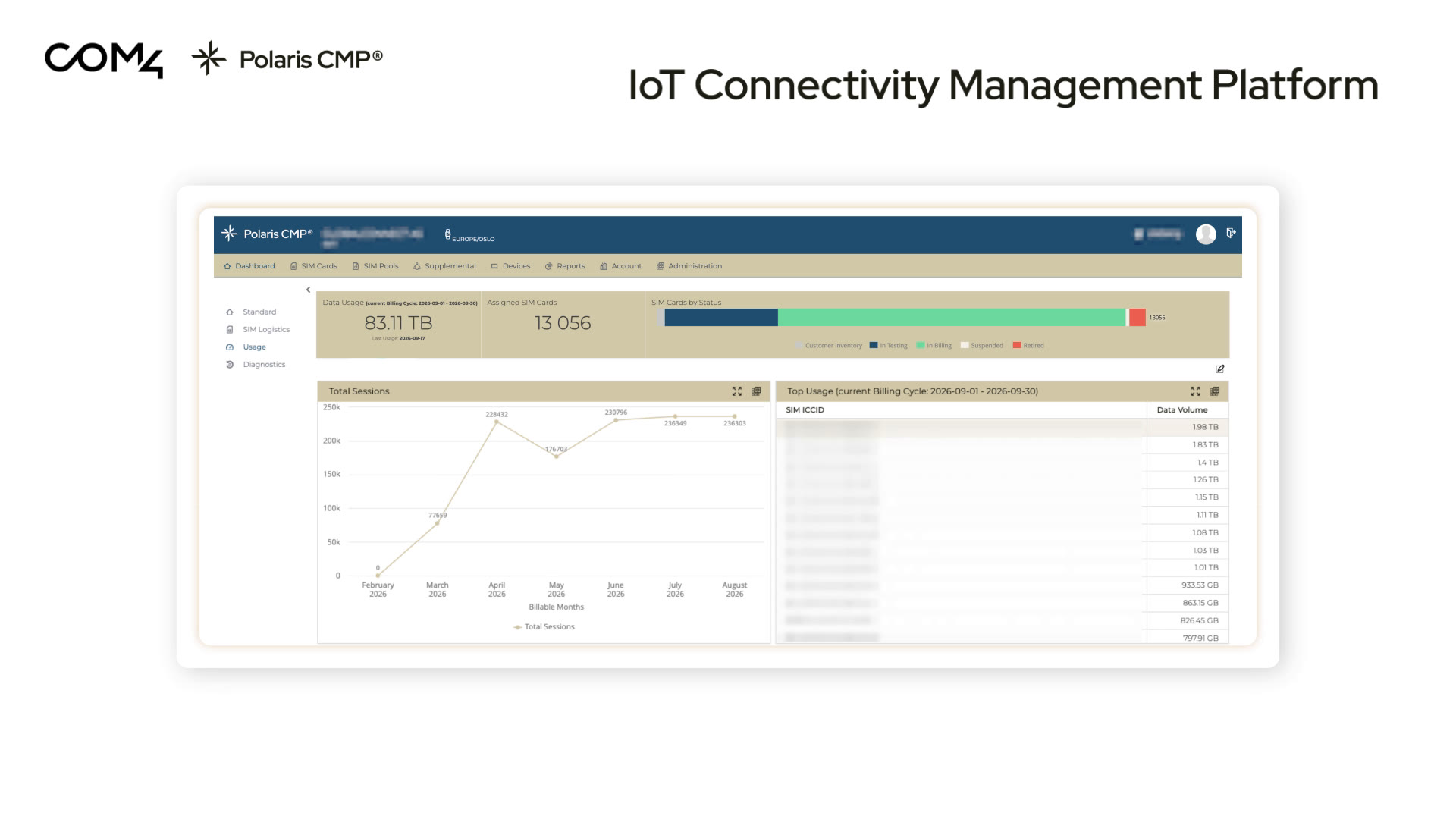
Polaris CMP explainer video: IoT Connectivity Management Platform dashboard
Network operations dashboard showing IoT SIMs across many networks

Operator portal, single-network MVNO or multi-network CMP?

Most platforms fall into three groups. Operator portals manage SIMs on one mobile network and its roaming partners. Single-core MVNO platforms give you one interface but only for the networks that provider has agreements with. Multi-network CMPs sit above many operators, so you can mix local and roaming profiles and change networks without changing your tooling. For multi-country fleets, the third group usually means fewer portals, fewer contracts and less vendor risk.
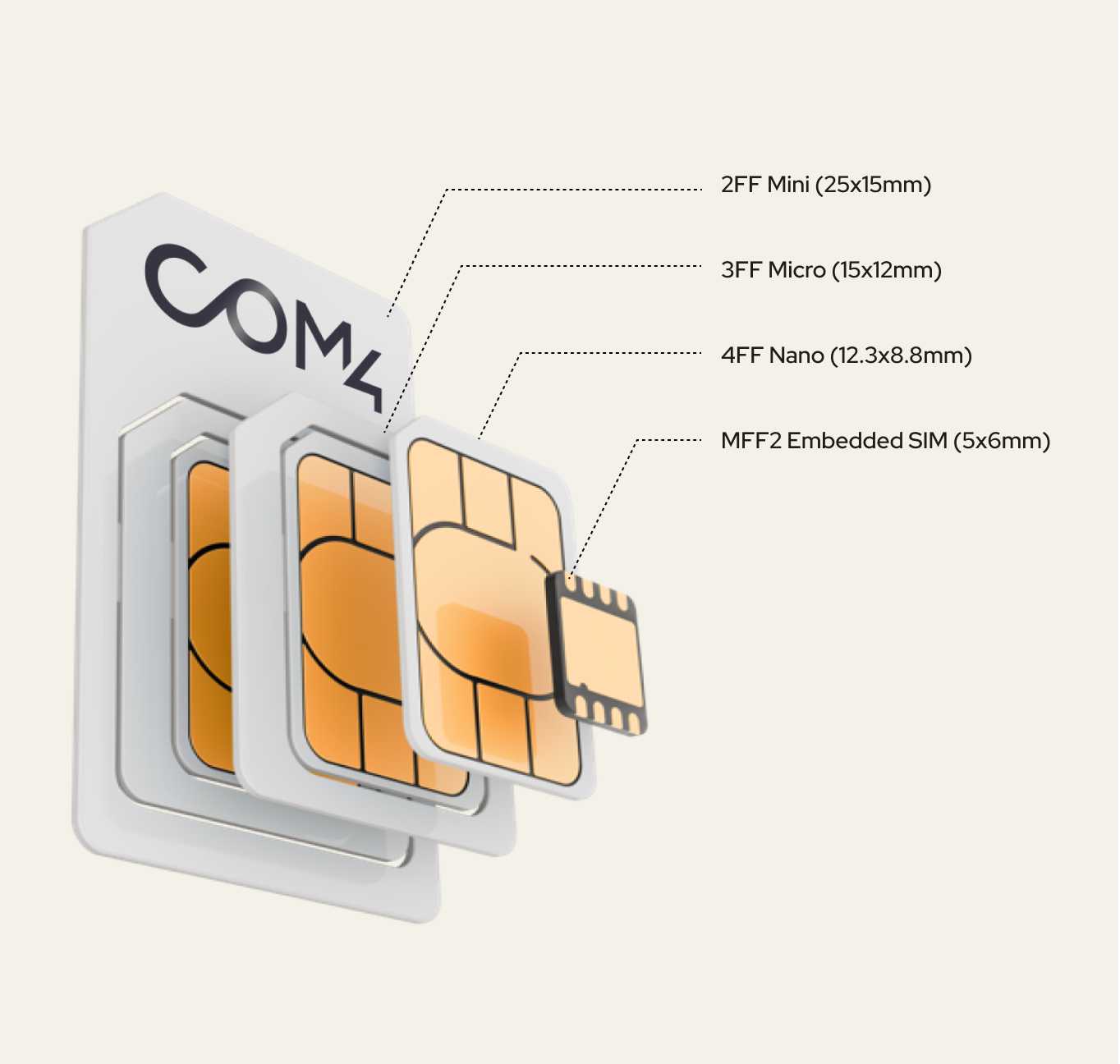
IoT SIM and eSIM formats, illustrating over-the-air profile changes with SGP.32

Plan the switch before you need it

Changing platform does not have to mean downtime. Ask any new vendor to cover: a pilot on real devices in your key countries, a parallel-run period, bulk import of your SIM inventory and labels, and API mapping from your current provider. With eSIM and SGP.32, future network changes can then happen over the air instead of with a field visit.
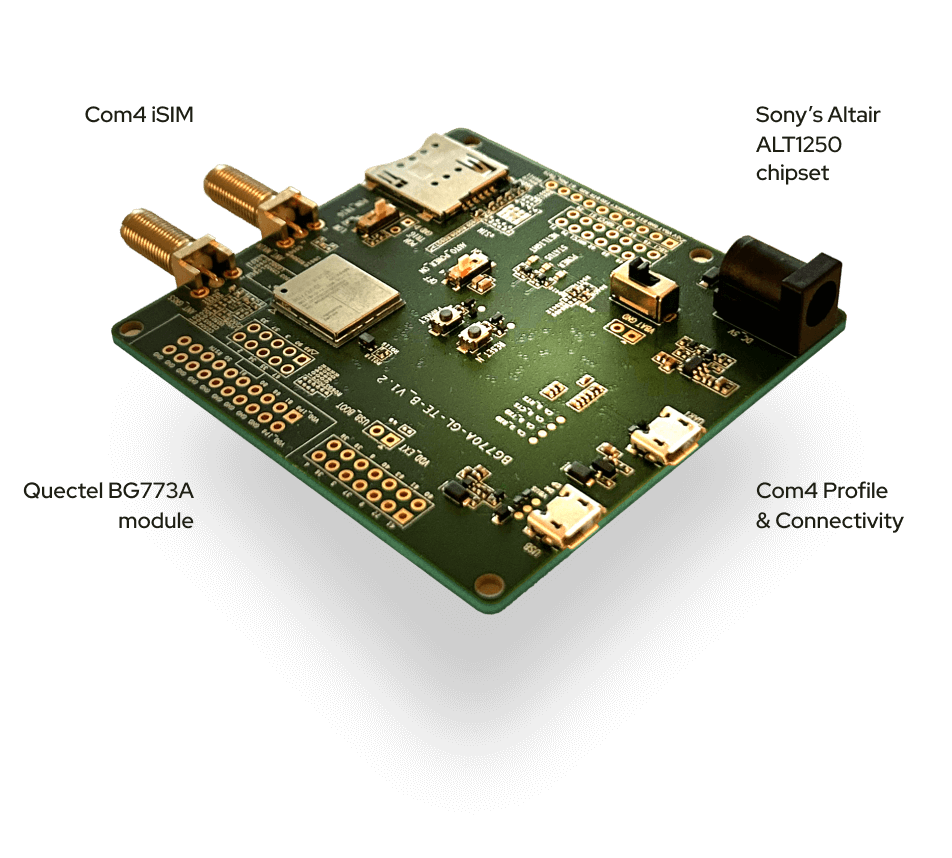
Com4 IoT test kit with SIM cards for testing in your own devices

Test it with your own devices

The fastest way to judge a platform is to use it. Com4's free IoT test kit gives you up to five SIMs with data for 60 days, managed in Polaris CMP, so your team can try activation, alerts and the API on real hardware before committing.

Frequently asked questions

What is LTE-M?

LTE-M (also called Cat-M1 or LTE Cat-M) is a low-power wide-area cellular standard built on LTE. It supports up to about 1 Mbps downlink and 1 Mbps uplink in half-duplex mode, with full tower-to-tower handover, VoLTE voice, and latency as low as 10 milliseconds. Think of it as a stripped-down LTE connection tuned for battery-powered devices that still need to move or talk.

What is NB-IoT?

NB-IoT (Narrowband IoT, Cat-NB1/NB2) is a parallel 3GPP standard that uses a 200 kHz narrow carrier. It delivers roughly 60–250 kbps and no voice, but reaches about 20 dB deeper into basements, walls, and underground vaults than regular LTE. It is built for stationary devices that send small payloads a few times a day for ten years on a single battery.

What are the main differences between LTE-M and NB-IoT?

LTE-M gives you higher throughput, lower latency, voice, and true handover. NB-IoT gives you deeper coverage, longer battery life, and a lower module cost. LTE-M behaves like a thin LTE pipe; NB-IoT behaves like a rugged telemetry channel.

When should I use LTE-M?

Pick LTE-M when the device moves, talks, or needs near-real-time data. Typical fits: fleet and asset trackers, wearables with voice or image stills, medical alarms, EV charging controllers, POS terminals in food trucks, lone-worker devices, and anything that sends bursts larger than about 10 KB.

When should I use NB-IoT?

Pick NB-IoT when the device is stationary, sends tiny payloads, and lives on a battery for years. Typical fits: smart water and electricity meters, parking sensors, environmental and agricultural sensors, smoke detectors, pipeline pressure sensors, and street lighting controllers.

Which has better coverage, LTE-M or NB-IoT?

NB-IoT has better in-building and underground coverage — around +20 dB link budget over regular LTE, versus +15 dB for LTE-M. Outdoors, under open sky, both work on the same towers. In Norway, Sweden, and most of Western Europe, both are available on all major networks.

Which has longer battery life?

NB-IoT wins on battery life for stationary, infrequent reporting: 10+ years on a C-size lithium cell is realistic for a meter that sends once a day. LTE-M can also hit multi-year battery life using PSM and eDRX, but 2–5 years is a more honest expectation for similar duty cycles.

Does LTE-M or NB-IoT support voice?

LTE-M supports voice via VoLTE. NB-IoT does not support voice at all. If a device needs a speaker and microphone — alarms with two-way audio, lone-worker call buttons, elevator phones — LTE-M is the only option of the two.

Which supports mobility (moving devices)?

LTE-M supports true tower-to-tower handover, so a device in a moving vehicle stays connected without dropping. NB-IoT supports cell reselection only (the device reconnects when it stops). Any device that moves at road speed and needs a live link needs LTE-M.

What are the typical data rates?

LTE-M Cat-M1 half-duplex: roughly 300 kbps–1 Mbps in practice. Cat-M1 full-duplex: up to 1 Mbps both ways. NB-IoT Cat-NB1: 20–60 kbps. Cat-NB2: up to 125 kbps uplink, 60 kbps downlink. For reference, a daily meter reading is well under 1 KB; a firmware image is typically 100 KB to several MB.

What are the latency differences?

LTE-M: roughly 50–150 ms round-trip in normal use, down to ~10 ms with optimized carriers. NB-IoT: typically 1.6–10 seconds, and up to tens of seconds when the device is in deep sleep. If a user is pressing a button and waiting for a response, that is LTE-M territory.

How does roaming work with LTE-M vs NB-IoT?

LTE-M roaming is now broadly supported across Europe, North America, and Japan on most Tier-1 networks, and continues to expand. NB-IoT roaming is more fragmented: within the EU it is improving, but coverage outside Europe (especially the US and parts of Asia) is still patchy. For devices that cross borders, LTE-M is the lower-risk default today.

Can I use both LTE-M and NB-IoT in the same device?

Yes. Most modern modules (u-blox SARA-R5, Quectel BG77, Sierra HL78xx, Nordic nRF9160/9161, and others) support both LTE-M and NB-IoT in a single part, with fallback to 2G on some SKUs. A multi-mode SIM profile plus a module that can choose the radio at runtime is the standard pattern for anything shipping to multiple countries.

Which one should replace 2G and 3G?

It depends on what the 2G device was doing. Alarm panels, trackers, elevator phones, and POS terminals with voice or near-real-time traffic migrate to LTE-M. Meters, parking sensors, and once-a-day telemetry migrate to NB-IoT. In both cases, plan for 2G sunset dates — Norway 2025, Sweden 2027, Germany 2028 — and specify modules that run on both of the new technologies to keep options open.

What about 5G? Will LTE-M and NB-IoT be retired?

No. 3GPP has committed to supporting LTE-M and NB-IoT inside the 5G RAN; they are the 5G massive-IoT standards. Operators will carry them forward as "5G mMTC" even after they switch off 4G mid-bands. A device certified today on LTE-M or NB-IoT is on a long runway — plan for 10+ years of service life.

Men in meeting focus

See Polaris CMP in action

Book a 30-minute walkthrough with a Com4 connectivity specialist. Bring your current setup and we will show how it would look in Polaris CMP.