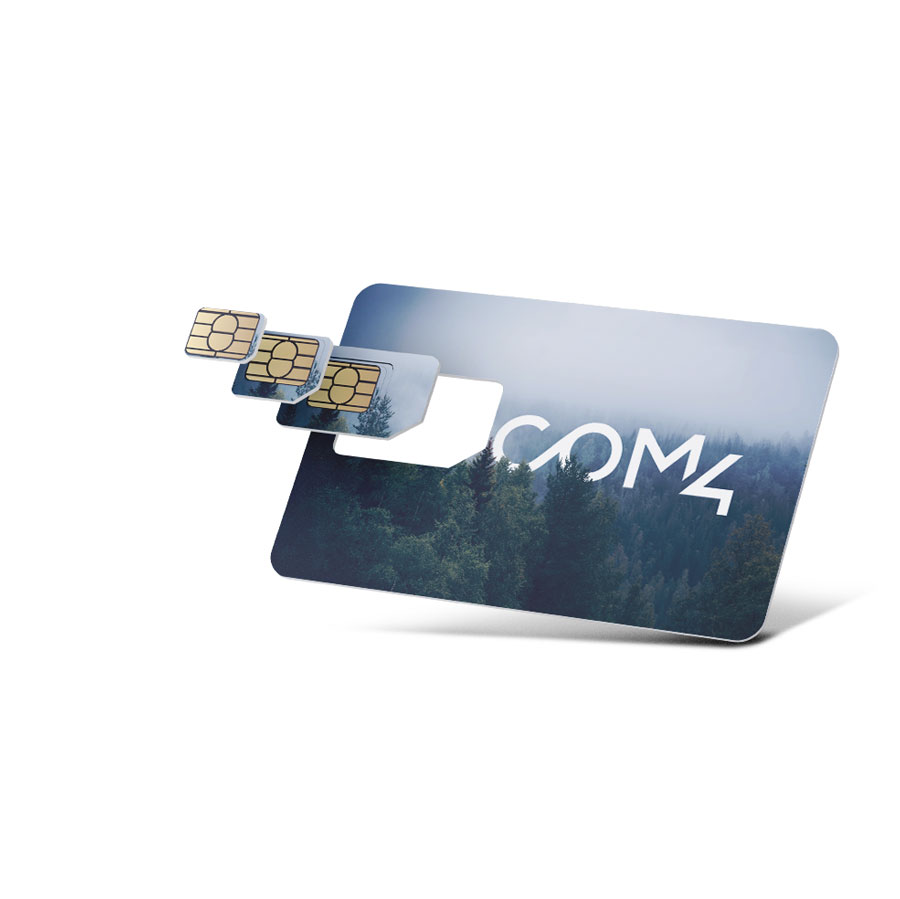
The best eUICC and SGP.32 IoT providers in 2026 are the ones that can ship certified SGP.32 SIMs today, let you choose or change the eSIM IoT Manager (eIM), offer useful IoT profiles in your markets, and manage SGP.32 SIMs in the same platform as the rest of your fleet. Providers with commercial SGP.32 offers include Com4, Telenor IoT, Tele2 IoT, Onomondo and Soracom. Com4's SGP.32 eSIMs are available now, alongside multi-network SIMs on 750+ networks in 190+ countries and the Polaris connectivity management platform.
For years, eUICC for IoT promised more than it delivered. The older SGP.02 standard made every operator integration a project, so most companies stayed with roaming or multi-IMSI SIMs. SGP.32, the GSMA eSIM IoT standard, changes that. It was built for devices without a screen or user, and it makes switching IoT profiles over the air a standard operation instead of a custom integration.
2026 is the year SGP.32 became something you can order. That also means a crowded market, with providers at very different stages. This guide explains what to check and compares the providers you are most likely to meet. We're Com4, so we've put ourselves first. Everything we say about other providers comes from their own public pages and press releases, checked in November 2026.

SGP.32 in one minute
SGP.32 splits eSIM management into two parts. The eIM (eSIM IoT Manager) sits in the cloud and tells a fleet which profiles to download, enable or delete. The IPA (IoT Profile Assistant) carries out those commands, either in the device (IPAd) or inside the eUICC itself (IPAe). Because the standard defines how these parts talk to each other, you are no longer locked into one provider's integration. SGP.32 is about switching IoT profiles over the air. It is not about moving from one network generation to another. For the basics, read is eUICC the best choice for connected devices? and our SGP.32 eSIM page.
What to look for in an SGP.32 eSIM provider
- Certified SGP.32 SIMs, available now. Not a roadmap, not SGP.02 with a new label. Ask for delivery dates and certification.
- Freedom over the eIM. Who runs it, and can you move to another eIM later? This decides how real your freedom to switch is.
- Where the IPA runs. An IPA inside the eUICC (IPAe) means no firmware changes. An IPA in the device (IPAd) needs module support.
- Profiles that matter in your markets. The value of SGP.32 depends on which IoT profiles you can actually download, especially in markets with permanent-roaming rules.
- Form factors for your hardware. Removable cards for retrofits, soldered MFF2 chips for sealed or rugged devices.
- One platform for the whole fleet. SGP.32 SIMs should sit next to your existing SIMs, not in a separate tool.
- Coverage on day one. A strong first profile, ideally multi-network, means the device works everywhere before you switch anything.
eUICC and SGP.32 IoT providers in 2026
1. Com4
Com4 is a Nordic IoT connectivity provider and part of Wireless Logic. Com4's SGP.32 eSIMs are available for sale now. They sit alongside Com4's multi-network SIMs, with access to 750+ networks in 190+ countries, so devices are covered from day one and can switch IoT profiles over the air later. Com4 SIMs are managed in Polaris, Com4's connectivity management platform, and traffic runs through Com4's own mobile core based on Nokia 5G SA. Com4 also offers satellite NTN for devices outside cellular coverage. Read more about Com4 SGP.32 eSIM.
Good fit for: Companies with long-lived devices in several countries who want SGP.32 and multi-network coverage from one provider.
Worth checking: Com4's support team works from 08:00 to 16:00 on all business days.
2. Telenor IoT
Telenor IoT announced commercial availability of standardised SGP.32 SIMs in February 2026, with deliveries from 17 April 2026. Its first SGP.32 customer, the Swedish public transport display maker Axentia, deployed them in May 2026. Telenor IoT says it has roaming agreements with 500+ networks in 200 countries.
Good fit for: Enterprises already working with Telenor that want SGP.32 from a large operator group.
Worth checking: Which eIM options are available and which third-party IoT profiles you can add.
3. Tele2 IoT
Tele2 IoT launched a commercial end-to-end SGP.32 solution with IDEMIA Secure Transactions and Cisco in March 2026, combining IDEMIA's eSIM ecosystem, Cisco's Mobility Services Platform with SGP.32 orchestration and Tele2's connectivity with 670+ network partners.
Good fit for: Large international programmes, such as automotive, that want a packaged SGP.32 setup without making their own eIM decisions.
Worth checking: How easily you could move the fleet to another eIM or provider later.
4. Onomondo
Onomondo partnered with Kigen in June 2026 to offer SGP.32 eSIMs on its own core network, and in September 2026 launched its own SGP.32 eIM, which can also be used with connectivity from other providers. Onomondo offers non-steered connectivity on 680+ networks in 180+ countries.
Good fit for: Product companies that want a developer-led SGP.32 platform and an eIM that isn't tied to one connectivity provider.
Worth checking: Support model and local presence for enterprise rollouts.
5. Soracom
Soracom made its SGP.32-compatible IoT eSIMs and its Connectivity Hypervisor orchestration generally available in July 2026, in card and chip form factors. Soracom says broader availability of third-party operator profiles depends on partner operators completing their integrations.
Good fit for: Teams that want to orchestrate several operators' profiles on one eSIM from a cloud platform.
Worth checking: Which third-party IoT profiles are available in your markets today.
6. Telia
Telia has offered Telia Global IoT Connectivity on a Telia eUICC with pre-integrated operators since 2020, and has published guidance on SGP.32 and its expected commercial ramp-up from 2026.
Good fit for: Companies that want a Nordic operator's eSIM ecosystem.
Worth checking: Whether Telia's offer in your market is SGP.32 or the older SGP.02 standard, and the delivery date.
SGP.32 providers compared
| SGP.32 status (Nov 2026) | eIM | Base coverage | Good fit for | |
| Com4 | Available now | Through Com4 | Multi-network, 750+ networks | SGP.32 plus multi-network from one provider |
| Telenor IoT | Delivering since April 2026 | Telenor IoT | 500+ roaming networks | Existing Telenor customers |
| Tele2 IoT | Commercial since March 2026 | With IDEMIA and Cisco | 670+ network partners | Packaged global programmes |
| Onomondo | Available, own eIM since Sept 2026 | Own, usable with other providers | Non-steered, 680+ networks | Developer-led product companies |
| Soracom | Generally available since July 2026 | Connectivity Hypervisor | Soracom profile plus partners | Multi-operator orchestration |
| Telia | Check with Telia | Check with Telia | Telia eSIM ecosystem | Nordic operator eSIM |
Facts about other providers come from their own websites and press releases, checked in November 2026. SGP.32 offers are changing fast, so confirm the details with each provider.
Questions to ask before you choose
- Is the eUICC certified to SGP.32, and when can you deliver at volume?
- Where does the IPA run, in the eUICC or in my module?
- Who runs the eIM, and can I move to another eIM later?
- Which IoT profiles can I download in my markets today?
- Which form factors do you offer: removable card, MFF2 or both?
- How are profile switches tested, monitored and rolled back?
- Are SGP.32 SIMs managed in the same platform as my other SIMs?
- What coverage does the first profile give me on day one?
- What does each profile download and switch cost?
The short version
SGP.32 is real in 2026, and several providers can ship it. The differences are in the details: whether you control the eIM, which IoT profiles you can use, and whether SGP.32 SIMs live in the same platform as the rest of your fleet. Choose the provider that keeps your future options open, not the one with the loudest launch.
The best eSIM is the one that leaves your next decision open.
If you're designing a device that will stay in the field for years, Com4 can help you decide between SGP.32, multi-IMSI or both, and test them on your hardware. Start with a free IoT test kit or book a talk with our team.