
.jpg?width=720&height=720&name=cctv-2-square%20(3).jpg)
Alarm systems play a critical role in protecting homes, businesses, and infrastructure. At the same time, requirements for security solutions have evolved. Today, users expect real-time alerts, remote access, high reliability, and seamless integration with other digital services.
This shift is driving the adoption of IoT-enabled smart alarm systems, where connected devices communicate continuously over secure networks. By using cellular IoT connectivity, alarm systems become more resilient, scalable, and future-proof than traditional solutions.
At Com4, we support security and alarm providers deploying connected solutions globally. In this article, we explore how IoT connectivity enhances modern alarm systems, which devices are typically involved, and how companies like Intellity use cellular IoT to deliver reliable, professional security services.
What is a smart alarm system?
A smart alarm system consists of connected sensors, cameras, access control devices, and a central management platform. Instead of operating in isolation, devices continuously transmit data to monitoring platforms where events can be analyzed and acted upon in real time.
Unlike WiFi-based systems, cellular-connected alarm systems operate independently of local internet infrastructure. This ensures continuous operation during broadband outages, power failures, or in locations without fixed connectivity. For professional security deployments, this level of reliability is essential.
 Examples of IoT devices used in modern alarm systems
Modern alarm systems are built as ecosystems of devices, each contributing to detection, verification, and response.
Sensors and detectors
Sensors form the backbone of any alarm system and are designed for long-term, low-power operation. Common sensor types include motion detectors, door and window contacts, smoke and heat detectors, and sensors for water leaks or gas detection. Many sensors today include basic intelligence to reduce false alarms, such as pet-friendly motion detection or configurable thresholds for environmental monitoring.
Manufacturers such as Bosch and Honeywell offer professional-grade sensor portfolios focused on reliability, long service life, and stable performance in demanding environments.
Surveillance cameras
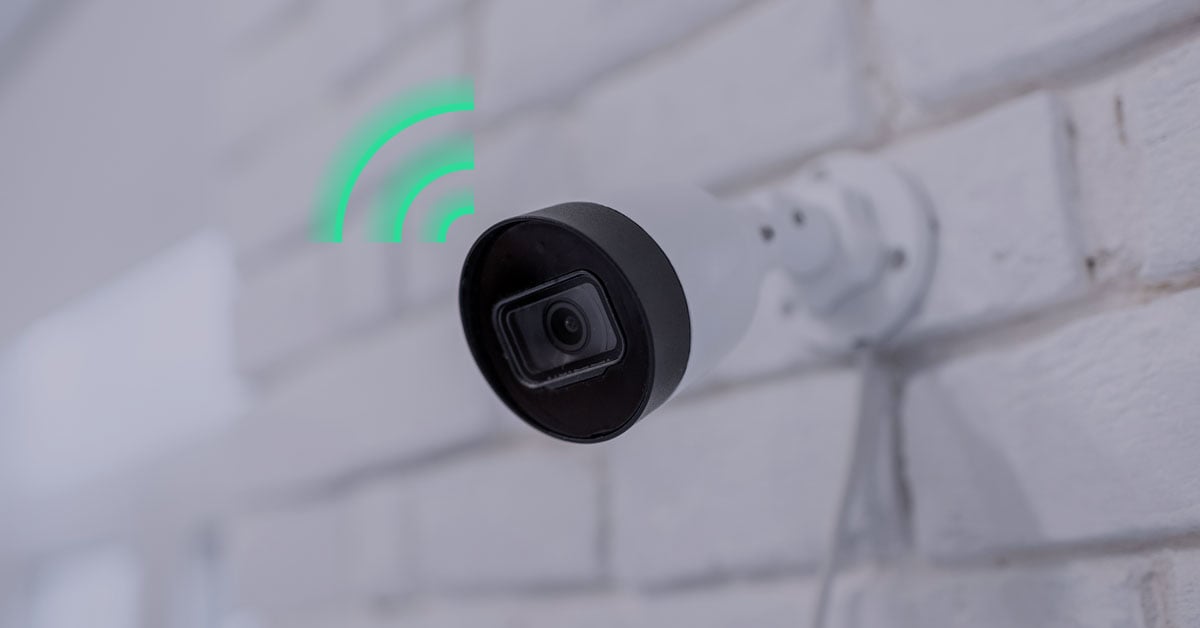
Surveillance cameras add visual verification and situational awareness to alarm systems. Modern cameras typically support high-definition video, night vision, motion or object detection, and secure video streaming. In professional alarm setups, cameras are often used for remote alarm verification, enabling monitoring centers to assess incidents before dispatching security personnel.
Suppliers such as Axis Communications and Hikvision are widely used in commercial and multi-dwelling deployments.
Smart locks and access control
Access control is increasingly integrated with alarm systems to create unified security solutions. Connected locks, intercoms, and access control devices allow remote management of entry points, access logs, and user permissions. When combined with alarms, access systems can automatically trigger alerts, lock down areas, or grant temporary access based on predefined rules.
Real-time security and instant alerts
Challenge
Traditional alarm systems often rely on limited sensor data and manual verification, which can delay response and reduce overall effectiveness.
Solution
IoT-enabled alarm systems continuously transmit data from multiple devices to a central platform. When an event occurs, alerts are delivered instantly to homeowners, security operators, or monitoring centers. Advanced analytics and AI can further improve accuracy by identifying abnormal patterns and reducing false alarms. This enables faster response times and more effective incident handling.
Remote monitoring and control
Challenge
Managing security systems across multiple locations becomes difficult without remote access.
Solution
IoT connectivity enables full remote monitoring and control through secure web portals and mobile applications. Users can arm or disarm systems, manage access rights, view live camera feeds, and receive alerts regardless of location.
This capability is particularly valuable for property managers, retail chains, commercial buildings, and distributed infrastructure.
Energy efficiency and lower operational costs
Challenge
Always-on alarm systems can be energy-intensive and costly to maintain, especially in battery-powered deployments.
Solution
Modern IoT alarm devices are designed to transmit small amounts of data efficiently and only when necessary. Combined with low-power connectivity, this significantly extends battery life, reduces maintenance visits, and lowers total cost of ownership.
Integration with smart buildings and automation
Challenge
Standalone alarm systems provide limited value when isolated from other building systems.
Solution
IoT-connected alarm systems integrate with smart building platforms, lighting, HVAC, and automation systems. This enables coordinated responses, such as activating lighting during intrusion events, controlling ventilation during fire alarms, or combining safety and security workflows in a single platform.
.jpg?width=1200&height=675&name=cctv-2%20(4).jpg)
Choosing the right IoT network for alarm systems
Different alarm components have different connectivity requirements, which is why professional solutions often combine multiple cellular technologies:
- NB-IoT for simple, battery-powered sensors such as water leak or smoke detectors.
- LTE-M for mobile or latency-sensitive alarm components.
- 4G LTE for access control systems and higher data requirements.
- 5G for advanced video surveillance and analytics.
Selecting the right network is critical for long-term reliability, scalability, and compliance, particularly as legacy 2G networks are phased out across Europe.
Customer case: Construction site security with Intellity
Intellity provides smart security solutions for demanding environments such as construction sites, where theft, vandalism, and unauthorized access are recurring challenges.
Using intelligent cameras combined with real-time alarm handling, Intellity enables rapid detection and response to incidents. With Com4’s mobile network, video and alarm data are transmitted securely and independently of local infrastructure. This ensures reliable operation even on temporary or remote sites.
The solution allows security operators to verify incidents immediately, deter intruders through direct communication, and dispatch security personnel or police when needed. As a result, construction companies benefit from reduced losses, fewer disruptions, and safer worksites.
How Com4 supports IoT-enabled alarm systems
Com4 provides managed IoT connectivity designed for professional security and alarm deployments. Our offering includes:
- Secure IoT SIM cards with multi-network coverage.
- Support for NB-IoT, LTE-M, 4G, and 5G.
- Centralized SIM and connectivity management platform.
- Global coverage for cross-border deployments.
- Expert advisory on network selection and migration from legacy technologies.
With upcoming 2G shutdowns across Europe, modernizing alarm connectivity is no longer optional. Com4 helps alarm providers transition safely while ensuring reliability, scalability, and long-term operation.
Smart alarm systems powered by IoT connectivity are redefining security. Real-time alerts, remote access, energy efficiency, and integration with smart buildings are now baseline expectations rather than optional features.
By combining the right devices with secure cellular IoT connectivity, alarm system providers can deliver resilient and future-ready security solutions. Companies like Intellity demonstrate how this approach enables professional alarm services at scale. If you are developing or upgrading connected alarm systems, Com4 is your trusted partner for secure IoT connectivity.




-1.webp)