Dimensions Agri Technologies logo featuring the company name in modern, bold typography representing innovation in agricultural technology.


With Com4 IoT connectivity and AI, farmers achieve higher yields using fewer chemicals

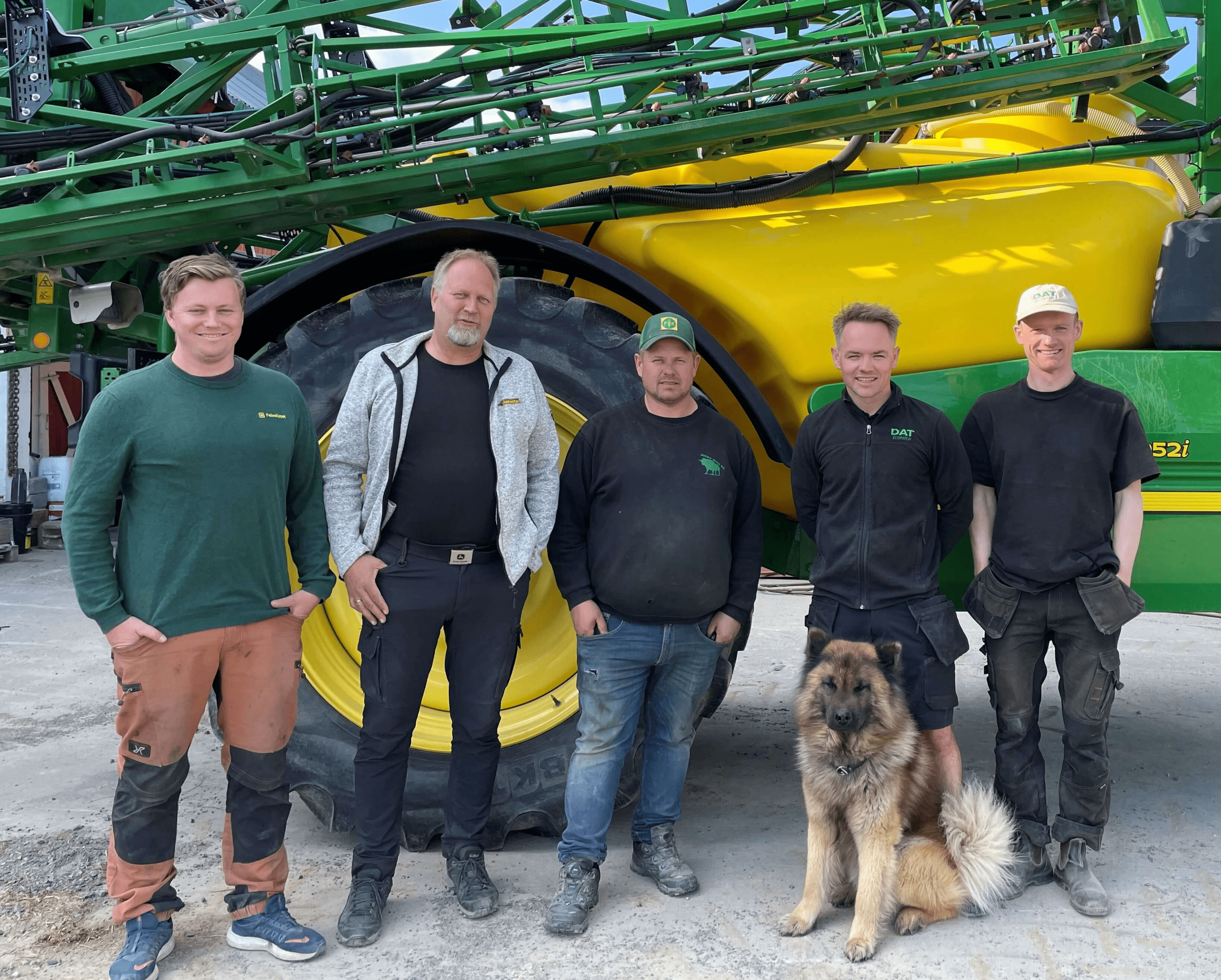
The Dimensions Agri Technologies team pictured together, representing innovation and collaboration in agricultural technology.

Dimensions Agri Technologies (DAT) has developed a sensor technology that transforms how farmers combat weeds. By combining artificial intelligence, real-time analysis, and IoT connectivity from Com4, spraying takes place only where weeds are actually present – not across the entire field. The result is lower costs, higher yields, and major environmental benefits.

For farmers, this means improved profitability and more precise agronomy. For the environment, it means reduced chemical use and less strain on soil and waterways. In short: yields go up, costs go down, and the negative footprint from crop protection chemicals is cut in half.

About Dimensions Agri Technologies

CEO Kristian Kaurstad Morthen leads a team of five at Dimensions Agri Technologies office in Ski, near Oslo. DAT brings together several co-owners who contribute with capital, expertise, and hands-on support. Their technology is the result of over ten years of development alongside Norwegian farmers and research institutes NIBIO and SINTEF, in partnership with the mechatronics company ADIGO Mekatronikk.

DAT has developed and tested a pioneering solution for precision weed control in cereal and oilseed rape. The company is based in Ski, employs five people, and is on track to reach nearly NOK 20 million in revenue in 2025, of which NOK 15 million comes from exports.

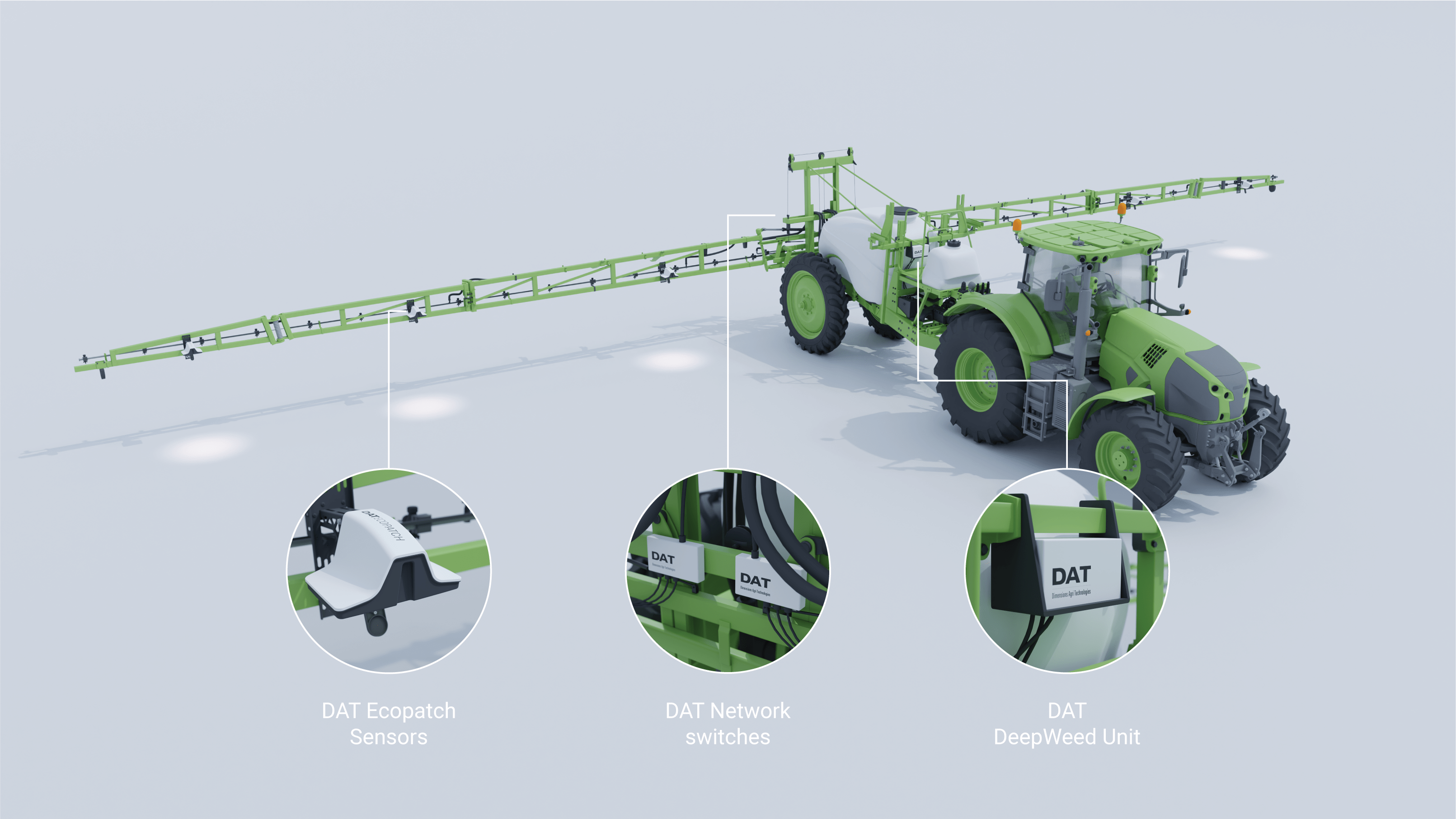
At the core of the technology is the EcoPatch sensor, an AI based system mounted on existing sprayers via ISOBUS. The sensor distinguishes in real time between broadleaf weeds, grass weeds, and species such as scentless mayweed. This enables spraying only on the patches where weeds actually grow. EcoPatch is already in use in several European markets.

Through close collaboration with NIBIO and ten years of testing on Norwegian farms, the technology is scientifically grounded, practically validated, and ready for scaling. Com4’s connectivity solutions ensure reliable transmission all the way out to farms around the world.

Challenges

Weeds spread either through wind or via root systems, forming islands – patches – across the field. Traditional spraying methods do not account for this; the entire area is treated evenly, even when large parts of the crop do not need chemical exposure. This leads to high consumption of crop protection chemicals, unnecessary runoff, and stress during a critical growth phase for the grain.

There is also wide variation in weed types across a field. Grass weeds and broadleaf weeds respond differently to treatment, yet are often sprayed with the same dosage and products. Farmers simply lack the information and tools needed to treat the field with the precision nature demands.

Spraying also has practical limitations: every refill takes time. Unnecessary use of chemicals and water means more stops, more logistics, and higher costs.

Technical challenges must also be solved: field data must be transferred to the cloud for analysis, giving farmers decision-ready insights for their own land – via mobile internet. This requires strong signal coverage, low latency, and robust technical support to make everything work in practice.

Dimensions Agri Technologies sensor system installed on a tractor, using AI and IoT connectivity to support precision weed control in the field.

Solutions

DAT EcoPatch solves these challenges by giving farmers real time insights into what is actually happening in the field. Using artificial intelligence, the sensor identifies multiple types of weeds and controls the sprayer so that spraying takes place only on weed patches and nowhere else.

The AI model identifies grass weeds, broadleaf weeds, and scentless mayweed in milliseconds before the system calculates precise treatment points.

Crops that are not exposed to chemicals grow faster and stronger. Aerial images from several field trials show that unsprayed areas are visibly greener and more vigorous, explaining the yield increase at harvest.

EcoPatch is also a data tool: every pass generates detailed weed maps. The data is transmitted via Com4 SIM cards to the cloud (AWS), where farmers can study the maps and make better decisions about spraying, soil management, and crop choices. The SIM card also enables updates with new models and algorithms.

Industry partner Kverneland contributes to scaling and ensures the technology works seamlessly on sprayers from one of Europe’s leading agricultural equipment manufacturers. Com4 SIM cards work equally well abroad, and Com4 has helped develop a complete connectivity solution. Continuous cloud connection is central to the value that DAT EcoPatch provides to farmers.
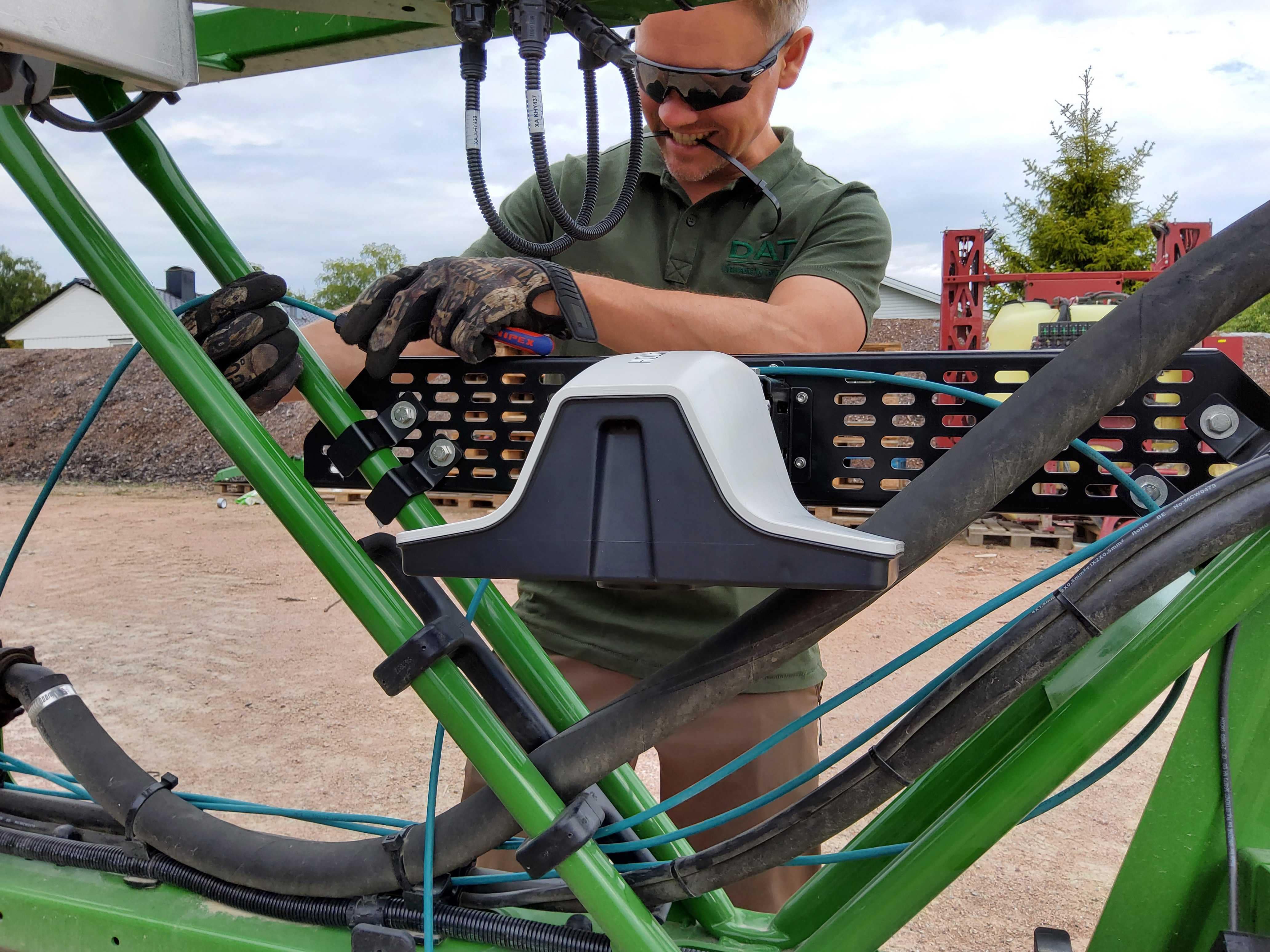
An engineer from Dimensions Agri Technologies installing an IoT sensor equipped with AI, cloud connectivity, and Com4 IoT SIM cards to combat weed growth in the field

Outcome

DAT documents clear gains from both field trials and customer experience:

Lower costs

EcoPatch reduces chemical use by an average of 45 percent. Farmers can almost double their spraying time before the tank needs refilling – a major advantage in busy seasons.

Higher yields

NIBIO-documented trials show a 7–8 percent yield increase in wheat because the crop is not set back during a critical growth phase.

Stronger profitability

For a farmer with 300–400 hectares, the investment typically pays for itself in 3–4 years thanks to reduced chemical use, higher yields, and improved operational efficiency.

Better agronomy

Weeds are controlled precisely and gently, resistance development slows, and farmers gain access to data that previously did not exist.

Environmental benefits

Lower chemical use reduces runoff into streams, soil, and surrounding nature. Chemical consumption goes down while soil and plants are better protected.

Contribution to UN Sustainable Development Goals

SDG 2 – Sustainable food production

Precision farming that increases yields without increasing chemical use.

SDG 3 – Good health

Reduced chemical exposure for both people and nature.

SDG 6 – Clean water

Significantly lower risk of runoff into streams and watercourses.

SDG 8 – Decent work and economic growth

Lower costs, higher productivity, and improved operational efficiency.

SDG 9 – Industry, innovation and infrastructure

Norwegian developed AI technology retrofitted on existing sprayers.

SDG 12 – Responsible consumption and production

Fewer inputs, less waste, and more targeted use of resources.

SDG 13 – Climate action

Lower CO2 footprint from chemicals and increased carbon sequestration in crops.

SDG 15 – Life on land

Protects soil health, reduces chemical load, and supports biodiversity.
Chemical Reduction
45 %
45 percent reduction in chemical use, based on average field results.
Yield Increase
8 %
5 to 8 percent yield increase in wheat, documented by NIBIO.
Revenue Growth
17.5 M
NOK 17.5 million in revenue so far in 2025.
Deployment Across Europe
60 M+
60 EcoPatch systems in use across Europe.
Quote
“Artificial intelligence gives us insight we have never had in crop protection before. This demands fast and reliable cloud connectivity, even far out in the field. Data must flow continuously for analysis, and software must update wherever the tractor is. With low latency, high speed, and stable services, Com4 delivers the dependable connection farmers need and supports a more sustainable future.”

Northern-light-with-circles-1

Start your journey today

Future-proof your IoT infrastructure with our cutting-edge solutions. Com4 is your True Partner for IoT Connectivity