
Best multi-network IoT SIMs for Europe in 2026
The short answer: for devices spread across Europe, choose a SIM that can use more than one network in each country and that you can re-profile over the air.
A device that relies on one roaming partner per country goes offline when that network does. Multi-network SIMs give each device access to several operators, so it can switch to the strongest one. This page compares the European providers that IoT teams shortlist most often, on the criteria that decide uptime and long-term cost. For the technical background, read how to compare IoT SIMs for Europe.
Key takeaways
- Pick providers that give you more than one network in each country you deploy in, not just a big global network count.
- Check LTE-M and NB-IoT availability country by country. NB-IoT roaming is still more limited than LTE-M.
- Prefer eUICC and SGP.32-ready SIMs, so you can change networks over the air during a 10 to 15-year device life.
How we compared providers
Networks per country
Total network counts say little. What matters is how many operators a device can use in each country you deploy in.
LTE-M and NB-IoT
With 2G and 3G closing, check that low-power technologies work where you need them, including when roaming.
Platform and API
One portal and API for every SIM, with lifecycle automation, usage limits and alerts.
Core network and security
Who runs the core network decides how traffic is routed and which options exist, such as private APN.
Built for long device life
eSIM support under GSMA SGP.32 lets you change networks over the air over a 10 to 15-year device life.
Multi-network IoT SIM providers for Europe at a glance
| Provider | Approach | Stated coverage | LTE-M / NB-IoT | Platform | Good fit for |
|---|---|---|---|---|---|
| Com4 (Oslo) | Multi-IMSI and eUICC SIMs, non-steered, own mobile core on Nokia 5G SA, 3GPP Rel-17 satellite NTN on the same SIM | 750+ networks, 190+ countries | Both supported | Polaris CMP, REST API (60+ endpoints), SGP.32-ready | Multi-country fleets that want several networks per country, a Nordic partner and satellite as an option |
| emnify (Würzburg) | Global IoT MVNO with permanent roaming agreements | 540+ networks, 180+ countries, 2–3 networks per country | Both; emnify notes NB-IoT roaming is still limited | emnify portal and API, SGP.32 bootstrap connectivity | Cloud-first device makers who want a self-serve platform |
| Onomondo (Copenhagen) | Own core integrated directly with local radio networks | 180+ countries, 30 in Europe including all Nordic countries | Both supported | API, webhooks, signalling logs and network traces | Engineering teams that want deep network diagnostics |
| 1NCE (Cologne) | Flat-rate global IoT MVNO | 170+ countries; LTE-M/NB-IoT in 100+ | Both supported | 1NCE portal, API, data streamer | Low-data devices that suit a fixed 10-year data allowance |
| Tele2 IoT (Sweden) | Mobile operator IoT unit | 670+ networks, 190+ countries | Not verified | Cisco IoT Control Center, eUICC | Enterprises that prefer an operator-led contract |
| Telenor IoT (Sweden) | Mobile operator IoT unit, one SIM, contract and portal | Around 200 countries | Not verified | Telenor IoT portal | Large enterprises already working with Telenor |
Provider details are taken from each provider's own public website and price lists, checked November 2026. Offers change, so confirm current terms with each provider. Com4 is one of the providers listed.
Provider notes
Com4
Com4's SIMs hold several network identities and connect to the strongest available network, without steering. Com4 runs its own mobile core on Nokia 5G SA, and every SIM is managed in Polaris CMP. SIMs are SGP.32-ready, so profiles can be changed over the air. Where cellular stops, the same SIM can fall back to satellite NTN built on 3GPP Release 17, managed in Polaris CMP. You pay only for active SIMs, with no minimum contract term.
emnify
A German IoT MVNO with a strong self-serve platform and wide roaming footprint, typically two to three networks per country. Its own coverage page says NB-IoT roaming is still limited, so check your countries.
Onomondo
A Danish provider that integrates its core directly with local radio networks instead of using roaming agreements, with detailed network diagnostics for engineers. Coverage in Europe spans 30 countries.
1NCE
Best known for a one-off flat price for a 10-year data allowance. A good fit for very low-data devices. For heavier data use, extra services or hands-on support, look at the full price list. See our 1NCE alternatives comparison.
Tele2 IoT and Telenor IoT
The IoT units of two large Nordic operators. Both offer global reach through one contract and suit buyers who prefer working directly with a mobile operator.
Multi-network or single-carrier roaming SIM?
A single-carrier roaming SIM uses one home network and its roaming partners. If that partner has an outage or weak coverage, your device has nowhere to go. A multi-network SIM can use several operators in the same country. For medical devices, payment terminals, EV chargers and meters, that redundancy is usually worth it.

Check permanent roaming and network sunsets
Permanent roaming is generally allowed in the EU, but operators can apply fair-use rules, and several markets outside the EU restrict it. 2G and 3G networks are also closing across Europe. A SIM that supports LTE-M, NB-IoT and over-the-air profile changes protects you from both risks.
Test before you choose
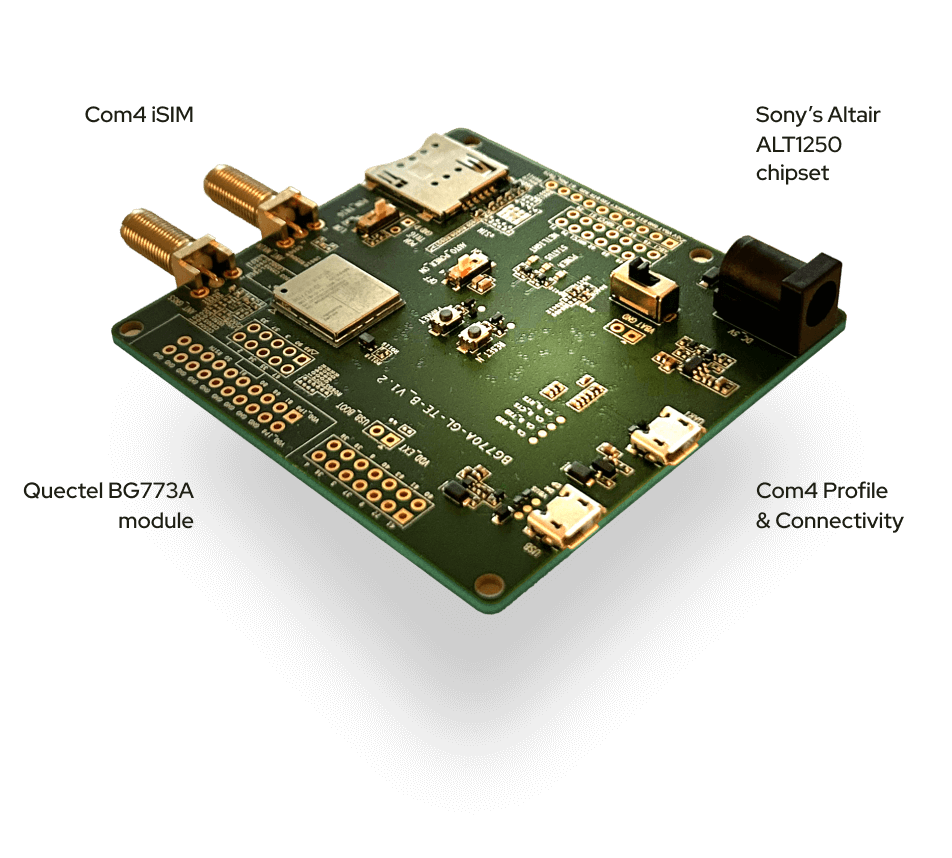
Coverage maps only go so far. Test SIMs in your own devices in the countries that matter. Com4's free test kit includes up to five SIMs with data for 60 days in the EU.
Frequently asked questions
What is the best multi-network IoT SIM for Europe?
It depends on your countries, data volumes and how much control you need. Look for several networks per country, LTE-M and NB-IoT support, a management platform with a full API, and eSIM support under SGP.32. Com4, emnify, Onomondo, 1NCE, Tele2 IoT and Telenor IoT are commonly shortlisted.
What is a multi-network IoT SIM?
A SIM that can connect to more than one mobile network in a country, either through multiple network identities (multi-IMSI) or several roaming agreements, so a device can move to another network if one fails.
Is permanent roaming allowed for IoT devices in the EU?
Generally yes, under EU roaming rules, but operators can apply fair-use policies. Some countries outside the EU restrict permanent roaming, so a SIM that can switch to a local profile over the air reduces risk.
Do multi-network SIMs support LTE-M and NB-IoT?
Most do, but availability varies by country and NB-IoT roaming is still more limited than LTE-M. Ask each provider for the networks and technologies available in every country you deploy in.
How many networks does Com4 give access to?
Com4 SIMs can access 750+ networks in 190+ countries, managed in one platform, Polaris CMP.
Resources
Stay Connected with the Latest in IoT Connectivity Solutions

How to Choose a Secure IoT SIM for Mission-Critical Applications
Short answer: A secure IoT SIM for mission-critical applications needs six things: network...
Is eUICC the Best Choice for Connected Devices?
Short answer: eUICC is the best choice for connected devices that will be sold in several...

IoT SIM Regulations: The Rules That Apply to Connected Devices
Short answer: Yes, IoT SIM cards are regulated, and the rules depend on where the device is used....

Talk to an IoT connectivity expert
Tell us where your devices will run, and we will show you which networks they can use in each country.