But in real-world IoT deployments, the question is increasingly less about LoRaWAN vs cellular and more about how to design the right connectivity architecture for the full lifecycle of the device.
At Com4, we see many customers who started with LoRaWAN moving toward cellular IoT — either as the primary connectivity technology, as a fallback, or as part of a hybrid architecture. The reason is not that LoRaWAN is “wrong”. In many use cases, it is a very good technology. The reason is that IoT deployments evolve. What begins as a local sensor project can quickly become a national or international rollout, with new requirements for coverage, reliability, remote management, mobility, security, firmware updates, and operational control.
LoRaWAN and cellular IoT both belong to the broader LPWAN landscape. LoRaWAN is an LPWA networking protocol designed to connect battery-operated devices to the internet across regional, national, or global networks, while LTE-M and NB-IoT are cellular LPWA technologies standardised for IoT use cases.
Why the LoRaWAN vs Cellular Debate Is Too Simple
LoRaWAN and cellular IoT are often compared as if they solve the same problem in the same way. They do not.
LoRaWAN is often attractive when devices are stationary, send small data packets, operate on battery, and are deployed in a defined area where gateway infrastructure is available or can be installed. Cellular IoT is often the better fit when devices need broader coverage, mobility, roaming, easier scaling across regions, or direct connection to managed mobile networks.
The challenge is that many IoT projects change after the first deployment.
A company may begin with environmental sensors in one facility. Then the solution expands to hundreds of sites. A smart building project may start with indoor monitoring, then require alarms, integrations, and service-level expectations. A utility or metering project may begin in one region, then need connectivity in multiple countries. A logistics solution may move from fixed sensors to mobile assets.
This is where many customers discover that the connectivity model that worked in a pilot does not always support the operational needs of a scaled deployment.
What LoRaWAN Does Well
LoRaWAN is a strong option for many low-power IoT use cases. It is designed for long-range communication, low energy consumption, and small data payloads. It can be especially useful in smart buildings, agriculture, environmental monitoring, utilities, and private sensor networks.
Key strengths include:
Low power consumption
LoRaWAN devices can operate for years on battery, depending on sensor type, transmission frequency, and network conditions.
Long range
LoRaWAN can support wide-area communication, especially in rural or open environments.
Private network control
Companies can build private LoRaWAN networks where they control gateways and local coverage.
Cost efficiency for local deployments
For large numbers of simple sensors in one defined area, LoRaWAN can be cost-effective.
Good fit for small, periodic data
Temperature, humidity, occupancy, air quality, soil conditions, meter readings, and simple status messages are common examples.
LoRaWAN is therefore not disappearing from IoT. It remains valuable. But it also has limitations that become more visible as deployments scale.
Where LoRaWAN Can Become Challenging
The first challenge is infrastructure. LoRaWAN coverage depends on gateways. If the device is outside gateway range, the data does not arrive. For private networks, someone must plan, install, operate, maintain, and secure the gateway infrastructure.
The second challenge is mobility. LoRaWAN is usually better suited for stationary or low-mobility devices. For assets moving across regions, borders, buildings, or mobile network environments, cellular IoT is often more dependable.
The third challenge is operational scalability. When a deployment grows from one site to hundreds or thousands of sites, gateway placement, troubleshooting, network maintenance, and support can become more complex.
The fourth challenge is data and device management. Many modern IoT devices need more than small periodic messages. They may need remote diagnostics, configuration updates, alarms, security updates, or firmware-over-the-air updates. Cellular IoT is often better suited when the device needs more flexible two-way communication and broader reach.
Why Many Customers Move from LoRaWAN to Cellular
At Com4, we often meet customers who began with LoRaWAN because it looked like the simplest or lowest-cost option. Over time, many move to cellular because their needs change.
The most common reasons include:
They need coverage beyond a private gateway network
A solution that works well in one building, farm, or city may need to work across many sites. Cellular IoT allows devices to connect using existing mobile infrastructure instead of depending on customer-managed gateways.
They need mobility
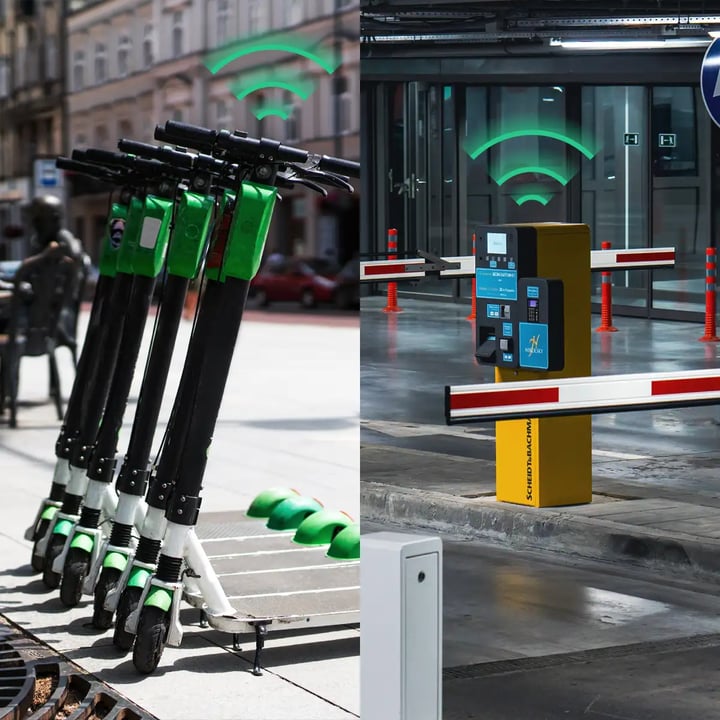
For vehicles, containers, machines, equipment, and mobile assets, LTE-M is often a better fit because it supports mobility and handover.
They need easier international scaling
When devices are deployed across countries, cellular IoT can simplify connectivity management through global IoT SIMs, roaming agreements, and one platform for monitoring and control.
They need more reliable remote operations
If a device is business-critical, the customer often needs predictable connectivity, remote troubleshooting, and secure access to device data.
They need firmware updates and lifecycle management
As devices become more advanced, connectivity must support more than sensor readings. Cellular can enable secure updates, diagnostics, and configuration changes without physical access.
They want fewer infrastructure responsibilities
Operating gateways, managing local network performance, and troubleshooting coverage gaps can become a burden. Cellular IoT shifts much of the network responsibility to established mobile infrastructure.
Cellular IoT: More Than “Traditional Mobile Data”
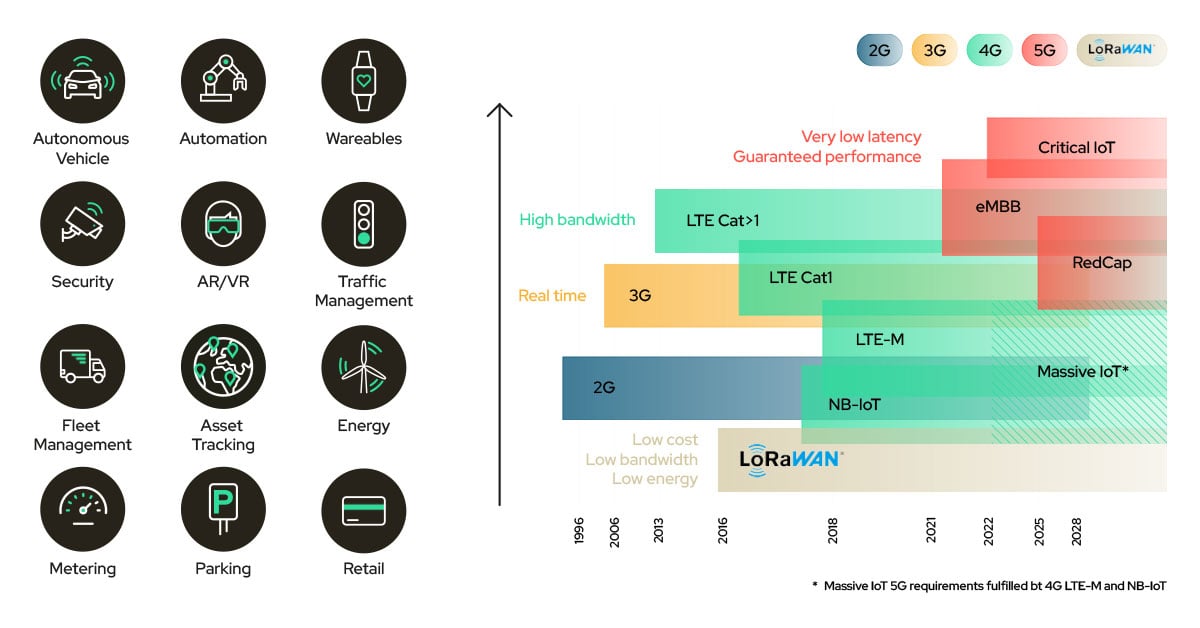
Cellular IoT is not just standard mobile broadband. Technologies such as LTE-M and NB-IoT were designed for IoT devices that need low power consumption, extended coverage, and long battery life. Both LTE-M and NB-IoT support IoT power-saving features such as PSM and eDRX, which help devices reduce energy consumption by sleeping when they are not actively communicating.
LTE-M
LTE-M is often a strong choice for IoT devices that need low power consumption, mobility, better data rates than NB-IoT, and support for roaming. It is well suited for asset tracking, alarms, payment terminals, healthcare devices, industrial equipment, and mobile IoT products.
NB-IoT
NB-IoT is designed for very low-power, low-data applications, especially stationary devices. It can be useful for smart meters, sensors, and devices located deep indoors or in hard-to-reach areas. GSMA describes NB-IoT as a 3GPP-standardised LPWA technology for a wide range of IoT devices and services.
LTE Cat 1 bis
For devices that need more bandwidth than LTE-M or NB-IoT, LTE Cat 1 bis can be a practical alternative. It supports higher data rates while still being simpler and more cost-effective than traditional high-bandwidth LTE modules.
LoRaWAN vs Cellular: A Practical Comparison
Requirement |
LoRaWAN |
LTE-M |
NB-IoT |
Best for |
Small sensor data in defined areas |
Mobile and scalable IoT |
Stationary, low-data IoT |
Network type |
Private or public LoRaWAN |
Cellular |
Cellular |
Spectrum |
Unlicensed |
Licensed |
Licensed |
Mobility |
Limited |
Strong |
Limited |
Data rate |
Low |
Medium for IoT |
Low |
Battery life |
Very strong |
Strong |
Very strong |
Coverage model |
Requires LoRaWAN gateway coverage |
Mobile network coverage |
Mobile network coverage |
Roaming |
Possible, but depends on ecosystem |
Stronger for global IoT |
More limited |
Infrastructure responsibility |
Often customer/operator managed |
Operator managed |
Operator managed |
Best use cases |
Buildings, farms, local sensors |
Asset tracking, alarms, connected products, logistics |
Metering, stationary sensors, deep indoor devices |
.jpg?width=1200&height=628&name=LoRaWAN-Chart%20(1).jpg)
The Hybrid Model: Getting the Best of Both
For some deployments, the best answer is not to replace LoRaWAN with cellular completely. The best answer is to combine them.
A hybrid architecture can use LoRaWAN for local sensor communication and cellular for backhaul, fallback, or remote access. This is especially relevant when many low-power sensors are deployed locally, but the data still needs to reach the cloud reliably.
Examples include:
Smart buildings
LoRaWAN sensors can collect data on air quality, occupancy, temperature, energy consumption, or leaks. A cellular gateway can send aggregated data securely to the cloud, reducing dependence on local IT networks.
Smart agriculture
LoRaWAN can connect many sensors across a farm, while cellular backhaul connects gateways to cloud platforms where coverage is available.
Utilities and metering
Meters can communicate locally through LoRaWAN, while cellular provides wide-area connectivity for aggregated data.
Industrial sites
Sensors can communicate locally, while cellular enables secure remote monitoring and reduces the need to connect IoT systems to corporate IT networks.
Fallback connectivity
If LoRaWAN coverage is unavailable or unstable, cellular can provide a backup path for critical data.
The Com4 Perspective: Connectivity Should Match the Business Case
The most important question is not “Which technology is best?” The better question is:
What does the device need to do today, and what will it need to do in three, five, or ten years?
A sensor that only sends a temperature reading twice a day has different needs from a mobile asset tracker. A device installed in one building has different needs from a product sold across Europe. A pilot with 50 devices has different requirements from a commercial deployment with 50,000 devices.
At Com4, we help customers assess the full connectivity picture:
- Where will the devices be deployed?
- Are they stationary or mobile?
- How often do they send data?
- How much data do they send?
- Do they need firmware updates?
- Do they need roaming?
- What battery lifetime is required?
- Who will operate the network infrastructure?
- What happens if connectivity fails?
- How will the solution scale internationally?
This is where cellular IoT often becomes the stronger long-term choice. It gives companies a managed, scalable, secure connectivity foundation that can support the entire device lifecycle.
When LoRaWAN Is the Right Choice
LoRaWAN can be the right choice when:
- Devices are stationary.
- Data payloads are small.
- Battery lifetime is a top priority.
- The deployment area is clearly defined.
- Gateway infrastructure is available.
- The customer wants a private local network.
- Real-time communication is not critical.
- The business case depends on very low recurring connectivity cost.
When Cellular Is the Right Choice
Cellular IoT is often the right choice when:
- Devices move between locations.
- Coverage is needed across regions or countries.
- The deployment must scale quickly.
- The company does not want to manage gateways.
- Devices need remote updates or diagnostics.
- Connectivity must be monitored centrally.
- Data security and SIM-based authentication are important.
- The device lifecycle is long and needs future flexibility.
- The solution is commercially critical.
Typical examples include asset tracking, connected machines, alarms, payment solutions, healthcare devices, smart city infrastructure, industrial monitoring, EV charging, energy systems, and logistics.
Future-Proofing IoT Connectivity
Many IoT projects fail not because the device is wrong, but because the connectivity model was not designed for scale.
A successful IoT deployment must be reliable not only in the lab, but in the field. It must work across buildings, basements, rural areas, cities, borders, and changing network conditions. It must support onboarding, troubleshooting, security, billing, data usage control, and lifecycle management.
This is why future-proofing matters.
For many companies, cellular IoT provides the foundation they need to move from pilot to production. For others, LoRaWAN remains valuable locally, while cellular strengthens the solution through backhaul, fallback, or international reach.
The future of IoT connectivity is not one-size-fits-all. It is integrated, flexible, and use-case driven.
 Moving Beyond LoRaWAN vs Cellular
LoRaWAN and cellular IoT are both important technologies. LoRaWAN is excellent for low-power, local, small-data sensor networks. Cellular IoT is powerful for scalable, mobile, secure, and managed deployments.
But the strongest IoT strategies often go beyond a simple comparison.
Many Com4 customers move from LoRaWAN to cellular because they need more coverage, reliability, mobility, remote management, and scalability. Others combine LoRaWAN and cellular to get the best of both worlds.
The right answer depends on the use case, the business model, and the long-term deployment plan.
At Com4, we help companies design IoT connectivity that works not only for the first device — but for the next thousand, the next market, and the full lifecycle of the solution.



.webp)
.jpg)