

At the center of Industry 4.0 is reliable IoT connectivity. Without seamless and secure connectivity, it is not possible to collect, transmit, and act on the data that powers smart factories. This is where Com4 plays a key role by enabling global, secure, and scalable IoT connectivity for industrial applications, including both cellular and satellite-based communication.
How Industry 4.0 technologies are changing manufacturing
Manufacturers are increasingly integrating technologies such as the Internet of Things, cloud computing, artificial intelligence, and advanced analytics into their operations. These technologies allow machines, sensors, and systems to communicate in real time and provide insights that were previously unavailable.
Smart factories are equipped with connected sensors and embedded software that continuously collect data from machines and production lines. This data is analyzed to improve performance, reduce downtime, and optimize processes.
When production data is combined with data from systems such as supply chain management and enterprise resource planning, manufacturers gain full visibility across operations. This leads to better decision making and improved efficiency.
Com4 enables this transformation by ensuring that industrial devices and sensors remain connected across locations and networks. For example, companies can deploy sensors on critical machinery and use Com4’s IoT connectivity to transmit real-time data for monitoring and predictive maintenance. This reduces unplanned downtime and extends the lifespan of equipment.
From steam to sensor: historical context for Industry 4.0
The concept of Industry 4.0 builds on earlier industrial revolutions.
-
The first industrial revolution introduced mechanization powered by steam and water, allowing goods to be produced more efficiently than manual labor.
-
The second industrial revolution introduced electricity, assembly lines, and mass production, making manufacturing faster and more scalable.
-
The third industrial revolution brought computers, automation, and digital systems into factories. This marked the beginning of data-driven manufacturing.
-
The fourth industrial revolution, Industry 4.0, builds on this foundation by connecting machines, systems, and data. It enables real-time insights, automation, and intelligent decision making across the entire production process.

What technologies are driving Industry 4.0?
Internet of Things
The Internet of Things is a core component of Industry 4.0. Machines and devices are equipped with sensors and connectivity that allow them to collect and exchange data.
Com4 provides the connectivity layer that makes this possible. Through global IoT connectivity and support for multiple network technologies, Com4 ensures that devices remain connected regardless of location.
A typical use case involves industrial equipment fitted with sensors that monitor temperature, vibration, or performance. Using Com4 connectivity, this data is transmitted in real time to monitoring platforms, enabling predictive maintenance and reducing costly disruptions.
Cloud computing
Cloud computing allows manufacturers to store and process large volumes of data efficiently. It also enables integration across departments such as production, logistics, and sales.
With connected devices powered by Com4, data can be securely transmitted to cloud platforms where it can be analyzed and used to improve operations.
Artificial intelligence and machine learning
Artificial intelligence and machine learning allow manufacturers to turn large volumes of data into actionable insights. These technologies enable predictive maintenance, process optimization, and improved quality control.
For example, data collected from connected devices can be analyzed to detect anomalies and predict equipment failures before they occur. This helps reduce downtime and improve operational efficiency.
Edge computing
Edge computing enables data processing closer to where it is generated. This reduces latency and allows for faster decision making in time-critical environments.
In industrial settings, this is essential for applications such as safety monitoring or real-time quality control, where immediate responses are required.
Cybersecurity
As industrial systems become more connected, cybersecurity becomes increasingly important. Protecting devices, data, and networks is critical to ensuring reliable operations.
Com4 supports secure IoT deployments through features such as private network configurations, secure data transmission, and controlled access to devices and platforms.
.jpg?width=1200&height=628&name=robot-3%20(1).jpg)
Non-Terrestrial Networks and LEO satellite connectivity
Non-Terrestrial Networks, including Low Earth Orbit satellite services, are becoming an important part of Industry 4.0. These technologies extend connectivity beyond traditional cellular coverage and enable communication in remote, offshore, and hard-to-reach environments.
Com4 offers managed LEO and NTN-based connectivity solutions that complement cellular networks. This ensures continuous connectivity for industrial operations that take place outside standard coverage areas.
A relevant use case includes remote energy infrastructure, maritime operations, or construction sites where terrestrial networks are limited or unavailable. With Com4’s satellite connectivity solutions, devices can continue to transmit data in real time, ensuring visibility and control regardless of location.
Characteristics of a smart factory
A smart factory is defined by its ability to use data and connectivity to optimize operations.
Connected sensors and devices generate large amounts of data that can be analyzed to improve decision making. Manufacturers can identify patterns, detect inefficiencies, and continuously optimize their processes.
Systems across the organization are integrated, allowing data to flow between production, logistics, and business systems. This creates a unified view of operations and supports better coordination.
Smart factories also enable more flexible production. Manufacturers can produce customized products in smaller batches while maintaining efficiency.
In addition, supply chains become more transparent and responsive. Real-time data allows companies to better manage inventory, coordinate with suppliers, and respond to changes in demand
Industry 4.0 use cases enabled by Com4
Com4 supports a wide range of Industry 4.0 applications through reliable and scalable connectivity.
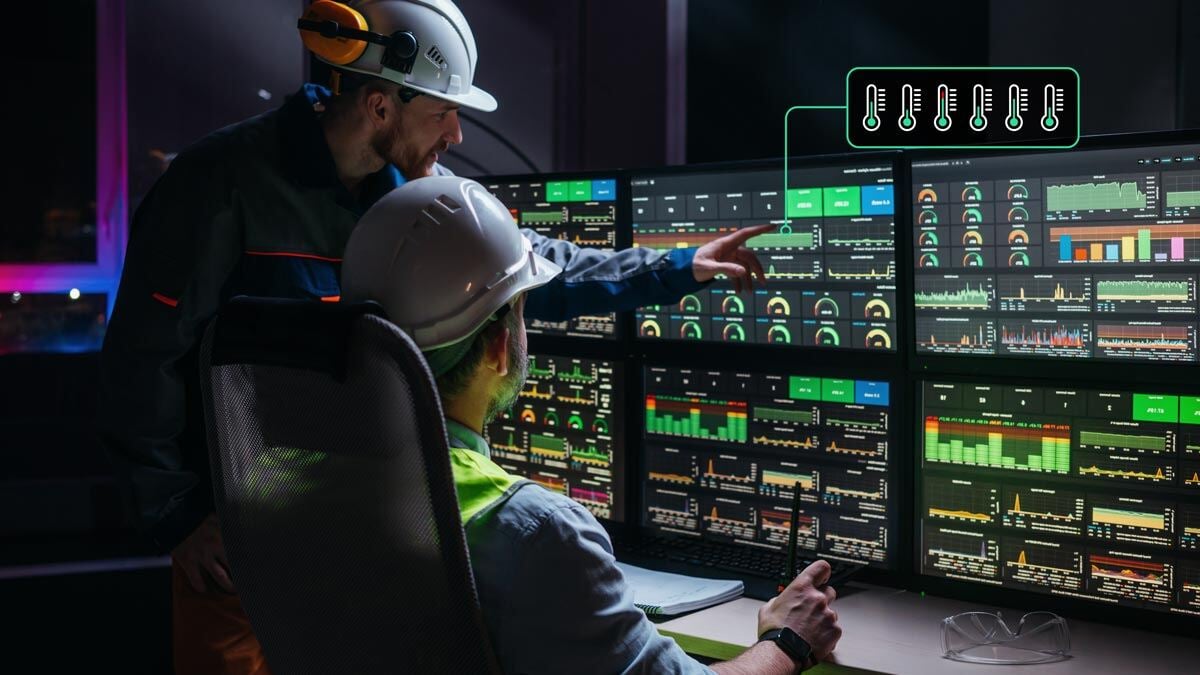
One common use case is predictive maintenance, where sensors monitor machine performance and send data continuously. This allows companies to detect issues early and schedule maintenance before failures occur.
Another use case is remote monitoring of industrial assets. Companies operating across multiple locations can use Com4 connectivity to monitor equipment and systems in real time, even in remote areas.
Com4 also supports high-data applications such as digital signage and industrial displays, ensuring consistent performance and uptime across deployments.
For industries operating in remote environments, such as energy or maritime, Com4’s combination of cellular and satellite connectivity ensures uninterrupted communication and data flow.



.jpg)
-1.jpeg)