
.webp?width=720&height=720&name=LoRaWAN-hero-4%20(1).webp)
This guide walks you through the evaluation criteria that matter most when selecting a provider for low-power wide-area (LPWA) connectivity. You will learn how to assess network coverage, roaming capabilities, SIM technologies, security features, and management platforms before committing to a partnership.
Key Takeaways: How to Choose an IoT Connectivity Provider for LTE-M and NB-IoT
- Evaluate providers based on their actual network footprint, not just claimed country coverage numbers.
- Multi-IMSI SIMs reduce permanent roaming risks and improve connection reliability across borders.
- LTE-M suits mobile assets, while NB-IoT excels for stationary devices with deep indoor coverage needs.
- Com4 offers operator-independent connectivity across 750+ networks in 190+ countries with full core control.
- A strong connectivity management platform with real-time analytics is essential for fleet-scale deployments.
What Are LTE-M and NB-IoT, and Why Do They Matter?
LTE-M (also called Cat-M1) and NB-IoT are cellular network technologies designed specifically for IoT devices. Both fall under the 4G/5G umbrella and offer significant advantages over older 2G and 3G networks that many operators are now sunsetting.
These technologies share a common goal: enabling battery-powered devices to transmit small amounts of data reliably over long periods. However, they achieve this goal through different technical approaches, which affects how you should evaluate providers supporting each technology.
Core Differences Between LTE-M and NB-IoT
LTE-M uses a 1.4 MHz bandwidth and supports data rates up to 1 Mbps. It handles cell tower handovers well, making it suitable for assets that move between coverage areas. Devices can maintain connections while transitioning between towers, which is critical for real-time tracking applications.
NB-IoT operates on a narrower 200 kHz bandwidth with maximum data rates around 250 kbps. It provides superior building penetration and extended range, making it ideal for smart meters, environmental sensors, and other stationary devices deployed in challenging radio environments.
How Should You Evaluate Network Coverage Claims?
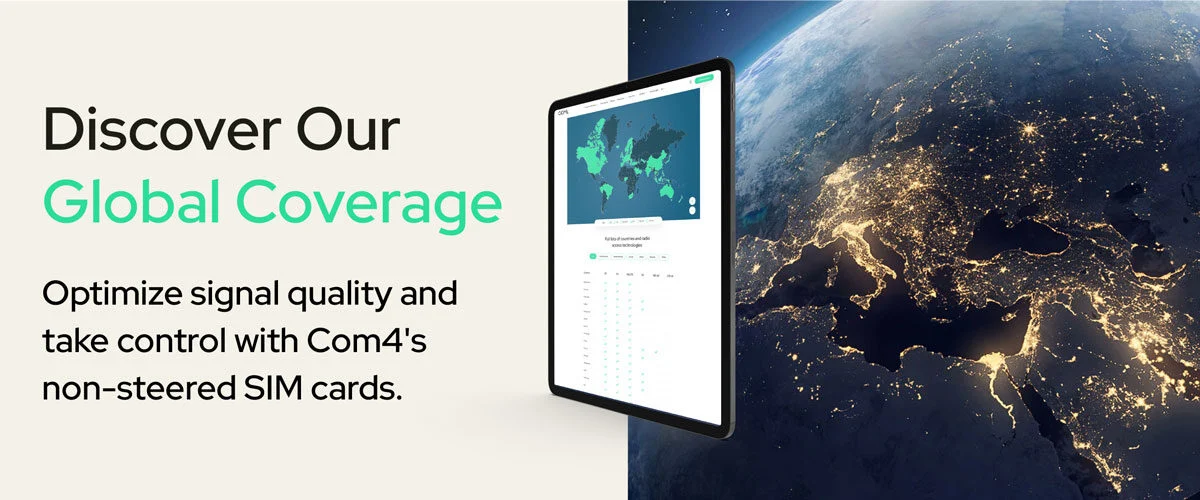
Most providers advertise coverage in "190+ countries" or claim access to "500+ networks." These numbers rarely tell the complete story. A provider may have roaming agreements that technically cover a country, but the actual network availability for LTE-M or NB-IoT within that country could be limited to major urban areas.
Ask providers for specific network maps showing where their LTE-M and NB-IoT coverage exists. Request information about which mobile network operators (MNOs) they partner with in your target regions and whether those partnerships include both technologies.
Questions to Ask About Coverage
Determine whether the provider has direct relationships with local operators or relies entirely on roaming agreements. Direct relationships often deliver better performance and more predictable pricing. For regions where you plan significant deployments, ask about local IMSI availability, which can eliminate permanent roaming restrictions.
Test IoT coverage in your actual deployment locations before committing to large SIM orders. Many providers offer trial SIMs or starter kits that let you validate connectivity in the field.
Why Does Multi-IMSI Technology Matter for Global Deployments?
Single-IMSI SIM cards connect to one home network and roam onto others when that home network is unavailable. This approach works for simple deployments but creates vulnerabilities for global operations. Roaming agreements can change, networks can impose permanent roaming restrictions, and connection quality may suffer when devices operate far from their home network.
Multi-IMSI SIMs store multiple network profiles on a single card. When one network becomes unavailable or imposes restrictions, the device can switch to an alternative profile without requiring physical SIM replacement or manual intervention.
Evaluating Multi-IMSI Capabilities
Not all multi-IMSI implementations deliver equal performance. Ask providers how many profiles their SIMs support and which specific networks those profiles enable. Determine whether profile switching happens automatically based on signal quality or requires manual triggers.
Consider how the provider manages regulatory compliance in countries with strict permanent roaming rules. Brazil, Turkey, and several Middle Eastern countries enforce time limits on how long devices can operate on roaming networks. Providers with local IMSIs in these regions can keep your devices connected legally.
What Role Does SIM Technology Play in Provider Selection?
Traditional plastic SIM cards served IoT deployments well for years, but newer eSIM and iSIM technologies offer significant advantages for modern deployments. Understanding these technologies helps you evaluate whether a provider supports the SIM format your deployment requires.
eSIM and eUICC for Remote Management
eSIM (embedded SIM) technology enables remote profile provisioning without physical card replacement. eUICC (embedded Universal Integrated Circuit Card) is the standard that makes this remote management possible. Providers supporting GSMA SGP.32 standards can provision and update device profiles over the air.
This capability becomes critical when devices are deployed in hard-to-reach locations or when you need to change connectivity providers without truck rolls. Com4 supports SGP.32 compliance, enabling flexible profile management for enterprise IoT fleets.
iSIM for Reduced Footprint and Cost
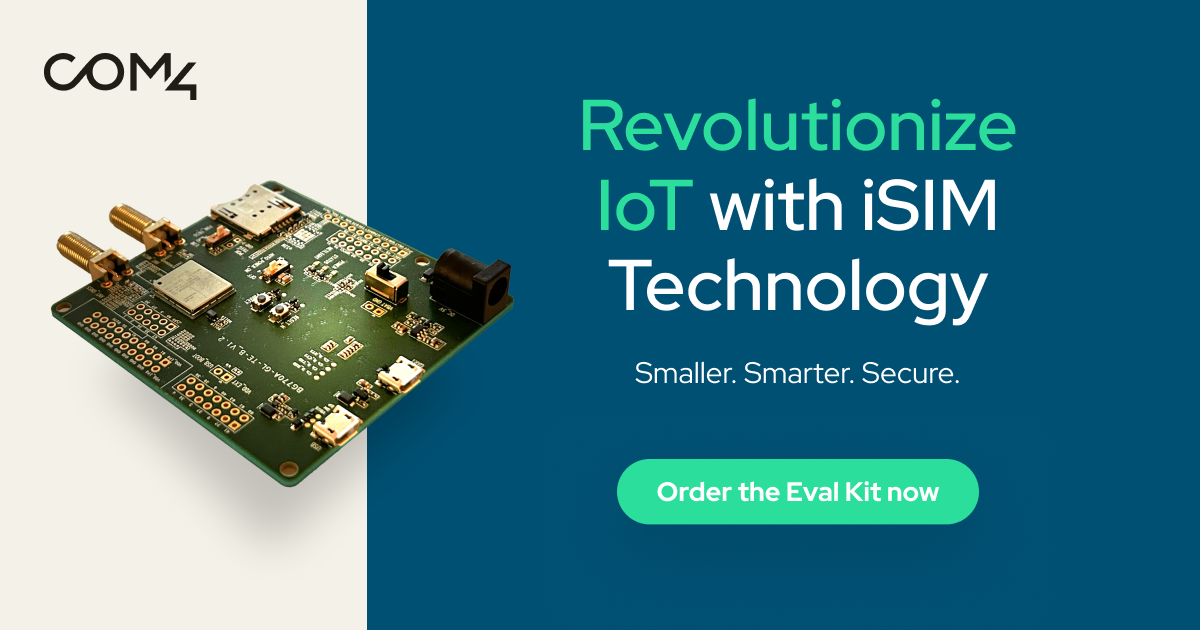
iSIM (integrated SIM) embeds SIM functionality directly into the device's main processor, eliminating the need for a separate SIM module. This approach reduces device size, simplifies manufacturing logistics, and can lower total cost of ownership. Ask providers about their iSIM roadmap and whether they support preprovisioned profiles for faster device deployment.
How Should You Assess Provider Security Capabilities?
IoT devices transmit sensitive operational data and may control critical infrastructure. Your connectivity provider plays a significant role in securing that data and preventing unauthorized access to your devices.
Enterprise-grade security for IoT connectivity includes multiple layers: network-level protections, SIM-level authentication, and data transmission encryption. Evaluate providers on each of these dimensions.
Network Security Features to Evaluate
Private APN (Access Point Name) configurations create isolated network paths for your IoT traffic, separating it from public internet traffic. VPN and IPsec options add encryption layers for data moving between devices and your backend systems. Fixed public IP addressing allows you to implement firewall rules that restrict which external systems can communicate with your devices.
Ask providers about their DDoS protection capabilities and how they handle SIM theft or unauthorized device cloning. Penetration testing services and security audits demonstrate a provider's commitment to protecting customer deployments.
What Should a Connectivity Management Platform Include?
Managing thousands or millions of SIMs requires a robust connectivity management platform (CMP). The platform should give you visibility into device status, data consumption, and network performance while enabling automated responses to common events.
Essential CMP Capabilities
Real-time diagnostics help you identify connectivity issues before they affect operations. Look for platforms that show last-known device location, current network attachment, signal strength, and recent connection history. These details accelerate troubleshooting when devices stop reporting.
Automation features reduce manual workload as your fleet scales. Usage alerts can notify you when devices exceed expected data consumption, potentially indicating firmware issues or security breaches. Automatic suspension rules can protect against bill shock when devices malfunction.
API Integration for Enterprise Workflows
Standalone dashboards work for small deployments, but enterprise operations need API access to integrate connectivity management into existing business systems. Evaluate whether the provider offers REST APIs, webhooks for event-driven automation, and detailed documentation for developers.
Consider how the API handles bulk operations. Activating, suspending, or updating thousands of SIMs should not require individual API calls for each device. Batch operations and asynchronous processing become essential at scale.
How Do You Compare Provider Pricing Models?
IoT connectivity pricing varies significantly between providers, and the lowest advertised per-megabyte rate rarely delivers the lowest total cost. Understanding pricing components helps you build accurate cost models for provider comparison.
Common Pricing Components
Monthly recurring charges (MRC) apply to each active SIM regardless of data consumption. Some providers charge reduced fees for inactive or standby SIMs, while others charge nothing until devices activate. This distinction matters significantly for seasonal deployments or staged rollouts.
Per-megabyte rates may vary by region, network technology, or consumption tier. Ask whether rates differ between LTE-M and NB-IoT traffic, as some providers price these technologies differently. Zone-based pricing adds complexity when devices operate across multiple regions.
Building Total Cost Models
Calculate your expected monthly cost using this formula: (active SIM count × MRC) + (total data consumption × per-MB rate) + (SMS count × per-SMS rate) + platform fees. Add SIM hardware costs amortized over expected device lifetime.
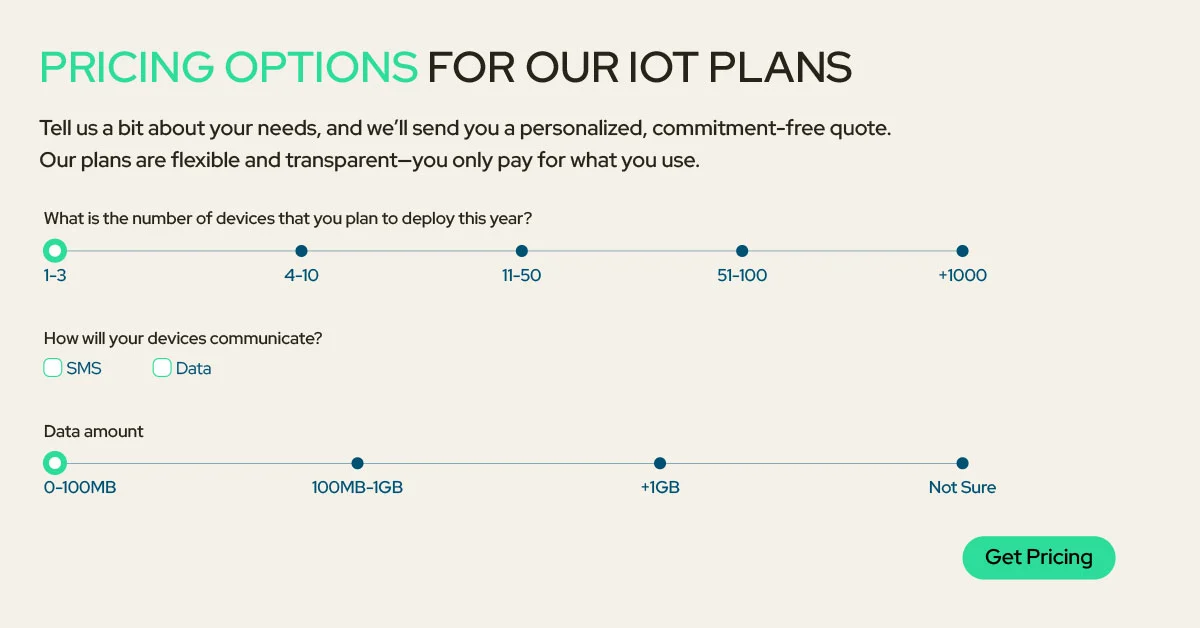
Request committed pricing for your expected volume levels, as many providers offer significant discounts above certain thresholds. Ask about minimum commitments, contract terms, and early termination conditions that could affect flexibility.
What Operational Support Should Providers Offer?
Technical issues with connectivity can halt operations and damage customer relationships. Your provider's support capabilities directly affect how quickly you can resolve problems and restore service.
Support Tiers and Response Times
Understand what support tiers the provider offers and what each tier includes. Basic support may only cover business hours assistance, while premium tiers might include 24/7 access to network operations center (NOC) teams. For mission-critical deployments, dedicated account management ensures someone understands your specific environment and priorities.
Ask about escalation paths when issues require network operator involvement. Providers with strong MNO relationships can often resolve network-level problems faster than those operating purely through aggregation agreements.
Testing and Validation Services
Pre-deployment testing reduces field failures and support costs. Some providers operate test labs where you can validate device firmware against their networks before production deployments. Others offer field testing services or loaner equipment for coverage validation.
How Do You Evaluate Provider Technology Roadmaps?
IoT connectivity technology continues advancing rapidly. 5G networks are expanding, satellite connectivity is becoming viable for IoT, and new SIM technologies promise better efficiency. Your provider's ability to support these technologies affects the longevity of your deployment.
5G and Future Network Support
5G networks include specific enhancements for IoT use cases, including improved LTE-M and NB-IoT implementations. Ask providers about their 5G roadmap and whether current SIM cards will support future network upgrades or require replacement.
RedCap (Reduced Capability) is an emerging 5G technology designed for IoT applications that need more bandwidth than LPWA but less than full 5G. Providers actively developing RedCap capabilities demonstrate commitment to IoT innovation.
Satellite Connectivity Options
Non-terrestrial network (NTN) integration enables IoT devices to fall back to satellite connectivity when cellular networks are unavailable. This capability is particularly valuable for deployments in remote areas or for mobile assets that travel through cellular dead zones. Com4 offers managed LEO satellite integration for deployments requiring hybrid cellular and satellite coverage.
What Criteria Should Drive Your Final Provider Selection?
After evaluating providers across all these dimensions, prioritize criteria based on your specific deployment requirements. A fleet of smart meters with predictable locations and data patterns has different provider needs than a logistics operation tracking assets across continents.
Matching Provider Strengths to Use Cases
For stationary deployments in single countries, local MNO relationships and NB-IoT coverage depth may matter most. For mobile assets crossing borders, multi-IMSI capabilities and LTE-M handover performance become critical. Remote deployments may require satellite fallback options that only certain providers support.
Consider total cost of ownership rather than just connectivity pricing. A provider with higher per-MB rates but better management tools and support may deliver lower overall costs through reduced operational burden and faster issue resolution.
Starting with Pilot Deployments
Before committing to large-scale contracts, run pilot deployments with your top candidate providers. Install test devices in representative locations and operating conditions. Measure actual performance against provider claims, including connection reliability, data throughput, and roaming behavior.
Document your pilot findings systematically to support procurement decisions. Compare providers on both technical performance and operational experience, including support responsiveness and platform usability.
Conclusion: Building a Reliable IoT Connectivity Foundation
Choosing the right IoT connectivity provider requires evaluating multiple technical, operational, and commercial factors. Focus on providers that offer genuine multi-network access, robust security features, and management platforms that scale with your deployment.
Prioritize providers with proven experience in your target industries and regions. Request references from similar deployments and conduct thorough pilot testing before full-scale rollout. The provider you select will be a long-term partner in your IoT success, so invest the time needed to make an informed decision.
FAQs About Choosing an IoT Connectivity Provider
What is the difference between LTE-M and NB-IoT for IoT deployments?
LTE-M supports higher data rates and cell tower handovers, making it suitable for mobile assets and applications requiring real-time communication. NB-IoT offers better building penetration and extended range but lower bandwidth.
Your choice depends on whether devices move during operation and how much data they transmit. Many providers, including Com4, support both technologies through the same SIM cards.
Why should I choose a provider with multi-IMSI SIM support?
Multi-IMSI SIMs store multiple network profiles, allowing devices to switch between networks automatically when connectivity issues arise. This redundancy improves reliability for global deployments.
Com4 delivers multi-IMSI capabilities through operator-independent SIMs connecting to 750+ networks worldwide, reducing permanent roaming risks and ensuring consistent connectivity.
How do I evaluate IoT connectivity provider security features?
Look for providers offering private APN configurations, VPN and IPsec encryption, fixed IP addressing, and DDoS protection. These features create defense layers protecting your devices and data.
Ask about SIM-level security measures including IMEI locking and authentication protocols. Com4 offers enterprise-grade IoT security including penetration testing services.
What should I look for in an IoT connectivity management platform?
Essential features include real-time device diagnostics, usage monitoring, automated alerts, and bulk SIM management capabilities. API access enables integration with your existing business systems.
Com4's connectivity management platform includes real-time analytics, automation rules, and REST APIs for enterprise-scale deployments requiring programmatic SIM control.
How do permanent roaming restrictions affect IoT connectivity?
Some countries limit how long devices can operate on roaming networks before requiring local network attachment. Violating these restrictions can result in disconnection.
Providers with local IMSI options in restricted countries can keep devices connected legally. Com4 supports local profiles in key markets to address permanent roaming compliance requirements.
Should I choose eSIM or traditional SIM cards for my IoT deployment?
eSIM technology enables remote profile provisioning without physical card replacement, reducing logistics complexity and enabling provider changes without truck rolls. Traditional SIMs work well for simpler deployments.
Consider your deployment scale, device accessibility, and need for future flexibility. Com4 supports eSIM with GSMA SGP.32 compliance for remote profile management.



-1.webp)