

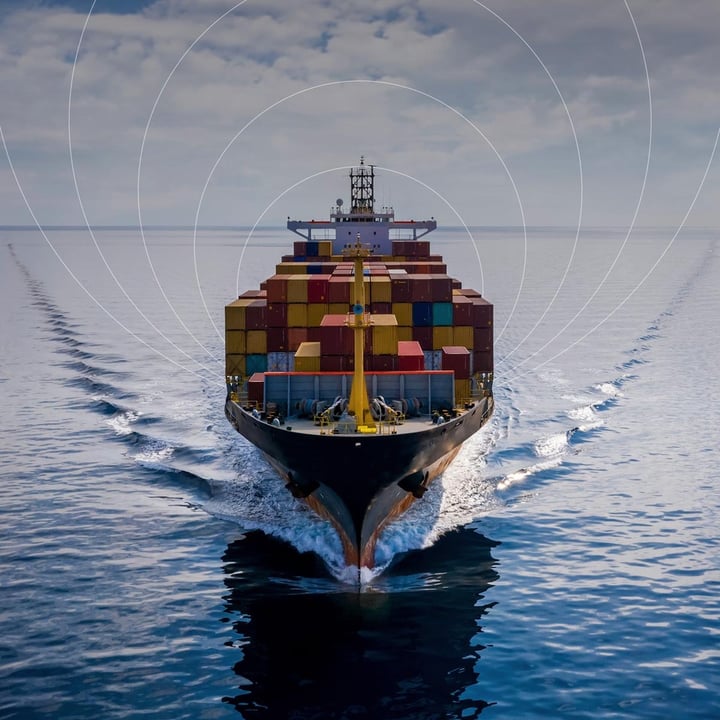
Customers demand real-time visibility into cargo and vessel operations, regulators are introducing stricter environmental requirements, and operators face rising costs and competitive pressures. In this environment, digitalization and connectivity have become essential, and the Internet of Things (IoT) is emerging as one of the most transformative forces in modern shipping.
IoT enables ships, containers, and port equipment to communicate and share operational data in real time. From containers that can report their location and condition across continents to vessels that detect early signs of equipment failure before a breakdown occurs, IoT is helping the maritime sector move from reactive to predictive and preventive operations.
However, IoT is only as powerful as the connectivity behind it. For data to move seamlessly across oceans, ports, and global logistics chains, reliable and intelligent connectivity is essential. This is where Com4 plays a central role, providing resilient and managed IoT connectivity solutions that ensure continuous communication, no matter where the vessel or cargo is located.
What IoT Means for the Maritime Sector
IoT in the maritime industry refers to networks of connected devices and sensors that collect, transmit, and analyze data from ships, containers, and port infrastructure. These devices measure everything from cargo temperature and humidity to engine vibration and fuel efficiency.
The result is an unprecedented layer of visibility across global operations. Rather than waiting for updates at port checkpoints or relying on manual reporting, shipping companies can monitor assets, performance, and conditions in real time. This visibility allows them to optimize operations, reduce risk, and make better-informed decisions based on accurate, continuous data.
Maritime IoT is more complex than land-based applications. Devices must withstand extreme weather, saltwater corrosion, and months-long voyages far from terrestrial networks. Reliable communication requires a combination of technologies — from satellite networks at sea to LTE-M and 5G at ports. Com4 provides exactly this hybrid connectivity, ensuring data flow through cellular, LPWA, and satellite systems such as Starlink and NTN Sateliot.
Container Tracking: From Visibility to Control
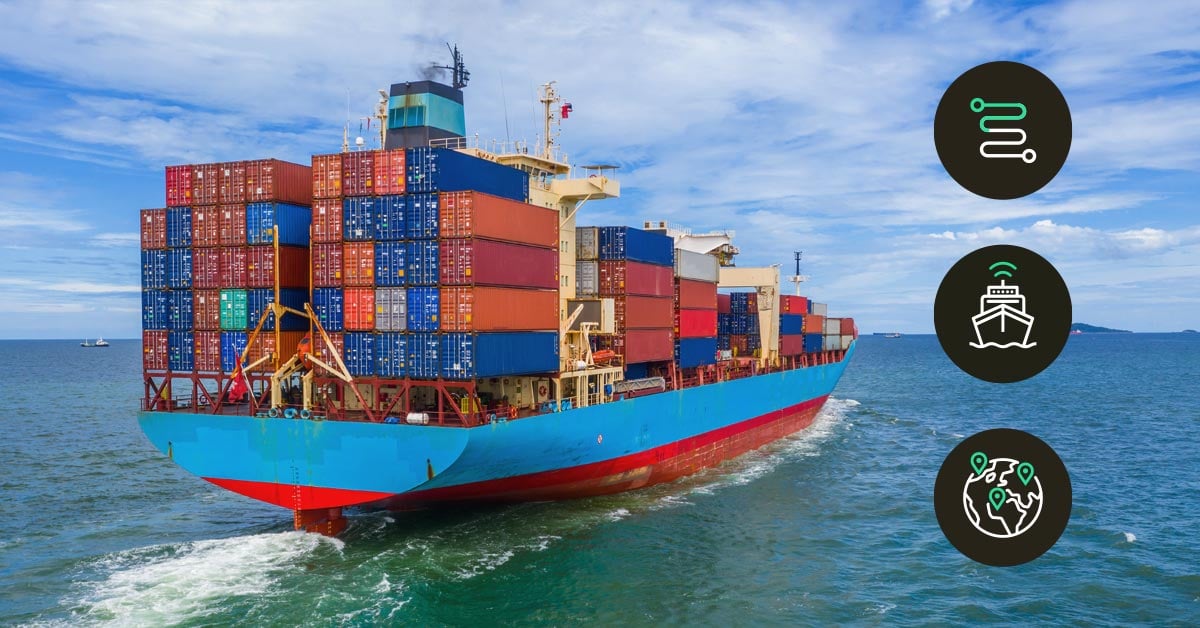
Container tracking has become one of the most visible and practical uses of IoT in shipping. Traditional methods relied on scanning and manual updates when cargo reached ports. Today, containers equipped with IoT sensors provide continuous data about their location, condition, and security — throughout the entire supply chain.
These connected devices provide critical information, such as:
- Location data, showing a container’s position on land or at sea.
- Condition data, including temperature, humidity, or shock levels for sensitive goods.
- Security status, with alerts if a door is opened unexpectedly or if a container leaves its assigned route.
A good example is pharmaceutical logistics, where a small temperature deviation can lead to significant financial loss. With IoT-enabled containers powered by Com4 SIM connectivity, operators are alerted instantly if conditions fall outside defined parameters, enabling corrective action before goods are compromised.
Com4 supports global logistics companies that rely on multi-network connectivity to monitor refrigerated and high-value containers. Data is transmitted over satellite networks in open waters and cellular networks near shore, ensuring end-to-end visibility and control.
Com4 in Action: Real Maritime Use Cases
Remote Fleet Monitoring and Managed LEO Connectivity
One of Com4’s maritime customers operates offshore service vessels that spend weeks in remote ocean regions. Using Com4 Managed LEO Plus, a hybrid connectivity service that combines Starlink satellite with 4G and 5G coverage, they can continuously monitor onboard systems, crew welfare, and vessel performance. This setup ensures operational insight and communication even when the fleet is far beyond terrestrial network range.
Predictive Maintenance for Fuel and Engine Systems
Another Com4 customer in Northern Europe uses IoT sensors and Com4’s cellular connectivity to monitor vibration, temperature, and pressure data from ship engines. By collecting this data in real time, they can identify early warning signs and plan maintenance proactively. This approach has reduced unexpected downtime and improved fuel efficiency, saving both costs and emissions.
Connected Ports and Equipment Tracking
In cooperation with logistics operators, Com4 enables data exchange between port cranes, vehicles, and containers through private LTE-M and 5G networks. This allows for more efficient traffic flow inside terminals, accurate container positioning, and improved safety for personnel and equipment.
Why IoT Connectivity Is Now a Strategic Imperative
The shipping industry is facing mounting pressure on several fronts:
- Environmental regulations such as the International Maritime Organization’s carbon reduction targets.
- Customer expectations for real-time visibility and transparency.
- Rising costs from fuel, insurance, and disruptions.
IoT connectivity addresses these challenges directly. It provides the data that shipping companies need to optimize routes, reduce emissions, enhance safety, and strengthen customer trust. The foundation of every IoT deployment is reliable and secure connectivity, an area where Com4 excels.
Com4 delivers global, managed IoT connectivity that supports every step of the journey, from open sea to port operations and inland transport. This enables shipping companies to focus on improving efficiency and sustainability while Com4 ensures that every data packet arrives safely and on time.
The Benefits of IoT for Maritime Operations
Improved Environmental Compliance
IoT sensors help measure and control emissions, fuel use, and route efficiency, making it easier for operators to meet the International Maritime Organization’s carbon intensity and emission reduction targets. Data from Com4-connected sensors supports both compliance reporting and active carbon reduction strategies.
Predictive Maintenance and Operational Reliability
Unplanned mechanical failures at sea are costly. IoT connectivity from Com4 enables continuous monitoring of engines and onboard systems, allowing predictive maintenance that prevents failures before they occur.
Real-Time Cargo Visibility
By connecting smart containers through Com4’s global multi-network SIMs, shipping companies can see where each unit is and verify that goods remain in safe conditions throughout transit.
Enhanced Security
IoT-enabled tracking helps detect tampering, unauthorized access, and cargo theft. Alerts triggered by door sensors and geofencing can prevent incidents before they escalate.
Data-Driven Decision-Making
Com4’s managed connectivity platform provides access to data analytics tools that help operators transform raw sensor data into insights for route optimization, cost control, and sustainability improvements.
Overcoming the Challenges of Maritime IoT
Connectivity at sea remains one of the biggest challenges for global shipping. Vessels spend long periods beyond terrestrial network range, where traditional cellular signals cannot reach. Com4 solves this through hybrid connectivity, combining satellite coverage offshore with cellular and 5G at ports and coastal zones. This ensures uninterrupted data flow without blind spots.
Another challenge is scalability. Not every container or vessel can be equipped with sensors immediately. Com4 supports gradual scaling, starting with high-value or time-sensitive cargo and expanding connectivity over time without the need for hardware replacements.
Finally, data management is critical. IoT generates vast amounts of information, and its value depends on how effectively it is used. Com4’s APIs and management tools make it easy for operators to integrate and interpret this data, transforming it into actionable intelligence rather than unstructured information.
The Future of IoT in Maritime Operations
The next phase of maritime IoT will be defined by intelligence, automation, and integration. Several trends are already shaping this evolution:
- Edge computing enables ships to process data locally, reducing the need for constant satellite transmission and cutting costs.
- Artificial intelligence combined with IoT (AIoT) will allow predictive models to forecast equipment failures, optimize routes, and minimize fuel consumption.
- Blockchain integration is helping create transparent, tamper-proof records for cargo handling and customs verification.
- Autonomous and remotely operated vessels will rely on continuous connectivity and real-time IoT data to function safely and efficiently.
Com4’s expanding portfolio of cellular, LPWA, and satellite connectivity services ensures that shipping companies are ready for this new era — where every vessel, port, and container becomes part of a unified digital ecosystem.

Why Choose Com4 as Your IoT Connectivity Partner
Com4 is part of the Wireless Logic Group, a world-leading provider of managed IoT connectivity services. With over a decade of experience supporting global IoT deployments, Com4 delivers robust, scalable, and secure solutions for the maritime industry.
Our offering includes:
- Global multi-network connectivity covering cellular, LPWA, and satellite systems.
- Seamless interoperability with IoT platforms and hardware vendors.
- Scalable eSIM and iSIM solutions designed for harsh maritime environments.
- Technical support and a team of experienced IoT and telecom engineers
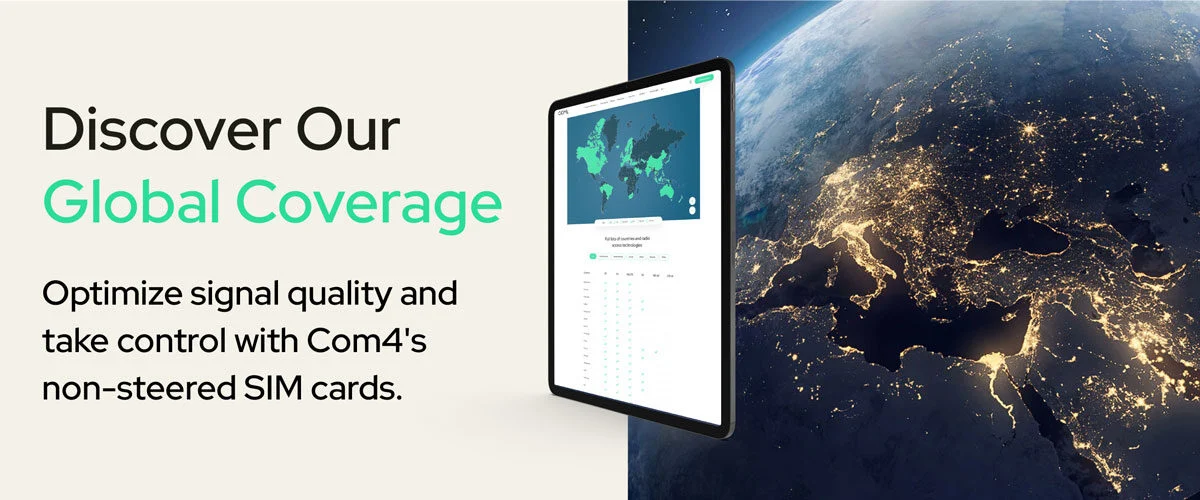
At Com4, we see connectivity not as a commodity but as the foundation for innovation. Our mission is to ensure that shipping companies can operate efficiently, sustainably, and safely — wherever their fleets may be.
The shipping industry is transforming, and IoT connectivity is at the heart of that change. With reliable, global connectivity from Com4, maritime operators can achieve real-time visibility, predictive maintenance, and smarter decision-making across their fleets and logistics chains.
To learn more about how Com4 enables digital transformation in the maritime industry, visit our IoT solutions page or contact us to discuss how we can support your next project.




.webp)
.jpg)