

What started as a defense innovation has rapidly evolved into one of the fastest-growing IoT technology segments. Drones and UAVs are now key components in industries such as agriculture, construction, logistics, mining, public safety, and environmental monitoring. In parallel, aerial access and compute networks are emerging as a bridge to deliver IoT connectivity and real-time data processing to regions that remain beyond the reach of terrestrial infrastructure.
For the IoT ecosystem, cellular and satellite connectivity are the backbone of this transformation. At Com4, we enable secure, always-on IoT connectivity that supports aerial operations from the ground up; ensuring reliable communication, low latency, and global coverage for mission-critical deployments.
From Battlefield to Business: The Evolution of Drones and UAVs
The earliest drones were developed for military intelligence and surveillance, enabling remote missions without endangering human lives. Two decades later, the technology has matured into a versatile commercial solution.
Today’s UAVs feature long flight times, high payload capacities, advanced navigation systems, and robust communication technologies. This progress has made them essential to multiple industries, performing everything from infrastructure inspection to real-time environmental monitoring.
In technical terms, the term UAV (Unmanned Aerial Vehicle) is the more formal aviation term, while drone is used more broadly in commercial and consumer contexts. Both refer to aircraft that operate without a human pilot onboard and are often equipped with IoT sensors, cameras, and telemetry systems.
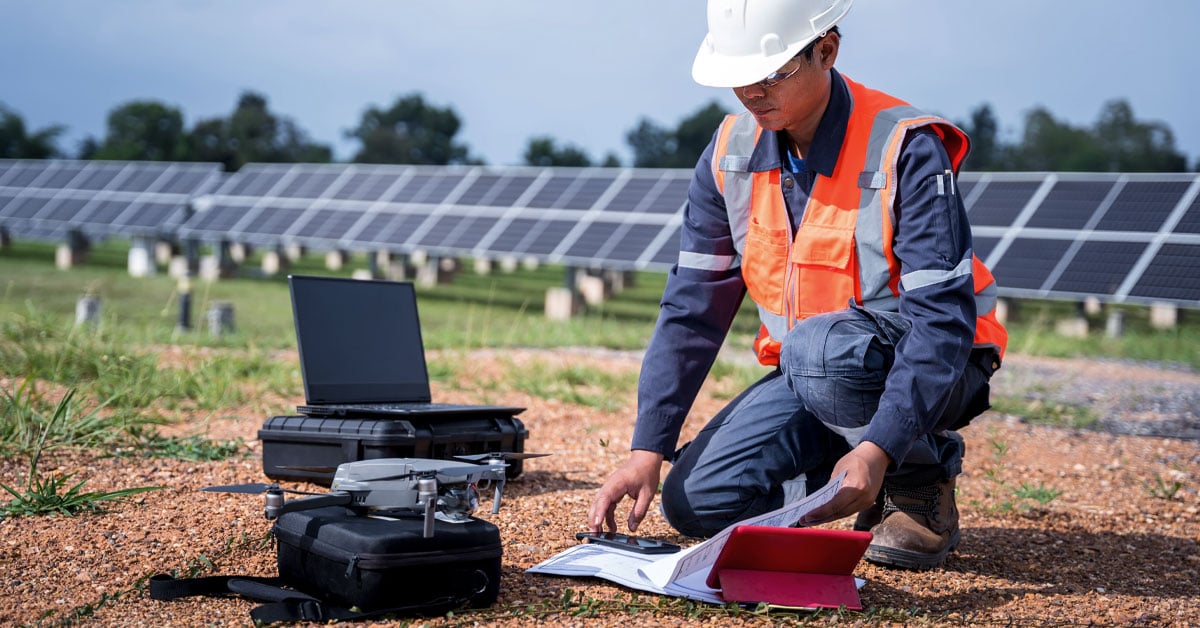 The Role of Connectivity in Aerial IoT
Early UAVs relied primarily on RF (Radio Frequency) communication in the 2.4 GHz or 5.8 GHz bands for control and video transmission. However, as commercial drone operations expanded — particularly for beyond visual line of sight (BVLOS) use cases — these systems reached their limitations in range, reliability, and interference.
Modern aerial IoT systems increasingly depend on cellular and satellite communication to enable high-speed data transfer, remote monitoring, and autonomous operations.
Key advantages of cellular connectivity for aerial IoT:
- Low latency: Critical for real-time flight control and autonomous decision-making.
- High data throughput: Enables transmission of HD video, sensor data, and telemetry.
- Wide coverage: Expands operational range far beyond line-of-sight.
- Scalability: Supports large fleets of drones simultaneously.
- Security: Uses encrypted cellular networks and SIM authentication.
Com4’s global IoT SIMs, eSIMs, and iSIMs support multi-network connectivity across more than 750 networks in over 190 countries, ensuring near-continuous uptime — even when drones cross borders or move between operators.
Aerial Access Networks: Expanding IoT Coverage from the Sky
While drones represent the most visible part of Aerial IoT, aerial access networks (AANs) are the architectural foundation that could reshape connectivity itself.
An AAN uses flying platforms such as drones, airships, balloons, or satellites to provide wireless access and compute services from the air. These networks can deliver IoT connectivity in areas where deploying terrestrial base stations is not feasible — for example, remote industrial zones, offshore platforms, mining sites, or disaster-stricken regions.
Depending on altitude, AANs can use:
- Low-altitude platforms (LAPs): Tethered drones or small UAVs acting as temporary base stations.
- High-altitude platforms (HAPs): Airships or balloons operating in the stratosphere to extend coverage over vast regions.
- LEO satellites: For global reach and integration with terrestrial networks.
Future generations of AANs will integrate edge or fog computing, enabling low-latency, high-performance IoT services such as real-time analytics and AI-driven decision-making directly from the air. This approach aligns with emerging 6G architectures, where aerial and terrestrial systems will coexist to ensure universal IoT coverage.
Real-World Use Cases of Aerial IoT
Agriculture and Smart Farming
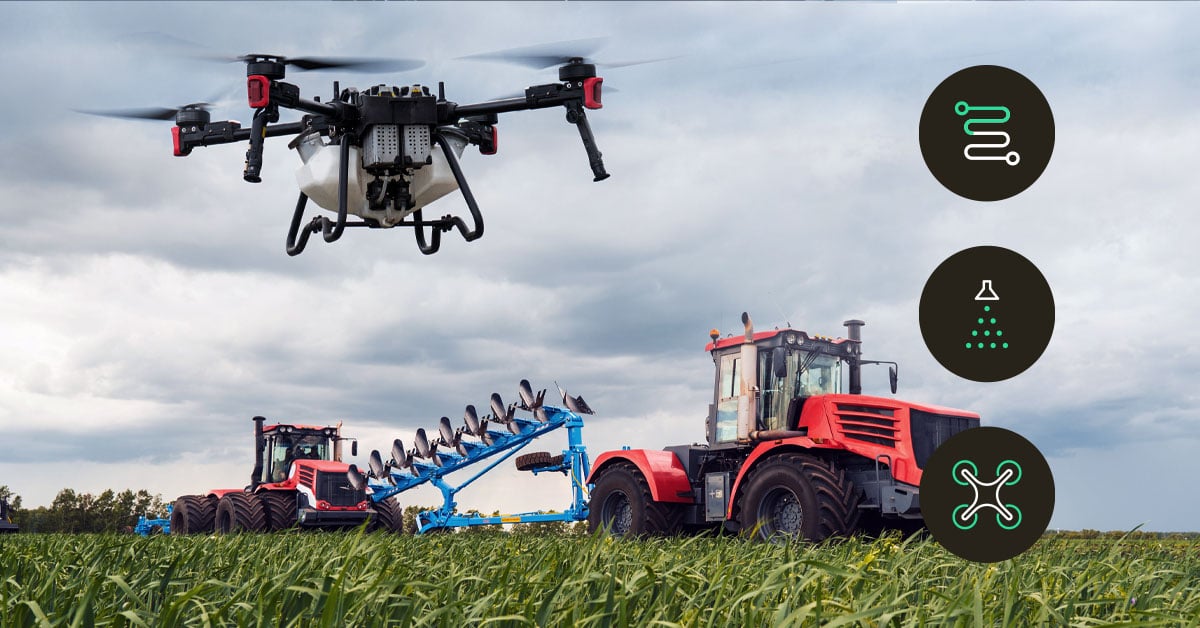
Agriculture is one of the leading adopters of Aerial IoT. Drones equipped with IoT sensors and cameras enable precision agriculture, collecting data on crop health, soil moisture, nutrient levels, and pest detection. This information supports data-driven decisions, improving yields while reducing waste and environmental impact.
In livestock management, drones can track animal movement and monitor health without manual intervention.
Construction and Mining
In construction, drones are transforming site inspection, surveying, and project monitoring. They deliver high-resolution imagery and real-time data for project managers, enabling more efficient workflows.
Mining operations benefit from drones equipped with geological sensors and 3D mapping tools, which help detect structural issues, assess ore grades, and ensure worker safety in hazardous areas.
Energy, Oil, and Gas
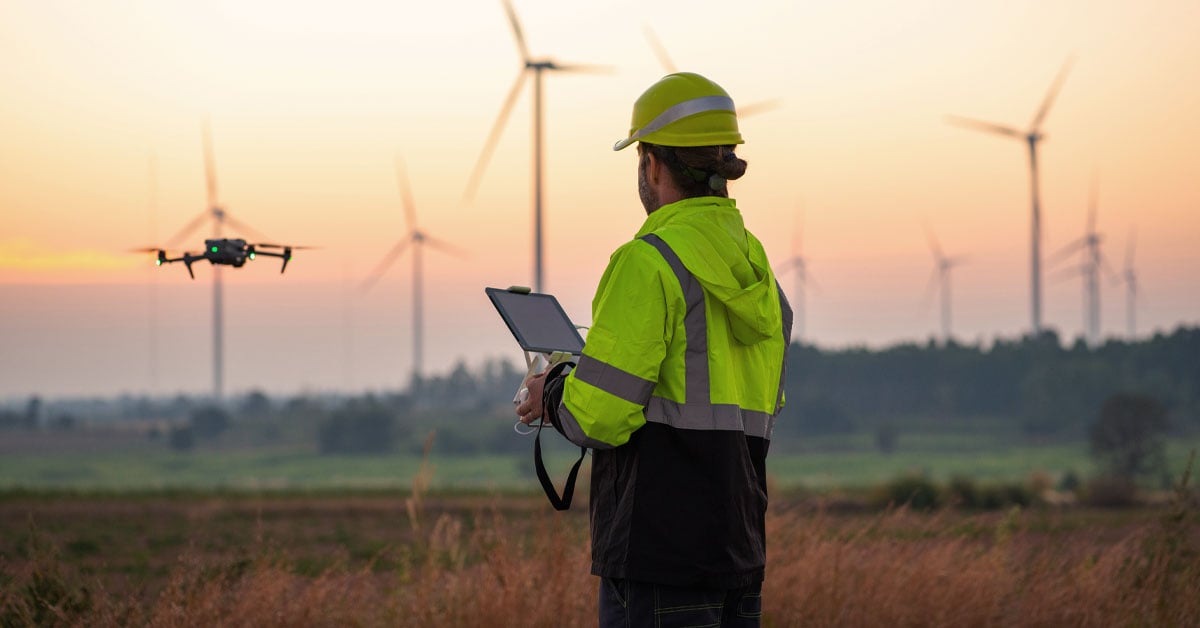
Aerial IoT solutions are revolutionizing infrastructure inspection across the energy sector. Drones enable real-time monitoring of oil rigs, pipelines, and offshore wind farms, reducing costs and downtime while improving safety and sustainability.
Public Safety and Emergency Response
In emergency services, drones play a critical role in search and rescue, disaster assessment, and first-response coordination. Equipped with heat, motion, and gas sensors, UAVs can quickly gather situational data, even in areas where ground access is limited.
Logistics and Supply Chain
Drones are being tested for last-mile delivery, warehouse inventory management, and automated logistics. While regulatory and payload challenges remain, aerial and ground-based autonomous systems are becoming integral to modern supply chains.
Environmental Monitoring
Environmental agencies and researchers deploy IoT-enabled drones to monitor air and water quality, pollution levels, weather conditions, and deforestation. By integrating cellular IoT and satellite communication, this data can be transmitted in real-time for analysis and action.

The Connectivity Challenge in Aerial IoT
Aerial IoT deployments face several technical hurdles:
- Mobility across networks and borders.
- Remote or uncovered regions.
- Interference or signal loss during flight.
- Regulatory restrictions on data transmission
To address these challenges, connectivity must be intelligent, adaptive, and global.
Com4’s multi-network IoT solutions deliver seamless connectivity through advanced multi-IMSI technology, enabling drones and UAVs to automatically switch between networks for optimal signal strength and uptime. This eliminates downtime caused by roaming restrictions or weak coverage and ensures compliance with local regulations.
For aerial IoT applications in extremely remote or maritime areas, Com4 also offers managed satellite connectivity, including Starlink and NTN Sateliot services, ensuring truly global coverage and redundancy.
The Future of Aerial IoT
As industries continue to adopt drone and UAV technology, reliable and secure connectivity remains the foundation for growth. The convergence of cellular, satellite, and edge computing will unlock new possibilities for automation, analytics, and resilience in the sky.
From supporting agriculture and renewable energy to emergency networks and smart infrastructure, the next decade of aerial innovation will depend on scalable and intelligent IoT connectivity.
With over a decade of experience delivering managed IoT connectivity across industries and geographies, Com4 empowers businesses to deploy, manage, and scale Aerial IoT solutions globally — with confidence, compliance, and continuity.
Com4: Your Partner in Aerial IoT Connectivity
Whether your organization is developing commercial UAV systems, remote monitoring solutions, or aerial access networks, Com4 provides:
- Multi-IMSI eSIM and iSIM solutions for global coverage.
- High-availability cellular IoT connectivity with 2G–5G, LTE-M, and NB-IoT.
- Satellite and LEO integration for complete redundancy.
- Centralized connectivity management via Com4’s IoT platform.
- Security, scalability, and compliance built for enterprise-grade deployments.
With Com4, aerial IoT solutions take flight — powered by intelligent, reliable, and global IoT connectivity.



.webp)
.jpg)