For enterprise IoT teams managing large international deployments, IoT roaming management isn't a line item you set once and forget. It's an ongoing discipline, and in 2026 it's one of the highest-leverage places to cut cost without touching uptime.
This guide walks through the practical levers: operator-independent SIMs, pricing controls, coverage planning, and centralized connectivity management, the four areas that determine whether a large fleet's connectivity costs stay predictable or spiral.
Why IoT Connectivity Costs Spiral at Fleet Scale
Roaming costs behave differently at scale than they do in a pilot. A handful of devices on a single operator's roaming agreement is a rounding error. Ten thousand devices on that same agreement, moving across borders, hitting data caps, and occasionally landing on a network that charges premium roaming rates, is a budget line that can grow unpredictably from quarter to quarter.
Three dynamics drive this. First, traditional roaming rates can run 10 to 50 times higher than local rates, so any device that spends meaningful time roaming on a single-operator SIM is paying a steep premium by default. Second, large fleets rarely have uniform data usage. A handful of devices with a firmware bug or a misconfigured reporting interval can quietly consume disproportionate data, and without fleet-wide visibility, that goes unnoticed until the invoice arrives. Third, permanent roaming restrictions in markets like Brazil, Turkey, and China mean that connectivity built without a local compliance strategy can face fines, forced disconnection, or a scramble to source local IMSIs mid-deployment, all of which cost more than planning for it upfront.
Operator-Independent SIMs: The Foundation of IoT Roaming Management
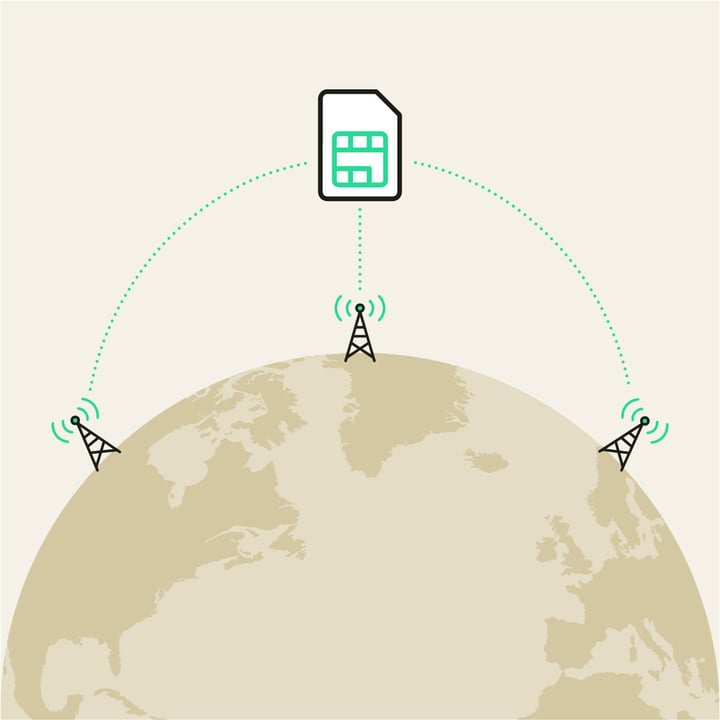
The single biggest lever for IoT roaming management is not being locked into one operator's roaming agreement per device. Operator-independent, carrier-agnostic SIMs change the economics entirely.
Multi-IMSI and eSIM (SGP.32) as Cost Control, Not Just Resilience
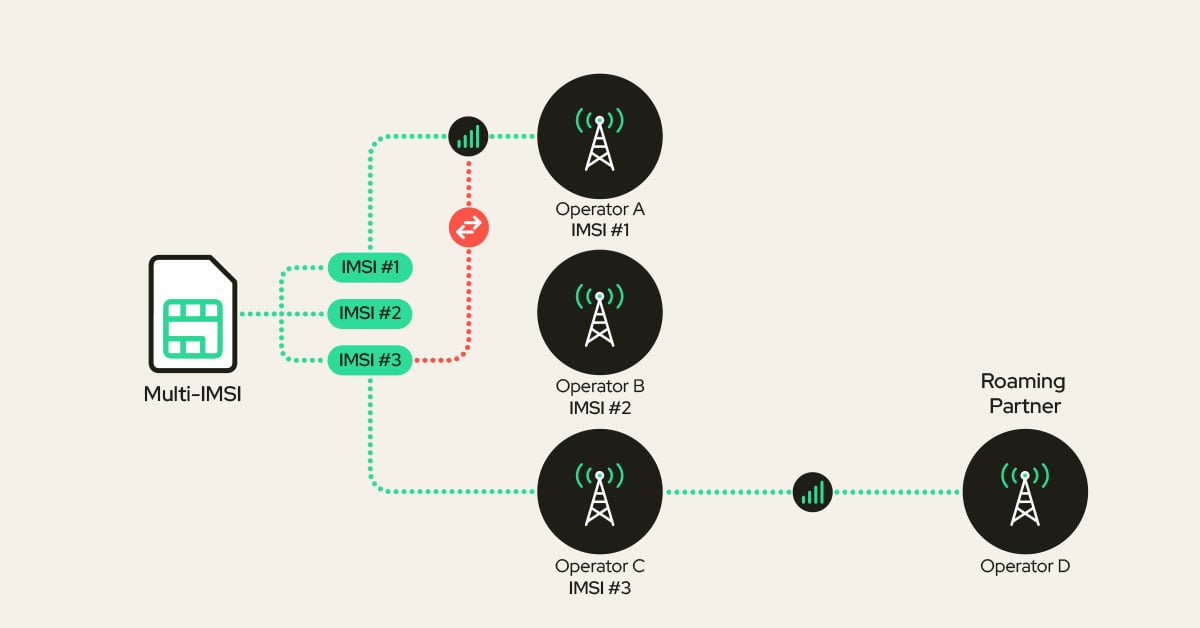
Multi-IMSI SIM cards store multiple network profiles on a single SIM and select the best available option based on location, signal strength, and, critically, cost. eSIM and eUICC (SGP.32) take this further by allowing profiles to be swapped remotely over the air, so if a cheaper or more reliable network agreement becomes available in a given country, the fleet can move to it without a truck roll or a physical SIM swap.
This matters for IoT fleet management specifically because large fleets can't economically send technicians to swap SIMs across thousands of devices in a dozen countries. The ability to re-provision remotely turns a cost optimization exercise from a multi-month logistics project into a configuration change.
Non-Steered Network Selection
Some connectivity providers steer traffic toward whichever partner network is most profitable for them, regardless of whether it's the cheapest or most reliable option for you. Non-steered SIMs select networks based on actual signal quality and negotiated rates, prioritizing your fleet's performance and cost profile over the provider's carrier economics. For IoT roaming management at scale, this distinction alone can meaningfully change your average cost per connected device.
Pricing Controls That Actually Reduce Roaming Fees
Operator independence creates the opportunity for roaming fee reduction. Pricing structure is what actually captures it.
Data Pooling Across the Fleet
Individual data plans per device make sense for uniform, predictable usage. Large fleets rarely have that. Data pooling aggregates usage across the entire fleet, so unused data from low-consumption devices offsets overages from high-consumption ones. For fleets with variable usage patterns, which is most large IoT fleets, this alone can eliminate a significant share of overage charges.
Usage Thresholds and Automated Actions
Per-device and fleet-level usage caps, paired with automated throttling or suspension when thresholds are hit, prevent a single misbehaving device from generating a surprise bill. This is standard practice in modern connectivity management platforms, and it should be table stakes for any large fleet, not an advanced feature.
Choosing the Right Plan Structure Per Use Case
Pay-as-you-go works for devices with low or unpredictable usage. Pooled plans work for fleets with variable but broadly predictable aggregate usage. Mixing both within a single fleet, rather than forcing every device onto the same plan type, is often where the largest and least obvious savings sit.
Avoiding Roaming Surcharges by Design
Because roaming rates can run 10 to 50 times higher than local rates, the most effective roaming fee reduction strategy is structural: source SIMs with pre-negotiated multi-country agreements so devices never hit retail roaming rates in the first place, rather than trying to manage around surcharges after they appear on an invoice.
Coverage Planning: Paying for the Network You Actually Need
A less obvious cost driver in IoT roaming management is coverage mismatch, paying for network capability the fleet doesn't use.
Matching Radio Standards to Data Needs
A fleet of low-power sensors reporting a few kilobytes a month doesn't need the same network profile as a fleet of connected vehicles streaming diagnostic data continuously. NB-IoT and LTE-M are built for exactly the first case: minimal data, long battery life, and lower cost per connection. Provisioning bandwidth-heavy 4G or 5G plans across an entire low-data-use fleet is a common, quietly expensive mistake in M2M connectivity solutions procurement.
Planning for Permanent Roaming Rules Before Deployment
Countries that restrict permanent roaming require devices to either register locally or move to a local IMSI after a set period. Discovering this after devices are already in the field means emergency sourcing, compliance risk, and cost premiums. Planning coverage market by market, with local compliance mapped in advance, keeps roaming fee reduction efforts from being undone by fines or forced last-minute fixes.
Right-Sizing Redundancy
Multi-network resilience is valuable, but not every device needs the same level of redundancy. A stationary sensor in a low-risk environment may not need the same failover coverage as a mobile asset crossing borders daily. Segmenting the fleet by actual risk and mobility profile, rather than applying uniform redundancy everywhere, avoids paying for resilience where it isn't needed.
Centralized Connectivity Management: The Cost Control Layer
None of the above works without visibility. A connectivity management platform (CMP) is what turns operator-independent SIMs and smart pricing into an actual, ongoing cost control system rather than a one-time setup.
Real-Time Visibility Across the Whole Fleet
A single dashboard showing usage, status, and cost across every device and every market replaces the alternative: checking multiple operator portals, each with different reporting formats, none of which show the full fleet picture. For IoT fleet management at scale, this visibility is what turns a cost problem from something you discover in an invoice into something you catch in real time.
Alerts and Automation as Ongoing Cost Management
Configurable alerts for unusual data spikes, unexpected roaming patterns, or IMEI changes let a small connectivity team manage a fleet of any size without manually reviewing usage device by device. Automation rules that throttle or suspend anomalous devices prevent one outlier from becoming a budget event.
.jpg?width=1200&height=628&name=CMP-Macbook-1200x628-1%20(1).jpg)
API Integration for Cost Data Where Your Team Already Works
Connectivity data pulled into existing dashboards, CRM systems, or finance tools through APIs means cost visibility doesn't require a separate login and a separate habit. This is part of what makes centralized IoT roaming management sustainable rather than a project that gets revisited only when costs are already a problem.
Com4 in Practice: Real Fleet Cost Outcomes
Two Com4 customers show what disciplined IoT roaming management looks like when it's built in from the start rather than retrofitted.
Soolo: minimal data, maximum reliability, real cost impact. Soolo's tank-monitoring sensors, deployed for fuel distributors and industrial customers, transmit as little as 100 KB of data per month per device, often from manholes, containers, or other environments with poor coverage. Because the data volume is so small, the connectivity cost per device is inherently low, but reliability still has to be absolute. Com4 supports Soolo with LTE-M and NB-IoT connectivity and multi-IMSI SIMs for coverage in exactly these difficult environments. The business impact goes beyond connectivity costs: customers using Soolo's real-time tank data have cut transport costs in fuel delivery routes significantly, since routes that used to run at roughly 50% tank utilization before optimization can now be planned around actual demand instead of fixed schedules. "We transmit very little data, but it must be 100% reliable," says Rein Anders Apeland, System Architect and Co-founder at Soolo. "Com4 was the first provider that was both honest about limitations and able to answer our technical questions."
Gomero: predictable costs across 9 countries. Gomero Group monitors critical electrical grid assets for more than 100 companies across nine countries, including Ellevio, Vattenfall, and Fingrid. At that scale, connectivity cost predictability matters as much as coverage itself. "Com4 enables a reliable and efficient connection at all our customers' stations," says Malin Giselsson, Head of Technology at Gomero. Com4 also supports Gomero with predictable pricing and regulatory compliance as it enters new markets, avoiding the cost surprises that come from expanding into a country without local terms and compliance already worked out.
Both cases point to the same underlying principle: the fleets with the most controlled connectivity costs are the ones where coverage, pricing, and compliance were planned market by market, not discovered after the fact.
A Practical Checklist for Cutting Roaming Costs This Year
Before the next budget cycle, run your fleet against these questions:
Are your SIMs operator-independent, with multi-IMSI or eSIM (SGP.32) capability, or locked to a single carrier's roaming agreement? Is your data plan structure pooled where usage is variable, with per-device and fleet-level thresholds in place? Does your radio standard match actual data needs per use case, rather than defaulting to the highest-bandwidth option everywhere? Do you have permanent roaming and local compliance mapped for every country in your footprint? Can your team see fleet-wide usage, cost, and anomalies in one platform, or are they checking multiple operator portals?
If more than one of these comes back as "no," there's likely meaningful roaming fee reduction available without any change to device hardware or uptime.
Com4 provides operator-independent IoT SIM cards, multi-IMSI and eSIM (SGP.32) support, and the Polaris CMP connectivity management platform for enterprises managing large, global IoT fleets. Get in touch to review where your fleet's connectivity costs can come down.



.webp)
.jpg)