.jpg?width=720&height=720&name=main-sims-1%20(1).jpg)
For enterprise teams deploying outdoor industrial sensors, whether on grid infrastructure, agricultural equipment, or remote monitoring stations, temperature isn't an edge case. It's a daily operating condition. Getting connectivity right starts with treating industrial SIM cards as engineered components, not an afterthought.
Why Industrial SIM Cards Must Withstand Extreme Temperatures
Consumer-grade SIM cards are typically rated for a narrow range, fine for a phone in someone's pocket, not for a device left outdoors through a Nordic winter or a desert summer. Once a SIM card operates outside its rated range, failures don't always announce themselves. A device might still power on but lose the ability to authenticate to the network, drop connections intermittently, or degrade in ways that are hard to diagnose remotely, exactly the deployments where a technician can't just drive out and check.
This is what makes temperature resistant SIM cards a genuine engineering requirement rather than a nice-to-have spec on a data sheet. If a connectivity component fails quietly in the field, the cost isn't the SIM, it's the downtime, the missed readings, and the truck roll to fix it.
Temperature Resistant SIM Cards: What the Spec Should Actually Say
Industrial-grade SIM cards are built differently from the ground up. Com4's industrial SIM cards, for example, are rated for -40°C to +105°C, with additional tolerance for shock and, in embedded formats, vibration. That range covers the realistic extremes of outdoor industrial deployment: sub-zero mountain installations, engine compartments, rooftop units baking in direct sun, and equipment near industrial heat sources.
Durability isn't only about temperature. Long-term data retention matters just as much for deployments meant to run untouched for years, industrial SIMs are typically built for data retention of around 15 years, or, in embedded MFF2 chip form, up to 10 million profile updates over a 10-year lifecycle. For a sensor network you're not planning to touch again after installation, that longevity is the difference between a maintenance-free deployment and a recurring field service bill.
Ruggedized Hardware: Choosing the Right Industrial SIM Form Factor
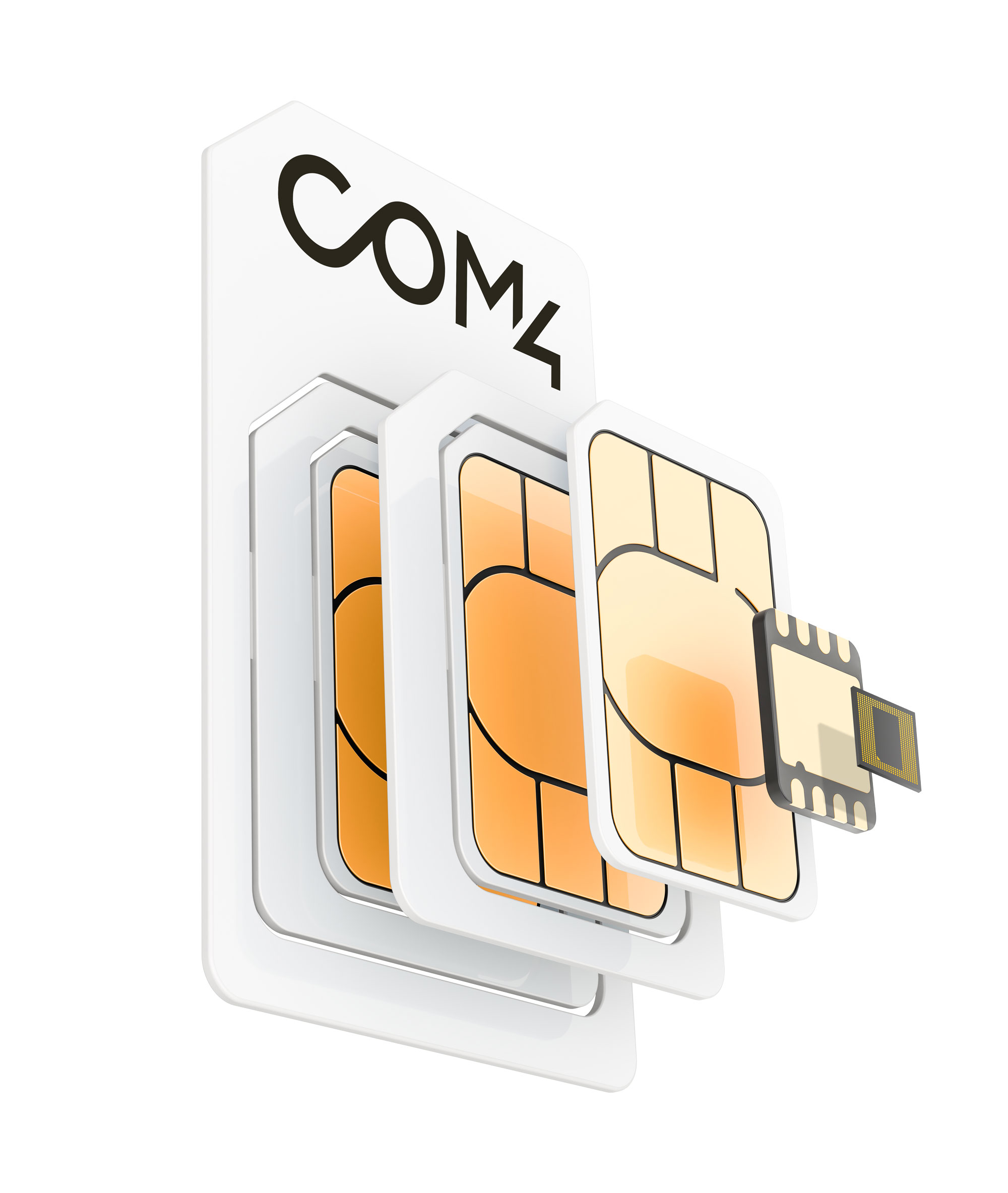
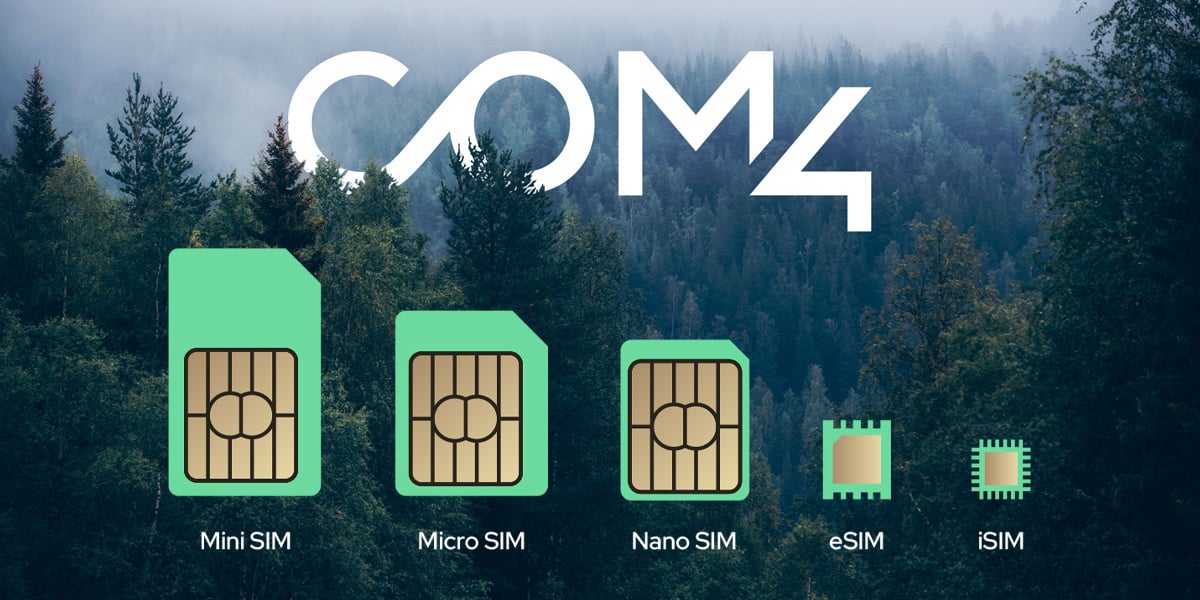
Industrial SIM cards come in a few standard formats, and the right one depends on how the device is built and how it will be serviced:
Triple-cut plastic SIMs (2FF/3FF/4FF) suit equipment where a SIM might occasionally need to be swapped, and support class A (5V), B (3V), and C (1.8V) supply voltages to fit different module designs.
MFF2 embedded chips, following the ETSI TS 102.671 specification, are soldered directly onto the PCB during manufacturing. This is the format of choice for high-volume, sealed industrial devices, weatherproof enclosures, embedded sensors, anything where a removable card is a liability rather than a convenience.
Both formats support eUICC for remote SIM provisioning, so connectivity profiles can be managed over the air without physically accessing hardware that might be bolted to a pipeline or buried in a cabinet somewhere inconvenient.
M2M Connectivity: Outdoor IoT Modules Built for the Same Extremes
A temperature-rated SIM only solves part of the problem. Outdoor IoT modules, the routers, antennas, and chipsets around that SIM, need to be built to the same standard. Industrial cellular routers and modules from manufacturers like Teltonika, Quectel, and Advantech are designed to operate reliably alongside industrial SIMs in the same harsh conditions, so the connectivity chain doesn't have a weak link at the hardware layer.
This is where M2M connectivity becomes a system-level decision rather than a single-part purchase: SIM, module, router, and antenna all need to be rated for the environment the device will actually live in, not the environment it was tested in.
Extreme Environment Communication Needs Network Resilience Too
Hardware durability solves the physical side of the problem. The other half is making sure the device can actually reach a network wherever it's deployed. Carrier-agnostic, non-steered SIMs connect to the strongest available signal automatically, which matters most in exactly the locations where extreme temperatures tend to show up: remote infrastructure, rural agricultural sites, and industrial facilities far from dense urban coverage.
Com4's Global IoT SIM Cards reach over 750 cellular networks across more than 190 countries, giving outdoor deployments a fallback path if one network has an outage or a coverage gap, rather than a single point of failure sitting on top of already-demanding physical conditions.

Industrial SIM Cards in Practice: Multi-Country Deployment
Gomero Group monitors critical electrical grid assets across nine countries for customers including Ellevio, Vattenfall, and Fingrid, infrastructure that sits outdoors, unattended, through every season. "It is of the utmost importance for us to have a supplier who can guarantee that our communication works smoothly and reliably in all nine countries where we operate," says Malin Giselsson, Head of Technology at Gomero. That kind of reliability starts with hardware rated for the conditions it actually faces, not the conditions it was convenient to test in.
The Takeaway: Choosing Industrial SIM Cards for Extreme Temperatures
Extreme temperature isn't a rare edge case for industrial IoT, it's the normal operating environment for most outdoor sensor deployments. Before committing to a connectivity partner, check that the SIM card, the surrounding hardware, and the network behind it are all rated for where the device will actually live, not just where it was tested.
Com4's industrial SIM cards are rated from -40°C to +105°C with shock and vibration tolerance, built for data retention up to 15 years, and backed by a global multi-network footprint spanning 750+ networks in 190+ countries. Get in touch to find the right SIM and hardware combination for your deployment.