
Every smart meter is only as reliable as the connectivity behind it. As utilities worldwide race to modernise their infrastructure, the pressure to deploy IoT connected metering systems that are secure, scalable and built to last has never been greater. This article explores what that demands in practice and how Com4 has become the trusted connectivity partner for some of Europe's most ambitious smart metering programmes.
What Is Smart Metering and Why Does Connectivity Define Its Success?
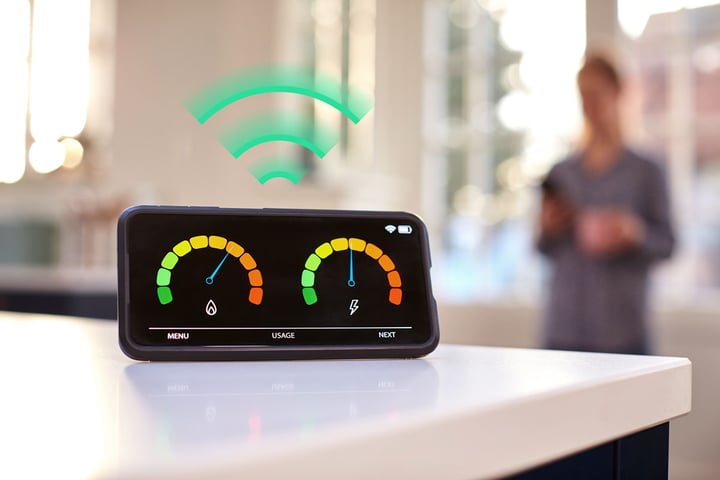
Smart meters are digital devices that measure and transmit real-time consumption data for electricity, gas, and water to utility providers. Unlike traditional meters that require manual reading, smart meters enable two-way communication — supporting remote management, firmware updates, automated billing, outage detection, and demand forecasting.
The global smart meter market was valued at approximately USD 28 billion in 2024 and is projected to grow at a compound annual growth rate of over 14% through 2034, driven by government mandates to modernise grid infrastructure, the global push toward renewable energy integration, and rising demand for granular consumption data. By the end of 2023, more than 1 billion smart meters had been installed worldwide, and the installed base is expected to exceed 1.75 billion by 2030.
Behind every one of those devices sits a connectivity layer. And in large-scale, nationally or globally distributed deployments, that connectivity layer is the single biggest determinant of whether a smart metering programme delivers on its promise — or becomes an expensive maintenance problem.
Com4 is one of Europe's leading IoT connectivity providers, with over two decades of experience supporting smart metering, energy infrastructure, and utility deployments across multiple countries. With carrier-agnostic SIM cards connecting to over 750 networks in more than 190 countries, and its own redundant mobile core network, Com4 gives utility operators, OEMs, and infrastructure providers the connectivity foundation their programmes demand.
The Global Deployment Challenge: Why Smart Metering Connectivity Is Harder Than It Looks
Smart meters appear simple from the outside: a fixed device that sends a small amount of data periodically. In practice, they are among the most demanding IoT deployments to operate at scale.
Difficult physical environments. Smart meters are typically installed in basements, utility cupboards, underground vaults, and remote rural locations. These environments attenuate cellular signals significantly. Connectivity must penetrate deep indoors and perform reliably in locations where coverage is weak or inconsistent.
Long operational lifespans. Smart meters are expected to operate for 10 to 20 years without hardware replacement. Connectivity strategies locked in at design time need to remain viable across multiple generations of network technology. The shutdown of 2G and 3G networks in many markets has already forced costly unplanned migrations for operators who built on legacy standards — a risk every new deployment must account for from day one.
Strict energy budgets. Many smart meters rely on battery power for backup or primary operation. Excessive network re-attachment attempts and inefficient connectivity protocols drain batteries, shortening device lifespan and increasing maintenance costs directly.
Multi-country programmes. Utility operators, hardware OEMs, and infrastructure investors increasingly deploy across multiple countries. Each market has different operator landscapes, regulatory frameworks, frequency bands, and compliance requirements. Managing connectivity through separate national operator contracts creates operational overhead and coverage gaps at every border.
Regulatory complexity. Deployments must meet an evolving matrix of standards, including EU smart grid directives, the Critical Entities Resilience Directive (CER), the Digital Operational Resilience Act (DORA), IEC 62052/62053 metering equipment standards, and IEEE 1686 cybersecurity requirements — all of which vary between countries and utility types.
How Smart Metering Systems Work: The AMI Architecture
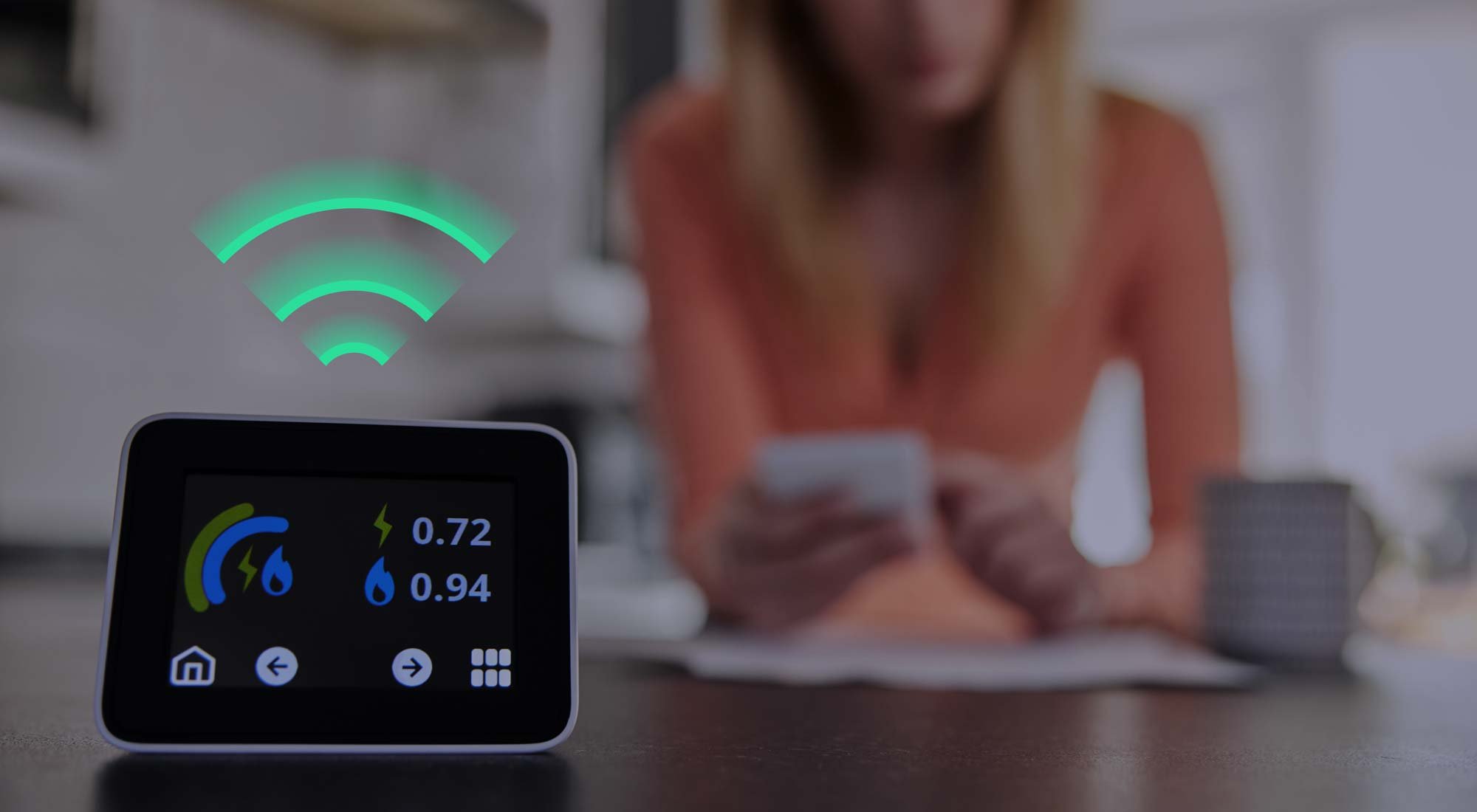
Modern smart metering relies on Advanced Metering Infrastructure (AMI) — an integrated system of smart meters, communication networks, and data management platforms enabling two-way communication between utilities and customers.
A typical AMI system includes:
- Smart meters at customer premises, equipped with sensors, communication modules, tamper-proof displays, and battery backup
- Connectivity carrying data between meters and utility head-end systems — using cellular (NB-IoT, LTE-M, 4G), RF mesh, or power line communication (PLC) depending on the deployment
- Head-end systems managing meter data and enabling remote operations including activation, deactivation, and firmware updates
- Meter Data Management Systems (MDMS) that store, process, and analyse meter data for billing, forecasting, and reporting
AMI supersedes older Automatic Meter Reading (AMR) systems, which only supported one-way communication. Two-way connectivity is what unlocks the operational and commercial benefits utilities are investing in: remote management, time-of-use pricing, demand response, and near real-time outage detection.
Choosing the Right Connectivity Technology for Smart Meters
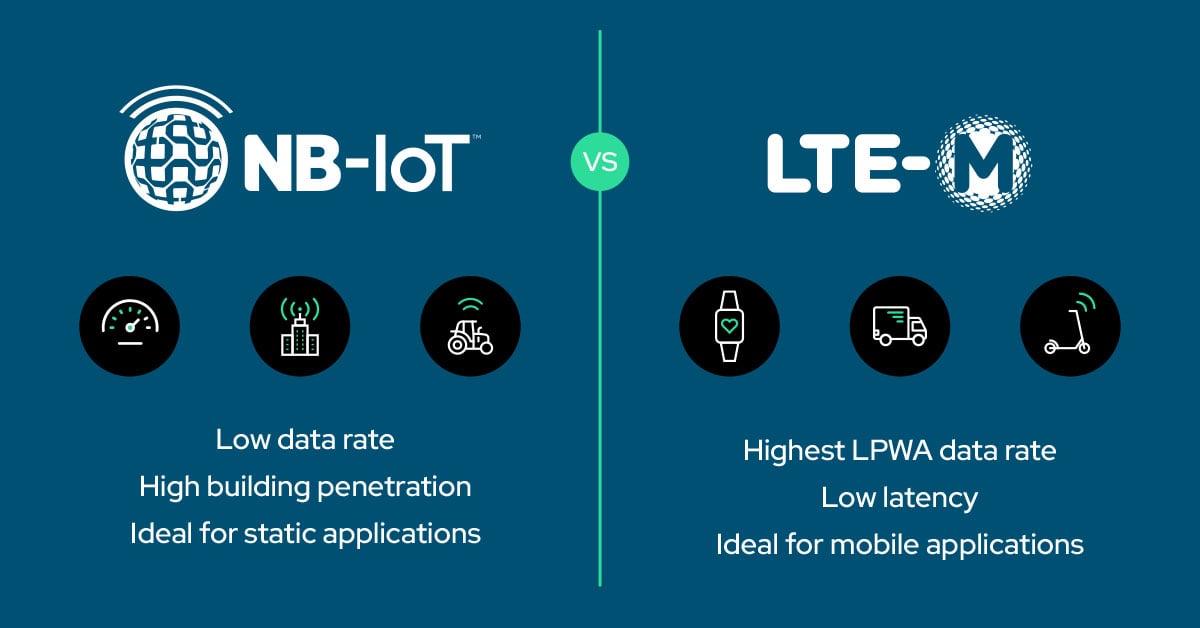
Connectivity selection is one of the most consequential decisions in smart meter design, and it must be made before hardware is finalised. The key cellular IoT technologies for smart metering are NB-IoT and LTE-M, both within the Low-Power Wide-Area Network (LPWAN) category.
NB-IoT
NB-IoT is designed for stationary devices that transmit small amounts of data infrequently. It offers deep indoor signal penetration — critical for meters in basements and enclosed utility spaces — and efficient battery usage. Peak data rates around 250 kbps are more than adequate for consumption data and billing messages.
The key limitation for global deployments: NB-IoT has struggled to gain traction outside China, which accounts for the vast majority of worldwide NB-IoT connections. Coverage in Europe and North America varies considerably by operator, and roaming support across borders remains limited. For purely domestic deployments with a single operator, NB-IoT can be the right choice. For cross-border or multi-market programmes, that coverage picture requires careful verification before committing.
LTE-M (Cat-M1)
LTE-M offers higher data rates (up to 1 Mbps), lower latency, and broader international coverage, building on existing LTE infrastructure. It supports voice, firmware-over-the-air (FOTA) updates, and mobility — making it more versatile for programmes that include mobile assets alongside fixed meters.
For global deployments, LTE-M generally offers more consistent multi-country coverage than NB-IoT outside Asia. Dual-mode chipsets supporting both NB-IoT and LTE-M are now available, allowing OEMs to build a single device that selects the most appropriate technology at each location.
The Multi-Network Imperative
No single operator delivers optimal coverage everywhere a smart meter is installed. Rural areas, national borders, and underground environments all create situations where a device locked to one operator will underperform or go dark. Multi-network SIMs — selecting the strongest available operator at any given location — solve this directly. They also remove the need to manage separate operator contracts for every deployment country. Com4's non-steered, carrier-agnostic IoT SIMs connect to over 750 networks globally, giving each device access to the best available signal without manual intervention.
Six Design Principles for Reliable Smart Metering Deployments
1. Start with connectivity strategy, not hardware
The most common smart meter design mistake is treating connectivity as a component selected after the form factor is finalised. Antenna placement, signal attenuation, and module selection interact directly with physical device design. Changing the connectivity approach post-enclosure typically requires a full redesign. Define the connectivity strategy at the earliest stage.
2. Design for the full device lifespan
A meter commissioned today may still be in the field in 2040. Devices should incorporate eUICC technology, enabling remote SIM re-provisioning over the air — allowing connectivity profiles to be updated without field visits or physical SIM replacement. This is essential to migrating between operators or network technologies as the landscape changes across a 15–20 year operational lifespan.
3. Optimise for low power consumption
Connectivity solutions designed for LPWAN protocols — including PSM (Power Saving Mode) and eDRX (extended Discontinuous Reception) — extend battery life dramatically. For a device expected to run for a decade or more, this directly determines total cost of ownership.
4. Build compliance in from the start
Regulatory requirements vary between countries and utility types. Selecting a connectivity partner with multi-market compliance experience reduces the risk of gaps discovered after devices are already deployed. Com4 has direct experience navigating certification and regulatory requirements across European markets on behalf of utility customers.
5. Prioritise remote management capability
Diagnosing, troubleshooting, and resolving connectivity issues without dispatching a technician is a baseline requirement for large deployments. Connectivity platforms should provide real-time access to network logs, signalling data, device status, and usage analytics. When a meter goes offline, the operations team should be able to identify the cause immediately and act remotely.
6. Plan for scale and multi-utility expansion from day one
Smart metering programmes increasingly cover electricity, gas, and water within the same infrastructure framework, and often span multiple countries. The connectivity and management platform chosen for the initial deployment should scale across utilities and geographies without requiring additional operator relationships or renegotiations. Smart water meter adoption alone is projected to grow at 16% CAGR through 2030, making this a near-term planning requirement.
The Business Case: What Smart Metering Delivers
The financial and operational case for smart metering is well established and continues to strengthen as deployments scale and data capabilities mature.
- EU research estimates smart meters generate energy savings of 2–10% per metering point, with average cost savings of approximately €230 for gas and €270 for electricity per point across the value chain.
- Each avoided truck roll saves hundreds of dollars in labour, fuel, and vehicle wear. Remote management makes these savings systematic rather than incidental.
- Accurate, real-time billing reduces disputes and the operational cost of resolving them. UK research found 80% of residents with smart meters reported improved insight into their energy bills.
- Outage detection and remote restoration reduce fault response time and eliminate unnecessary field inspections.
- In 2024, over 45% of new smart meter installations globally used cellular IoT connectivity — a clear industry-wide shift toward more capable, scalable communication technology.
Use Case: Validér — Norway's Largest Smart Metering IoT Deployment
When the Norwegian Parliament mandated that all Norwegian households be equipped with digital automatic power meters, it created one of the largest smart metering rollouts in European history. Validér, a leading provider of metering services and data collection for Norwegian energy utilities, was tasked with making that rollout a reality.
To deliver the connectivity backbone for automatic power meters at national scale, Validér selected Com4 — partnering with Atea to handle logistics and administration while Com4 delivered the communication solutions and technology.
The technical requirement was exacting. Power meters needed to connect reliably across all of Norway's geography — from urban apartments to rural and remote locations — and report consumption data without gaps. Security was non-negotiable: data traffic was routed through an isolated, closed network with end-to-end encryption, ensuring that consumption data was protected throughout its journey from meter to utility.
A critical innovation in the deployment was the use of rewritable SIM cards — allowing the mobile operator to be changed without replacing the physical SIM inside each meter. For a deployment spanning hundreds of thousands of devices, this approach avoided the enormous operational and financial cost of field SIM replacement if connectivity requirements changed over the device's lifetime.
"This is all about Norway's largest delivery of IoT communication. It is essential that the solution is designed on the basis of security requirements," said Stein André Larner, CEO of Com4 at the time of the announcement.
Thomas Thiis, CEO of Validér, confirmed that the partnership with Com4 gave the company the foundation for long-term expansion: "The deal contributes to making us well equipped for expansion within data collection of meter values by mobile broadband, both for existing and new customers."
The Validér deployment illustrates precisely what makes smart metering connectivity different from general IoT: national scale, long contract horizons, deep security requirements, and the need for a connectivity partner who can deliver reliability across all conditions — and adapt as the programme grows.
Com4: Europe's Leading IoT Connectivity Provider for Smart Metering
Com4 is one of Europe's leading IoT connectivity providers, operating its own redundant mobile core network — built on Nokia 5G Standalone Core infrastructure — giving it the control, flexibility, and resilience that smart metering programmes demand. Unlike traditional telecom operators constrained by a single network, Com4 is carrier-agnostic, connecting devices to over 750 networks in more than 190 countries through a single commercial relationship.
For smart metering deployments specifically, Com4 offers:
Full technology coverage. Com4 supports the complete range of cellular IoT technologies — NB-IoT, LTE-M, 4G, 5G, and 5G RedCap — as well as satellite (NTN/LEO) for deployments in locations beyond terrestrial coverage. Customers select the right technology for each context and can evolve their strategy as networks develop.
eSIM and eUICC for future-proof deployments. As the first IoT operator in Europe to implement GSMA-compliant eUICC eSIM subscription management — and the organisation behind Europe's first successful IoT SIM profile swap — Com4 enables remote SIM re-provisioning across entire deployed fleets. No field visits required to update connectivity profiles across thousands or millions of meters.
A unified connectivity management platform. Com4's Polaris Connectivity Management Platform (CMP) provides provisioning, policy control, real-time usage monitoring, diagnostics, and analytics for every SIM across every market in a single interface. An API enables customers to integrate connectivity data directly into their own operational systems, and automation tools reduce the manual overhead of managing large fleets.
Resilience by design. Com4 operates fully redundant mobile platforms with duplex power and fibre connections, geographically separated data centres, and a secure secondary backup facility in a hardened mountain site. For programmes serving millions of electricity, gas, or water customers, this level of infrastructure redundancy is a requirement — not a nice-to-have.
Proven smart metering expertise. The Validér deployment remains one of the benchmarks for smart metering IoT connectivity in Europe. Com4's track record across Norway's national rollout — combined with its carrier-agnostic global reach — positions it as the connectivity partner of choice for utility operators planning deployments at scale, whether domestic or international.
Connectivity Is the Foundation, Not a Component
Smart meters are long-lived, widely distributed, power-constrained, and increasingly deployed across multiple countries and utility types. The connectivity layer underpinning them must match all of those requirements simultaneously — and remain serviceable for the full operational life of the device.
The Validér deployment demonstrates what is possible when connectivity is treated as a strategic foundation from the outset: a secure, scalable, future-proof programme that has supported Norway's transition to near-universal smart metering coverage.
For utility operators, hardware OEMs, and infrastructure investors planning the next generation of smart metering deployments — domestic or global — Com4 brings the infrastructure, the expertise, and the track record to make it work.
Get in touch with Com4 to discuss your smart metering connectivity requirements.



.webp)
.jpg)