
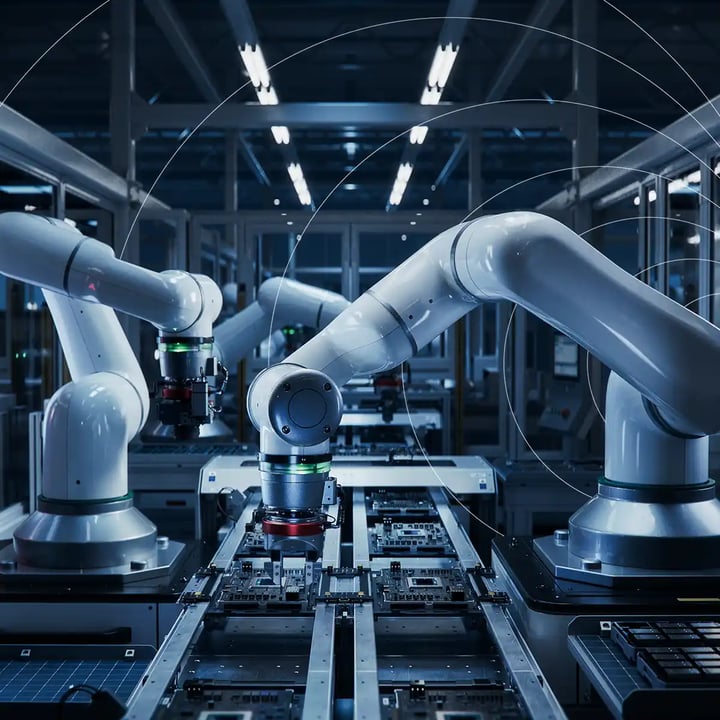
For companies like Com4, this is where IoT connectivity becomes mission critical, ensuring robots stay connected wherever they operate, from offshore environments to dense urban infrastructure.
What is the Internet of Robotic Things?
The Internet of Robotic Things refers to robots that are connected to the internet and equipped with industrial IoT hardware and sensors, giving them the ability to collect and analyze data, interpret their surroundings, and respond to changes in real time.
When combined with AI and cloud computing, IoRT-enabled robots can make decisions on the spot, such as slowing down when a worker enters their workspace or adjusting grip strength to handle fragile components.
This represents a shift away from traditional robots that operate in isolation. IoRT systems are aware, adaptive, and integrated into wider industrial ecosystems, allowing them to work collaboratively with both people and machines. The outcome is a safer working environment, fewer errors, and greater efficiency in complex production environments.
How IoT Robotics differs from standard IoT
While both IoT and IoRT rely on connected devices and sensors, the distinction lies in autonomy and response. IoT devices gather data and transmit it for analysis, often requiring external systems to interpret and act. IoRT, on the other hand, brings intelligence directly into the robot.
For example, IoT sensors may detect vibration anomalies in a machine and send an alert to maintenance teams. In contrast, an IoRT-enabled robot can process this information locally and immediately adjust its operations, such as slowing down or pausing production, to prevent damage or accidents. This ability to act in real time is what sets IoRT apart and makes it so valuable in manufacturing environments.
From Standalone Robots to Connected Systems
Traditionally, robots operated in isolated environments. Today, with IoT integration, they become part of a connected ecosystem:
- Robotics enables automation and physical task execution
- IoT connectivity allows robots to send, receive, and act on real-time data
- Cellular and satellite networks ensure continuous operation across borders and environments
This shift transforms robots into data-driven assets, capable of autonomous decision-making and remote management—at scale.
The Role of Connectivity in IoT Robotics
Connectivity is the backbone of IoT-enabled robotics. Without it, even the most advanced machines are limited.
Reliable global connectivity
Robots rely on technologies like 4G, 5G, LTE-M, NB-IoT, and satellite (LEO) to stay connected—especially in remote or mobile environments where Wi-Fi is not an option.
Low latency for real-time control
Autonomous navigation and remote operations depend on ultra-low latency, enabled by modern cellular networks and edge computing.
Secure data transmission
With large volumes of operational data being transmitted, secure SIM-based connectivity ensures protection and compliance.
Scalable device management
IoT platforms allow companies to monitor, control, and update robotic fleets remotely, regardless of geography.
Real-World Use Case: Autonomous Robotics at Sea
A strong example of connected robotics in action is Remora Robotics, a Norwegian company deploying autonomous robots to clean ship hulls.
Operating in harsh maritime environments, these robots depend on robust cellular connectivity to:
- Real-time data collection enabling remote monitoring and smarter farm management
- Improved fish welfare and reduced biofouling through continuous operations
- Lower costs and emissions with automated, data-driven aquaculture processes
Key Use Cases: Where Connectivity Powers Robotics
Smart Manufacturing (Industry 4.0)
Connected robots and cobots rely on IoT connectivity for:
- Real-time production monitoring
- Predictive maintenance to reduce downtime
- Seamless integration across global production sites
Connectivity value: Ensures uptime, synchronization, and data-driven optimization.
Logistics and Supply Chain
Autonomous mobile robots (AMRs), AGVs, and drones depend on continuous connectivity for:
- Real-time tracking and routing
- Warehouse automation
- Cross-border fleet management
Connectivity value: Enables full visibility and coordination across logistics networks.
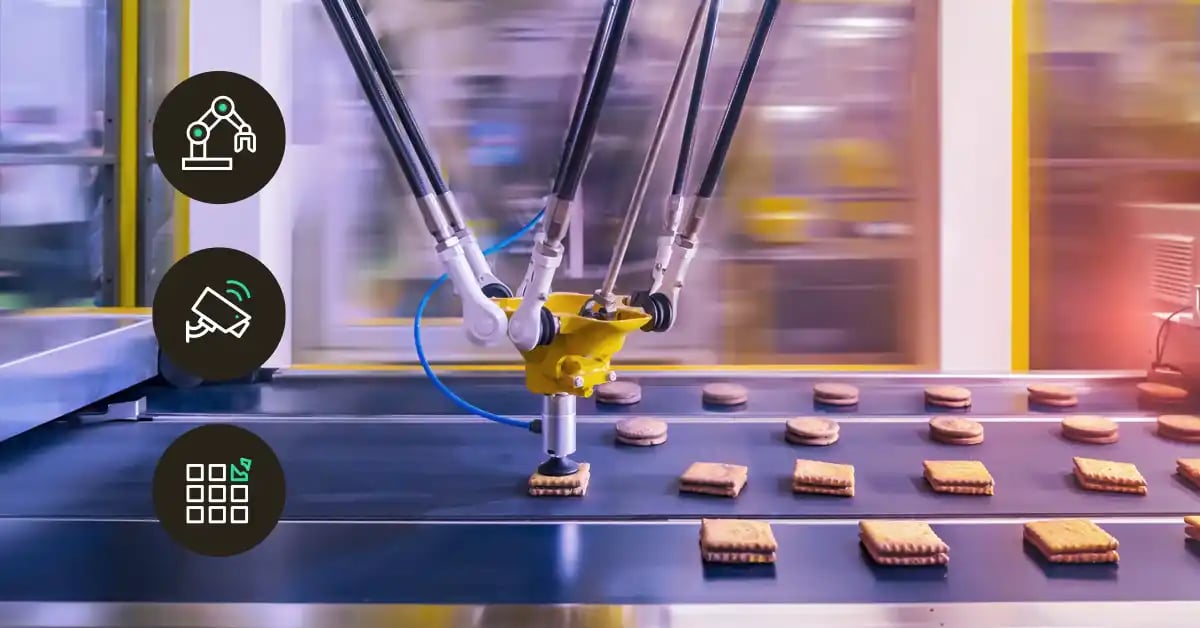
Agriculture and Environmental Monitoring
Robots operating in remote environments use IoT connectivity to:
- Monitor soil, weather, and crop conditions
- Automate planting and harvesting
- Optimize resource usage
Connectivity value: Cellular and satellite ensure coverage where traditional networks fail.
Healthcare and Remote Operations
Connected robots support:
- Remote diagnostics and patient monitoring
- Assisted surgery and precision robotics
- Elderly care solutions
Connectivity value: Secure, reliable communication is critical for safety and compliance.
Energy, Utilities, and Infrastructure
Inspection robots monitor critical infrastructure such as:
- Power grids and substations
- Oil & gas pipelines
- Renewable energy assets
Connectivity value: Enables real-time fault detection and predictive maintenance in remote or hazardous environments.
 Why IoT Connectivity is the Enabler
The true value of robotics in IoT is unlocked through robust connectivity solutions:
- Global coverage across networks and regions
- Multi-network resilience to avoid downtime
- Future-proof support for LTE-M, NB-IoT, 5G, and satellite
- Scalable deployments from pilot to global rollout
For Com4 customers, this means the ability to deploy and scale robotic solutions without connectivity constraints.
Challenges to Address
Success depends on solving key connectivity challenges:
- Network reliability in remote or mobile environments
- Latency requirements for real-time operations
- Security of connected devices and data
- Interoperability across technologies and networks
This is where managed IoT connectivity plays a critical role—removing complexity and ensuring consistent performance.
The Future: Fully Connected Autonomous Systems
Looking ahead, robotics and IoT will be accelerated by:
- 5G and private networks enabling ultra-low latency use cases
- LEO satellite connectivity expanding global coverage
- AI-driven automation powered by real-time IoT data
- Swarm robotics, where fleets collaborate through connected systems
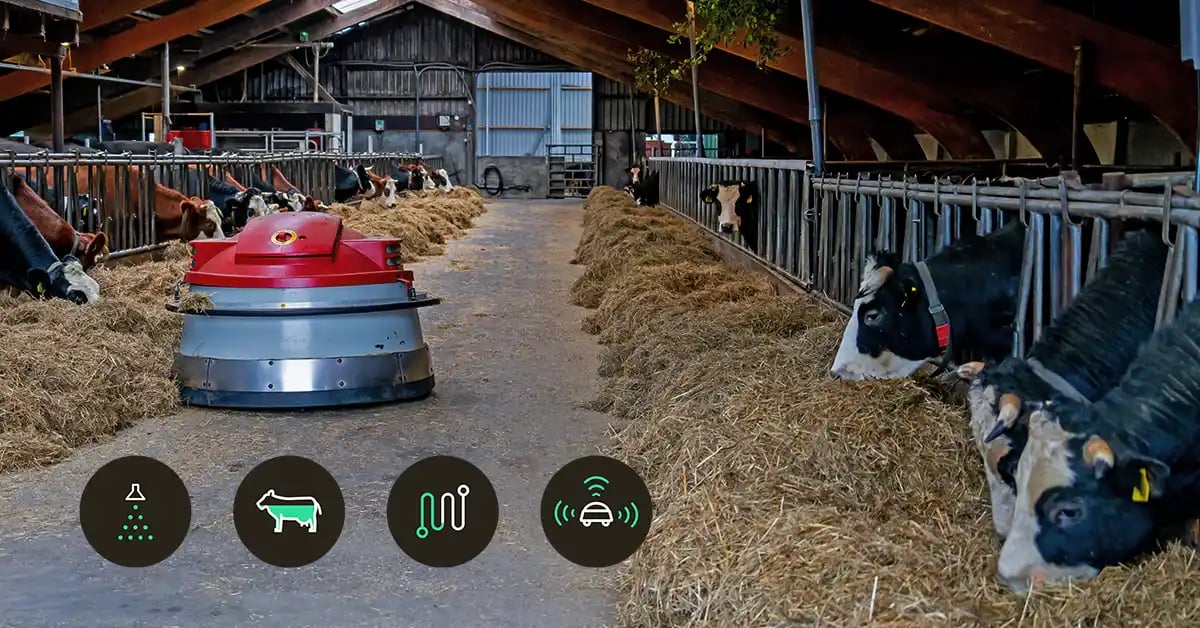
The combination of robotics and IoT is transforming industries—but connectivity is what makes it work.
With reliable, secure, and scalable IoT connectivity, companies can unlock the full potential of robotics—driving efficiency, sustainability, and new business models.



.jpg)