

.png?width=166&height=70&name=images%20(1).png)
.jpg?width=5570&height=3386&name=DSC_2858%20(1).jpg)
-1.jpg?width=6016&height=4016&name=DSC_5039%20(1)-1.jpg)
Løsningen
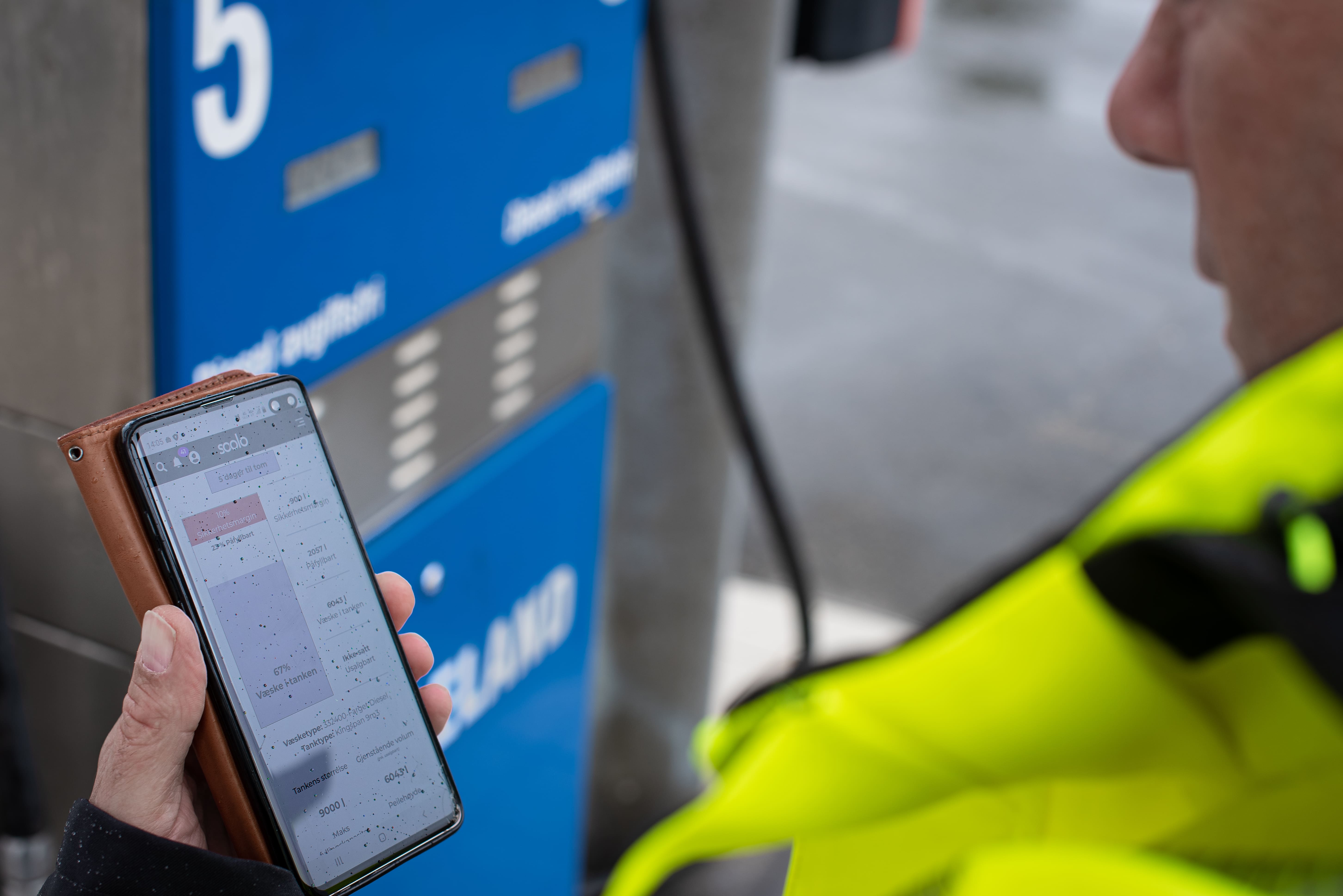
Soolo gir kundene sanntidsinnsikt i hva som skjer i tankene – til enhver tid. Sensoren måler væskenivå ved hjelp av hydrostatisk trykk: En sonde plasseres i bunnen av tanken og registrerer trykket fra væsken over seg. Dette omregnes til nøyaktig volum basert
på tankens form og innhold. Dataene sendes via mobilnettet til skyen, hvor de blir tilgjengelige for kunden.
Teknologien til Soolo muliggjør dette:
● Planlegge kjøreruter basert på faktisk behov
● Øke utnyttelsesgraden i hver tank
● Unngå overløp og tomme tanker
● Forutsi fremtidig forbruk
– Produktet vårt er ikke bare sensoren, det er informasjonen kunden får. Dette er en løsning som ikke bare brukes for å unngå tomme drivstofftanker, men som også kan måle det stikk motsatte – når andre typer tanker blir for fulle, sier Rein Anders Apeland i Soolo.
.jpg?width=810&height=540&name=Bilde4%20(1).jpg)
Com4s rolle
For Soolo er konnektivitet en kritisk del av løsningen. Sensorene opererer ofte i miljøer med utfordrende dekning, der tradisjonell mobilbruk ikke er tilstrekkelig. Samtidig er kravene tydelige: Dataene må frem – hver gang. Com4 leverer SIM-kort og en konnektivitetsløsning som er optimalisert for IoT, med støtte for teknologier som LTE-M og Narrowband.
– Vi sender svært lite data, men det må være 100 prosent pålitelig. Sensorene våre kan stå
nedgravd eller inne i containere, og da er det helt avgjørende med robust dekning, sier
Apeland. Gjennom samarbeid med Com4 har Soolo fått:
● Stabil kommunikasjon i krevende miljøer
● Multi-IMSI-løsning for bedre dekning
● Teknisk støtte på høyt nivå
● Forutsigbar drift på tvers av markeder
– Com4 var den første leverandøren som både var ærlig om begrensningene, og de kunne
svare på de tekniske spørsmålene våre, sier Apeland.
Resultater
Soolo dokumenterer tydelige gevinster hos kundene:
1. Lavere transportkostnader
Bedre planlegging og høyere utnyttelsesgrad gjør at transportbehovet i mange tilfeller kan
reduseres betydelig.
2. Økt driftssikkerhet
Sanntidsdata og varslinger gjør at tanker ikke går tomme, og kritiske stopp unngås.
3. Bedre beslutningsgrunnlag
Kundene går fra reaktiv drift til datadrevet planlegging.
4. Nye forretningsmodeller
Distributører kan tilby tjenester basert på garantert tilgjengelighet og optimal logistikk.
– Når kundene vet nøyaktig hva de har, kan de planlegge bedre. Det gir en direkte effekt på
bunnlinjen, sier Hatlestad.
«IoT kan virke enkelt, men i praksis er det komplekst. Sensorene våre står ofte steder meddårlig dekning, og vi sender små datamengder som må frem hver gang. Med Com4 har vifått en løsning som fungerer i praksis, og et team som forstår teknologien.»


Start reisen din i dag
Fremtidssikre IoT-infrastrukturen din med våre banebrytende løsninger. Com4 er din sanne partner for IoT-tilkobling