When deploying IoT solutions at scale, secure and reliable connectivity is essential. One key factor that often determines how easily devices can be managed and accessed remotely is the type of IP addressing they use.
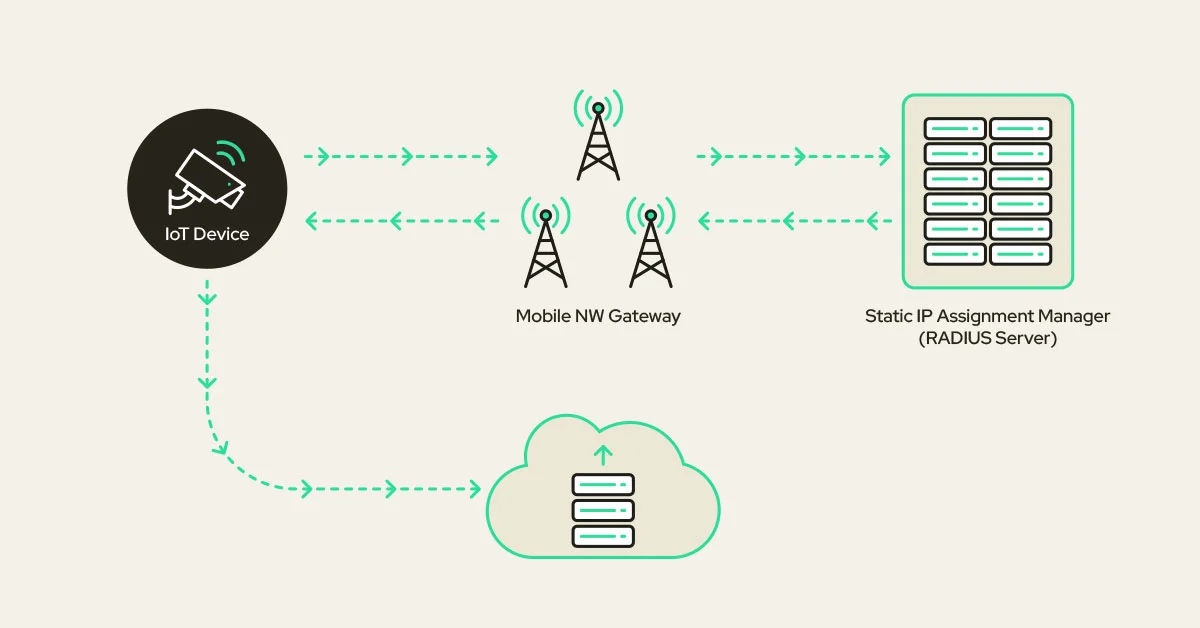
At Com4, we enable customers to choose the right configuration for their IoT deployments, including when and why to use fixed (static) IP addresses. With Com4’s managed SIMs and static IP options, your devices remain always reachable, secure, and easy to manage remotely, even on mobile networks that normally block inbound connections.
What Is a Static (Fixed) IP Address?
Every IoT device that connects to the internet across 2G, 3G, 4G, and 5G networks is assigned an IP address, which serves as its unique identifier.
There are two main types of IP addresses:
- Dynamic IP: changes every time a device reconnects to the network.
- Fixed (Static) IP: remains constant, even when the device moves, reboots, or reconnects.
A static IP ensures the device always keeps the same address, enabling direct, two-way communication between your IoT endpoints and your systems or cloud platforms.
Why Choose Static IPs for IoT?
IoT deployments require more than a data plan. They need consistent, secure, and manageable connectivity. With Com4’s static IPs, you gain:
- Consistent Addressing
Each device is assigned a fixed IP that never changes, simplifying integration, monitoring, and data access. - Remote Access from Anywhere
Access and control your devices across mobile networks without complex workarounds. - Built for VPNs, Firewalls, and Cloud Integration
Seamlessly connect devices to your enterprise IT setup, supporting secure connections to VPNs, firewalls, and cloud services. - No Manual Setup Required
Static IPs are managed automatically through Com4’s infrastructure — no need for local configuration or complex static mapping.
Static Public IP vs. Static Private IP
|
Type |
Best For |
Common Use Cases |
Network Exposure |
Ideal When |
|
Static Public IP |
Global access, remote support, external integrations |
EV chargers, kiosks, CCTV cameras |
Directly accessible over the internet |
External systems need to reach the device directly |
|
Static Private IP |
Security, segmentation, internal access |
ATMs, enterprise routers, industrial sensors |
Isolated within VPN/APN, protected from public networks |
Full control and internal communication are required |
Benefits of Static IP Connectivity
Choosing static IP SIMs from Com4 gives you:
- Guaranteed visibility and control over every connected IoT device.
- Reliable remote access, regardless of network changes or movement.
- End-to-end security and encryption for data integrity and compliance.
- Better network predictability and reduced latency for time-sensitive applications.
- Centralized device management through Com4’s connectivity platform.
When Static IPs Are Essential
Static IPs are particularly valuable for IoT projects that demand persistent, managed connectivity — including:
- Remote monitoring and management of IoT devices.
- Control systems, industrial sensors, and automation.
- CCTV surveillance and video monitoring.
- Remote maintenance and support.
- Cloud authentication and secure access for hosted applications.
- Failover connections for business continuity.
- Smart metering and telemetry applications.
Why Choose Com4
Com4’s fixed IP SIMs are part of our managed IoT connectivity platform, designed to give enterprises full control, visibility, and security across their connected ecosystems.
We support all radio standards including 2G, 3G, 4G, 5G, LTE-M, and NB-IoT, ensuring your IoT devices stay connected and accessible across any network or region. With Com4, your IoT devices remain visible, reachable, and protected through secure IoT solutions at all times.