For enterprises deploying IoT at scale, identifying and addressing vulnerabilities in connectivity and data management has become a strategic priority. Security is no longer a technical afterthought; it is a core requirement for business continuity, compliance, and customer trust.
Security-First Capabilities Every IoT Connectivity Partner Must Deliver
At Com4, we focus on delivering secure and managed IoT connectivity that helps enterprises reduce risk, ensure privacy, and build resilient IoT ecosystems.
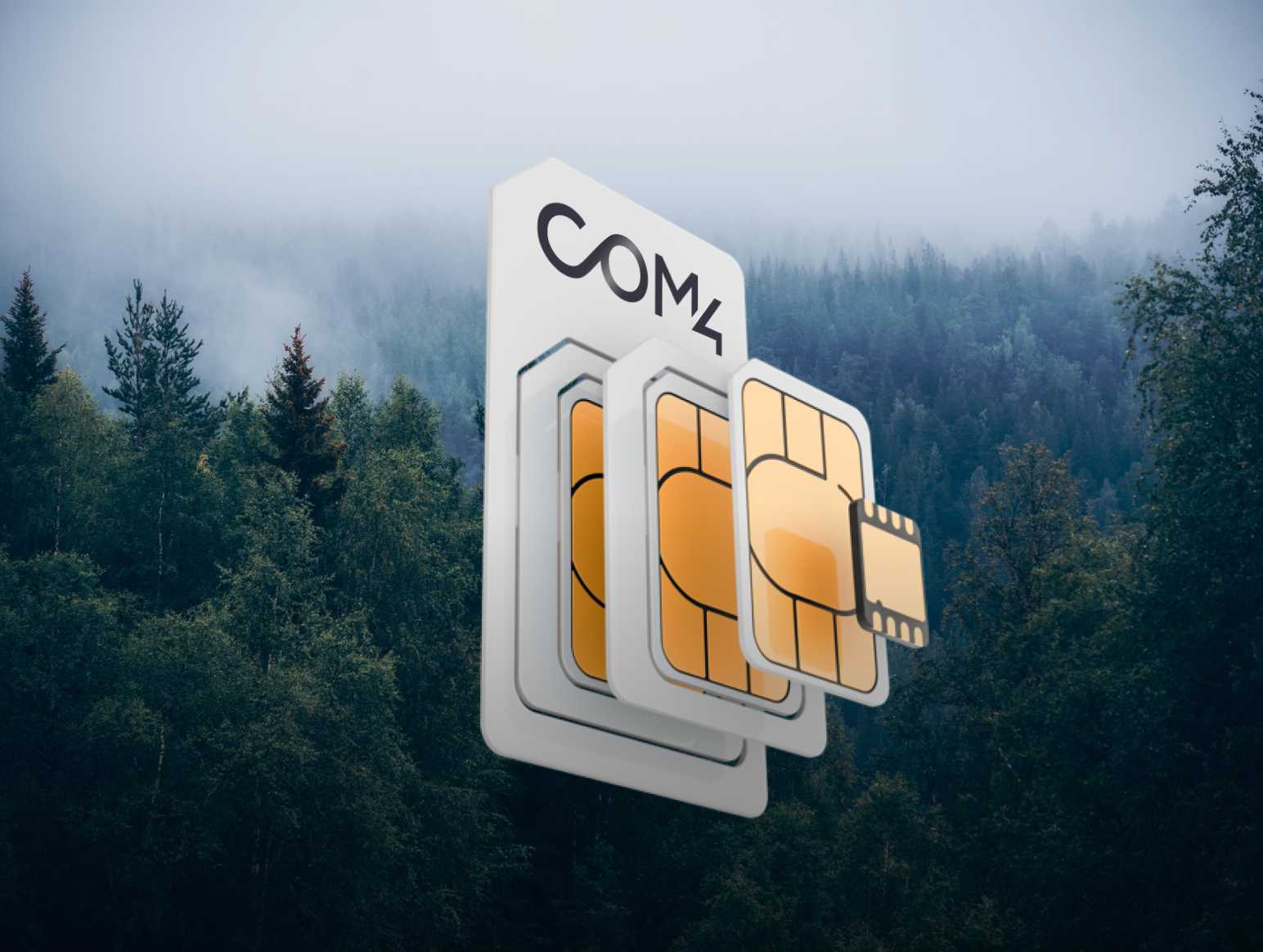
This requires holistic thinking covering all parts of the solution. Our products and solutions are designed using a suite of advanced technologies within SIM (UICC, eSIM/eUICC, iSIM/ iUICC), Remote Sim Provisioning (M2M SGP.02 and IoT SGP.32), hardware modules from globally leading suppliers, as well as global connectivity and wireless broadband type solutions by means of roaming and LEO satellite connectivity.
These elements all have inherent security mechanisms and the connectivity is delivered by secure IP and Mobile core networks. The customer can opt for additional security on the connectivity itself (VPN, dedicated links, encryption) and also apply secure features of the Connectivity Management Platform.
As part of the portfolio we can also offer dedicated security monitoring, and innovative security products based on AI and zero-trust principles are in the pipeline.
Privacy is managed both internally and by suppliers by combining processes, contractual framework with strict security to fulfill GDPR requirements.
What Makes IoT Security Unique
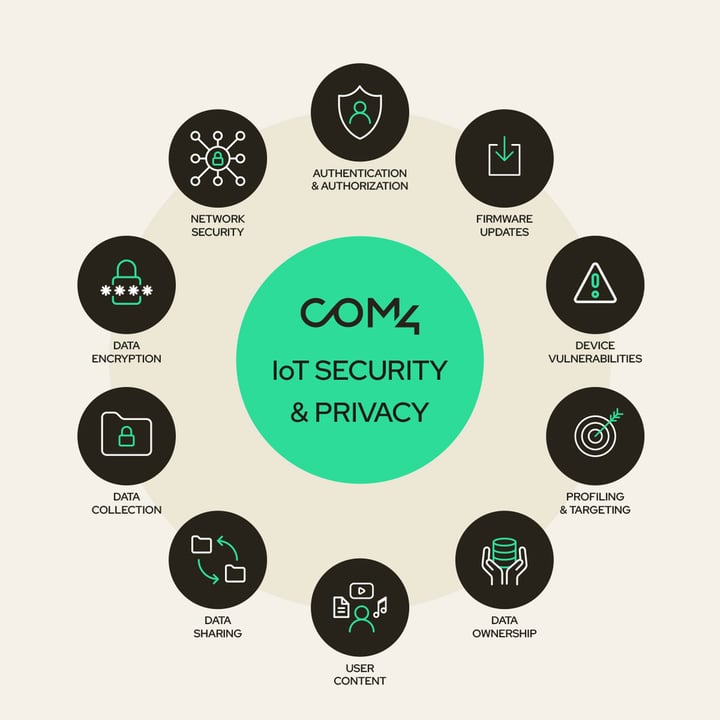
To build a working solution the customer needs to add several elements on top of what more traditional IT systems rely on. The totality of an IoT ecosystem brings together device hardware, firmware, connectivity with and the IT cloud infrastructure and application itself. The elements are often sourced from multiple vendors and deployed in distributed environments. Each component introduces its own security challenges.
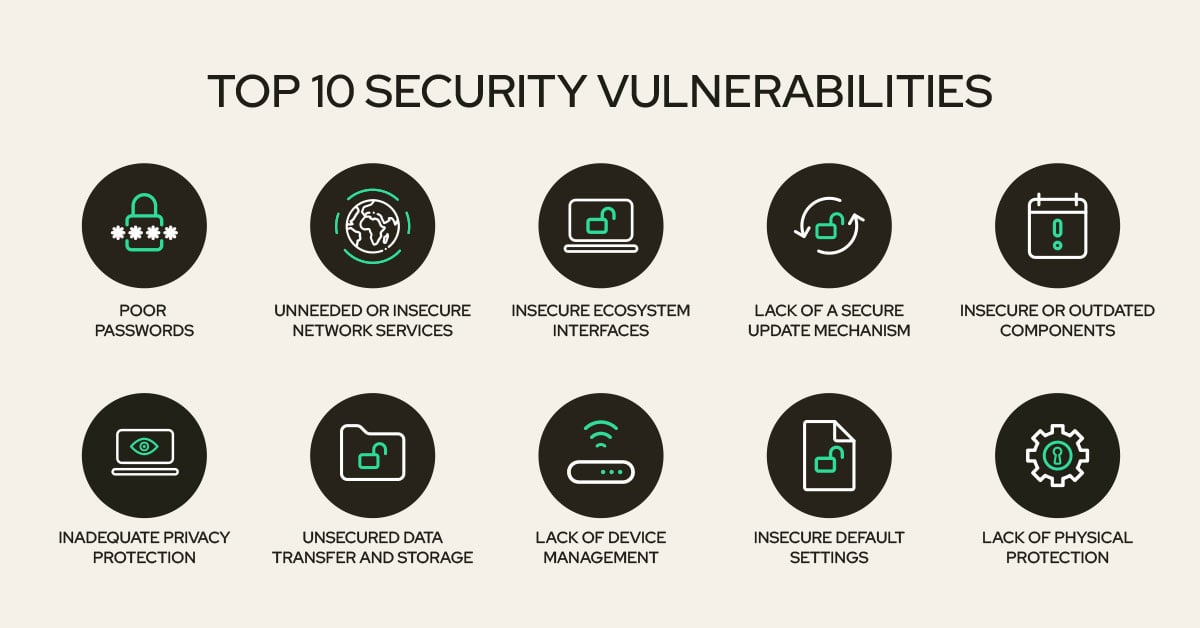
Devices can have weak authentication or outdated firmware. Data transmitted between devices, gateways, and cloud services can be insecure. Poor network segmentation can expose IoT systems to lateral attacks, and limited visibility into remote devices can make ongoing monitoring difficult.
A Broader Threat Surface
Billions of IoT devices now operate globally, including smart meters, industrial sensors, and connected vehicles. Taken togheter, this constitutes a vast and complex network of endpoints with a huge attack surface. Industry reports show that more than forty percent of enterprises still have parts of their IoT infrastructure without full security coverage. Taken together, this opens the door to malware, ransomware, denial-of-service attacks, and data theft, often with serious physical and operational consequences. No single entity manages the totality, either geographically, vertically, or technology domain.
There are some attempts to regulate IoT security for all suppliers in a region, like the EU Cyber Resilience Act, but in general the organization that is building a solution or offering a service built on IoT needs to ensure that what they use is safe and compliant to privacy concern. There is a clear trend among such companies to consider the whole supply chain as well as introduce their own “implementations” of zero-trust principles, including .
Common Weaknesses in IoT Deployments and Com4’s Response
Devices in the field are often not updated for years and may never receive security patches. Com4 enables remote SIM provisioning and management through our platform, allowing over-the-air updates, diagnostics, and deactivation to maintain control and compliance.
Some organizations rely on consumer-grade or public networks that are more susceptible to attacks. Com4 provides private access point names and virtual private network connections that ensure encrypted and isolated traffic between devices and enterprise systems.
As the number of connected devices grows, so does the amount of data being transmitted. This increases the risk of interception. Com4’s cellular and satellite services rely on SIM-based authentication, end-to-end encryption, and compliance with the GSMA IoT Security Guidelines and the SGP.32 IoT eSIM standards.
IoT Security in Action
Energy and Utilities: Protecting Critical Infrastructure
A European utility provider uses thousands of smart sensors connected through Com4’s LTE-M and NB-IoT networks to monitor grid health. The sensors are located in remote areas with limited physical security and require real-time data transfer without exposing grid controls. Com4 enables secure data transmission through private APN, encrypted traffic channels, and SIM-based authentication, isolating the devices from public networks. This setup supports predictive maintenance and fault detection without compromising operational security.
Smart Buildings: Securing Connected Environments
A facility management company deployed Com4 SIMs across hundreds of IoT sensors for noise and air-quality monitoring. The devices operated in shared network environments with varying security policies. Com4 provided secure global connectivity with centralized device management and encrypted communication over LTE-M, ensuring compliance with data privacy regulations while supporting real-time analytics for the client’s sustainability goals.
Retail and Consumer Insights: Preventing Data Breaches
A retail analytics company deployed more than one thousand tablets in shopping centers to collect customer feedback. These devices used mobile data in public areas and processed personal information, creating a data privacy risk. Through Com4’s IoT Connectivity platform, the company gained secure SIM management, data usage control, and real-time monitoring. With encrypted traffic and visibility at the device level, the retailer reduced the risk of data leakage while maintaining full compliance with the General Data Protection Regulation.
Remote and Maritime Operations: Secure Connectivity Beyond Cellular
For maritime IoT and remote site monitoring, Com4’s managed low-earth orbit services combine Starlink with cellular backup to maintain continuous and secure communication. Many of these sites lack reliable cellular coverage and require high levels of data confidentiality. Com4 provides managed LEO connectivity with end-to-end encryption and seamless integration into the management platform, ensuring high uptime and data integrity even in harsh or isolated environments.
Best Practices for Strengthening IoT Security
Enterprises should always use encrypted communication through cellular IoT technologies such as LTE-M, NB-IoT, or 5G, rather than relying on unprotected Wi-Fi or public internet connections. Real-time monitoring and automated alerts help identify unusual traffic or device behavior. Segmenting networks prevents IoT devices from being exposed to threats that move laterally within corporate IT environments. Devices must be remotely manageable to enable updates and deactivation if compromised.
How Com4 Protects IoT Ecosystems
Com4’s connectivity platform is built on the principle of security by design. All data traffic is protected through SIM-based encryption and private tunneling. Every device on the Com4 network is uniquely identifiable, providing customers with precise control. The platform offers real-time monitoring across devices, operators, and geographies, allowing instant detection of irregularities. Whether managing one hundred or one hundred thousand devices, Com4 ensures consistent protection and compliance.
.jpg?width=720&height=377&name=7-best%20(2).jpg)
Future-Proofing IoT Security
As 5G and iSIM adoption increase, IoT security is shifting from external controls to embedded protection within the SIM or chipset itself. The GSMA SGP.32 specification, soon supported by Com4, enables secure and remote provisioning for IoT devices at scale. This new generation of eSIM and iSIM technology strengthens authentication, simplifies lifecycle management, and ensures that devices remain secure throughout their operational lifespan. At the same time, emerging artificial intelligence–driven analytics and automated incident detection will make IoT systems more resilient by identifying anomalies and responding proactively.
.png?width=1200&height=630&name=2%20iSIM%201-91_1%20(2).png) Com4: Trusted Connectivity for a Secure IoT Future
Com4: Trusted Connectivity for a Secure IoT Future
Security is not a one-time effort but an ongoing process of assessment, adaptation, and improvement. By combining robust connectivity, embedded SIM security, and proactive management, enterprises can build IoT systems that are scalable, efficient, and trustworthy.
At Com4, we deliver secure and managed IoT connectivity that protects devices, data, and business reputation.
From LTE-M and 5G to iSIM and satellite, Com4 provides end-to-end secure connectivity trusted by enterprises across Europe. Our GSMA-compliant security framework ensure that your IoT projects are protected today and in the future.