
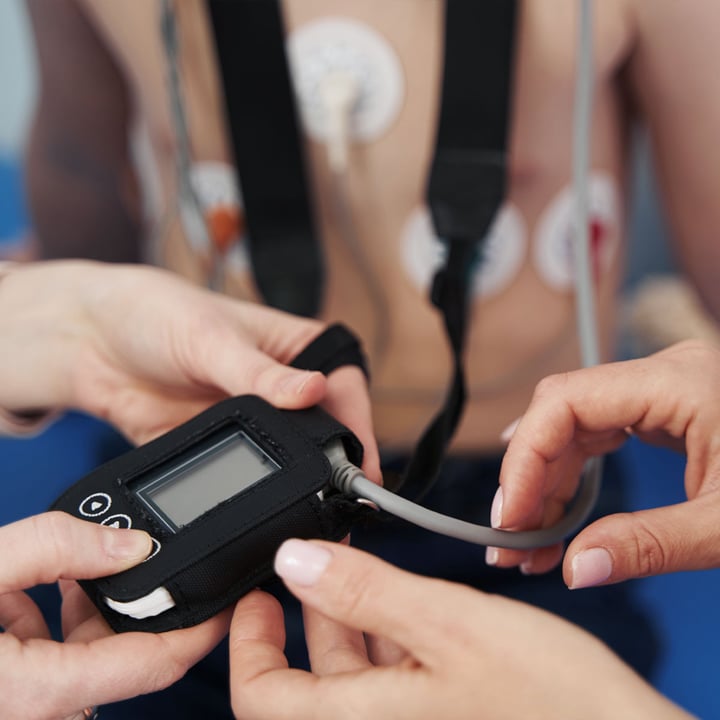
This article covers what IoT connectivity for medical devices actually requires, where most deployments fall short, and how com4 solves the hard problems — from zero-touch provisioning to cross-border compliance.
What Is IoT Connectivity for Medical Devices?
IoT connectivity for medical devices refers to the wireless communication infrastructure that allows connected health hardware to transmit patient data securely and continuously to clinical platforms, care teams, and hospital systems.
This includes:
- SIM and eSIM provisioning that activates devices without manual configuration
- Multi-carrier cellular networks with automatic fallback to maintain uptime
- Private APN infrastructure that keeps patient data off the public internet
- Real-time device monitoring and alerting across distributed device fleets
- Lifecycle management that keeps devices compliant throughout their operational life
For patients, none of this is visible. For MedTech manufacturers, all of it is critical.
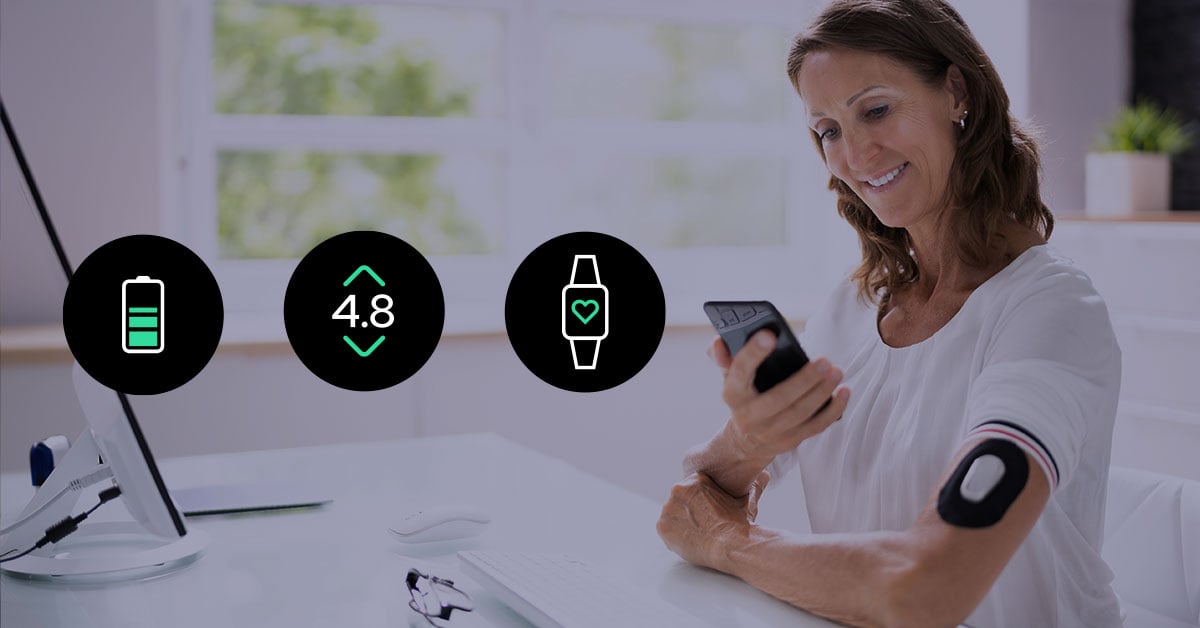
Why Standard IoT Connectivity Falls Short in Healthcare
Consumer IoT deployments can tolerate occasional downtime. A smart thermostat going offline for a few minutes is an inconvenience. A cardiac monitoring device missing a transmission window is a clinical risk.
Healthcare IoT connectivity has to meet a fundamentally different standard:
Regulatory compliance. Medical devices operating in Europe must meet MDR requirements and GDPR data protection standards. The connectivity layer is part of that compliance surface, not separate from it.
Security by design. Patient health data is among the most sensitive personal data that exists. Transmitting it over shared public networks is not acceptable. Private APNs and encrypted data paths are baseline requirements, not optional upgrades.
Reliability at scale. A single device going offline might be manageable. A fleet of thousands of remote monitoring devices experiencing connectivity gaps creates clinical risk at scale and operational burden that is extremely difficult to manage reactively.
Cross-border consistency. Clinical trials, chronic disease programmes, and hospital-at-home initiatives increasingly operate across multiple countries. Connectivity that works in one market but requires renegotiation for the next creates delays that directly affect patient access to care.
How Com4 Solves IoT Connectivity for MedTech
Zero-Touch Provisioning for Patient-Ready Devices
The first moment a patient powers on a connected health device sets expectations for the entire care relationship. If activation requires manual SIM configuration, a support call, or an IT visit, that friction undermines clinical adoption before monitoring even begins.
Com4 manages the full provisioning stack: multi-IMSI eSIM profiles loaded before devices leave the warehouse, zero-touch activation that fires on first boot, and security credentials already in place. MedTech manufacturers ship patient-ready hardware at scale without building or maintaining that provisioning infrastructure themselves.
In practice: MedThings builds smart medication dispensers for Norwegian hospitals and home care settings. By embedding Com4 eSIMs directly into their devices, MedThings ships units that connect automatically on arrival, support remote over-the-air software updates, and integrate in real time with hospital systems. There is no manual setup for the patient and no IT dependency on the care provider's side.
Multi-Carrier Connectivity with Automatic Fallback
Remote patient monitoring depends on continuous, uninterrupted data flow. A pattern of missed readings is not just a data quality problem. It can mean the difference between early clinical intervention and an avoidable hospital admission.
Com4's managed IoT connectivity platform provides multi-carrier coverage across Europe, with automatic network switching when signal degrades. Every device in a fleet is continuously monitored. When something goes wrong, the platform flags it immediately so clinical teams can respond before a gap becomes a clinical event.
In practice: Pilly, the smart pillbox developed by Dignio, addresses one of Norway's most significant healthcare challenges: medication non-adherence. Only around half of prescribed medications are taken as intended. Pilly uses sound and light cues to prompt patients and sends automatic notifications to designated contacts when doses are missed. Powered by Com4's SIM technology on a private network separate from the open mobile network, Pilly's critical communications are transmitted securely every time. The solution is now deployed across more than 50 Norwegian counties, has expanded into Denmark, and is attracting interest from healthcare authorities in China and England.
Single-SKU Global Deployment for Cross-Border Programmes
Connected health programmes grow. A successful remote monitoring pilot in one country creates the immediate question of how to replicate it in others. Traditionally, that means new carrier negotiations, different SIM SKUs per market, and separate support structures by region. This fragmentation slows expansion and creates consistency gaps that affect both patient experience and data quality.
Com4 enables single-SKU global deployments. One eSIM steers automatically to local carrier networks wherever a device lands. One platform manages the entire fleet. MedTech companies can expand geographically without rebuilding their connectivity operations from scratch for each new market.
Healthcare-Grade Security and Compliance
Connected health devices sit at the intersection of personal health data and regulated medical technology. The connectivity layer must meet the same regulatory standards as the device itself.
Com4 provides private APNs, end-to-end encryption, and auditable connectivity logs as standard, supporting compliance with GDPR, MDR, and relevant IEC standards. Lifecycle management keeps devices compliant from first activation through end of life.
In practice: Dignio was founded by doctors and healthcare professionals who understood that technology for elderly patients needs to be as trustworthy as it is simple. By partnering with Com4, Dignio ensures that every data transmission from Pilly travels over a private, secured network rather than a shared one. When the data in question relates to whether a cardiac patient took their medication, that distinction is not a technical preference — it is a patient safety decision.
Proactive Fleet Monitoring That Catches Problems Before Patients Notice
The most valuable thing IoT connectivity provides in healthcare is not data transmission. It is making proactive care possible. When a device drops offline, changes transmission patterns, or switches networks unexpectedly, clinical teams should know before patients do.
Com4's platform gives operations teams real-time visibility across their entire device fleet, with configurable alerting thresholds and usage trend analytics. Issues are identified and resolved remotely, typically before they cause any clinical impact.
In practice: MedThings deploys connected medication devices in hospital and home care settings where reliability is non-negotiable. Using com4 IoT SIMs, MedThings monitors device performance continuously, tracks equipment status in real time, and resolves connectivity anomalies before they affect dosing or care delivery. That level of always-on visibility is extremely difficult to build and maintain independently.
.jpg?width=1200&height=628&name=Health-and-IoT-2%20(2).jpg)
Key Considerations When Choosing IoT Connectivity for Healthcare
For MedTech companies evaluating connectivity partners, the right questions to ask are:
Does the platform support private APN configurations? Shared public network paths are not appropriate for patient health data. Private APNs are a baseline healthcare requirement.
Is multi-carrier fallback supported natively? Single-carrier SIM solutions leave devices offline when that carrier experiences outages or coverage gaps. Multi-network SIMs with automatic failover are essential for monitoring continuity.
Can devices be provisioned and updated remotely? Physical intervention at scale is impractical. Zero-touch provisioning and over-the-air update capability are operational necessities, not nice-to-haves.
Does the platform support global single-SKU deployment? If your programme will expand beyond one country, fragmented SIM management will slow that expansion significantly.
Does the connectivity provider understand regulated healthcare? GDPR, MDR, and audit requirements affect how connectivity infrastructure must be architected. A provider with no healthcare experience will not have the right defaults in place.
IoT Connectivity Standards and Protocols for Medical Devices
Connected health devices typically rely on the following wireless communication technologies:
LTE-M (Cat-M1): Low-power wide-area cellular optimised for mobile and wearable medical devices. Supports continuous connectivity and network handoff, making it ideal for devices that move with patients.
NB-IoT: Optimised for fixed or slow-moving devices in challenging signal environments. Excellent building penetration for devices used indoors, with long battery life for devices that transmit infrequently.
4G LTE / 5G: For devices requiring higher bandwidth, such as remote diagnostic equipment transmitting imaging data or video consultations.
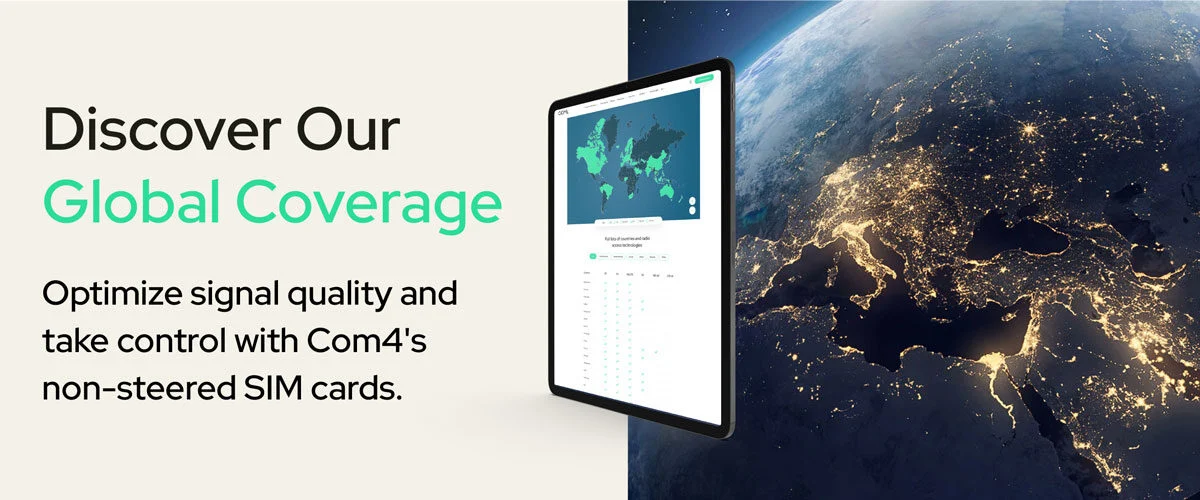
Com4 supports LTE-M and NB-IoT across its global network, allowing MedTech manufacturers to match connectivity technology to device requirements and manage everything through a single platform.
The Infrastructure Behind Connected Care
The best connected health experiences are the ones where patients never think about connectivity. The device works, data reaches the care team, and health outcomes improve. That result depends on a connectivity layer that is reliable, secure, globally capable, and built for the specific demands of regulated healthcare.
Com4 has been building that layer alongside MedTech companies for years, from eSIM provisioning to fleet management, from private networks to lifecycle compliance. If you are developing a connected health product and want to understand what the right connectivity architecture looks like for your use case, our team would be glad to help.




-1.webp)