

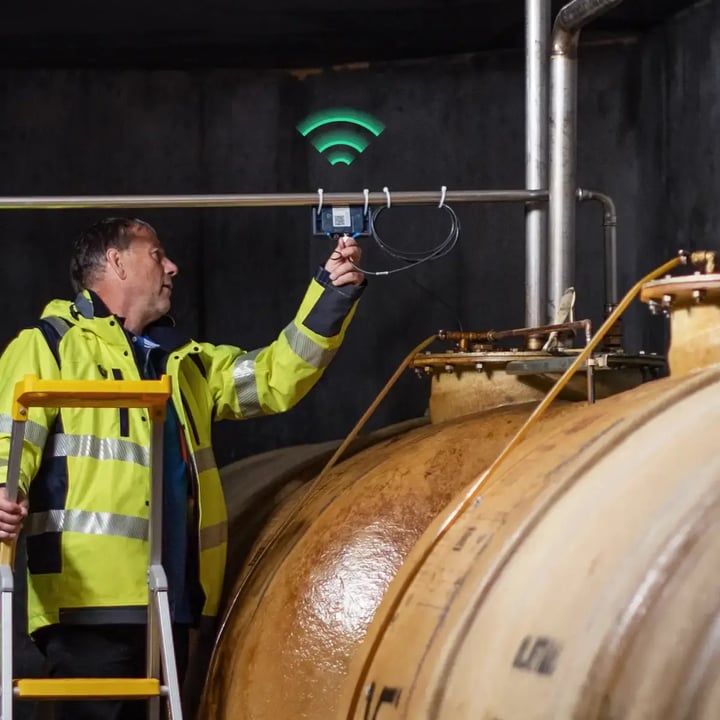
The cost of a single empty-tank incident can exceed 50,000 Norwegian kroner in penalties and lost production. Multiply that risk across an entire distribution network and the case for a smarter approach becomes impossible to ignore.
This is exactly the problem that IoT connectivity for fuel distribution is designed to solve.
What Is Remote Tank Monitoring?
Remote tank monitoring means measuring the level of liquid in a tank without being physically present. Using sensors that transmit data wirelessly to a cloud platform, operators can monitor tank levels in real time, receive automated alerts, and take action before a tank runs empty or overflows.
The technology replaces manual inspection, visual gauges, and fixed delivery schedules with continuous, accurate, and actionable data. For fuel distributors, this shift from reactive to predictive operations is transformative.
How Pressure Sensor Technology Works
The most reliable and widely used method for remote tank monitoring is the pressure sensor. Here is how it works in practice.
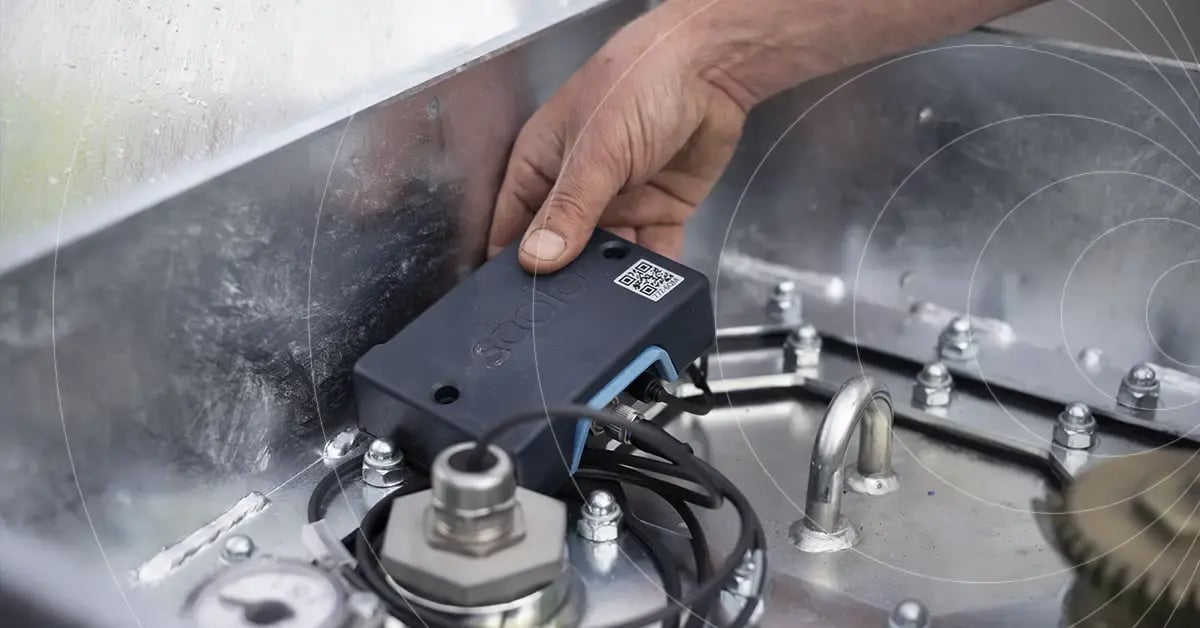
A hydrostatic pressure sensor is placed at the bottom of the tank. As the liquid level rises, the pressure at the bottom increases. As it falls, the pressure decreases. The sensor detects these changes and converts the pressure reading into an accurate measurement of liquid level and volume, calibrated to the specific shape of the tank and the type of liquid it contains.
The process from sensor to dashboard follows five steps:
- The sensor registers the hydrostatic pressure at the bottom of the tank
- The pressure reading is converted into liquid level and volume using a formula adapted to the tank shape and contents
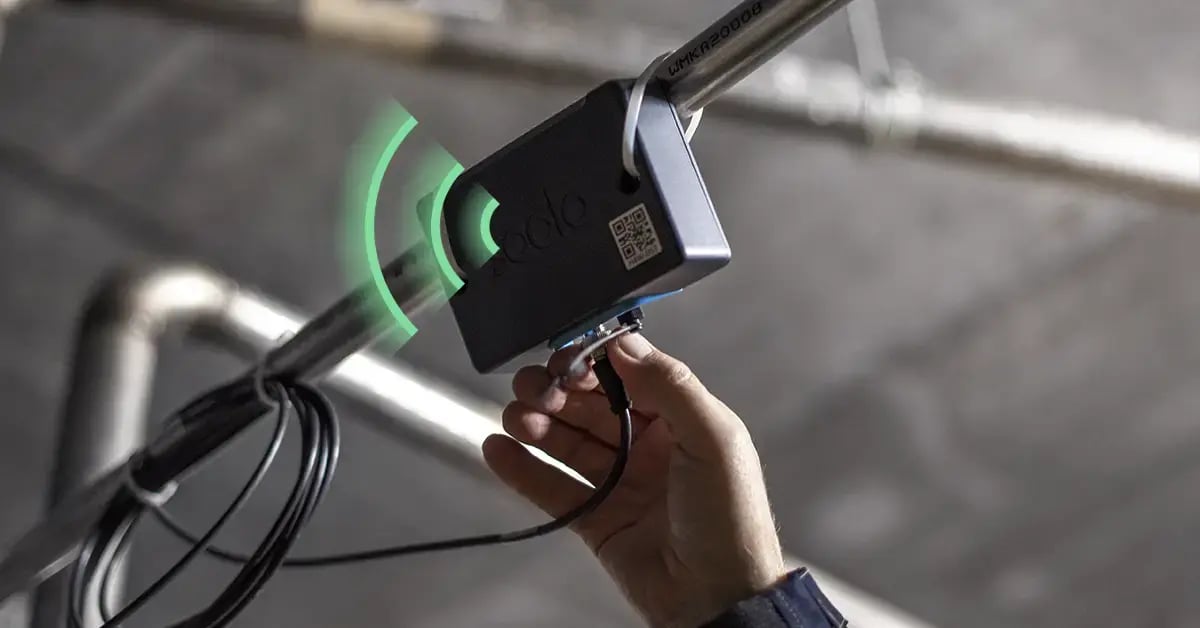
- The signal is transmitted wirelessly to an IoT device
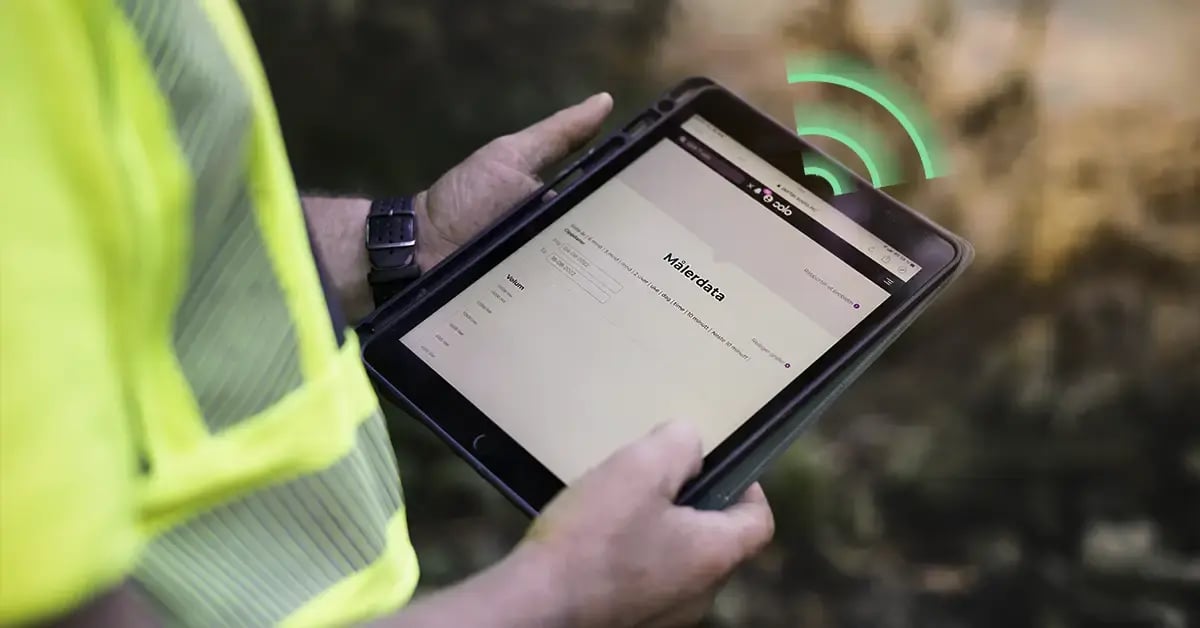
- The data is uploaded to the cloud and displayed in an app or web dashboard
- The operator sees real-time levels, historical trends, and receives automated alerts
The result is full visibility into every tank, from any location, on any device, without ever opening a lid or sending a driver to check.
Why IoT Connectivity Is the Critical Layer
The sensor is only half the solution. Without reliable connectivity, even the most precise sensor is useless. This is the layer that is most often underestimated, and most often the reason IoT deployments fail in practice.
Fuel tanks are rarely located in convenient, well-connected environments. They sit underground, inside sealed containers, in rural fields, and in industrial facilities with thick concrete walls. Standard mobile connectivity is often insufficient in these conditions. The data volumes involved are small, typically around 100 kilobytes per device per month, but the requirement for reliability is absolute. A sensor that fails to transmit even occasionally undermines the confidence the entire system depends on.
This is where purpose-built IoT connectivity makes all the difference. Technologies such as LTE-M and NB-IoT are specifically designed for exactly these conditions. They penetrate difficult environments, maintain stable connections in underground and enclosed spaces, and support battery-powered devices for years without maintenance.
Com4 is a specialist IoT connectivity provider that delivers this infrastructure across Europe. Through managed SIM solutions, multi-IMSI technology for cross-network coverage, and deep technical expertise in low-power wide-area networks, Com4 ensures that data from every sensor reaches the cloud without fail, regardless of where the tank is located.
How Soolo and Com4 Work Together
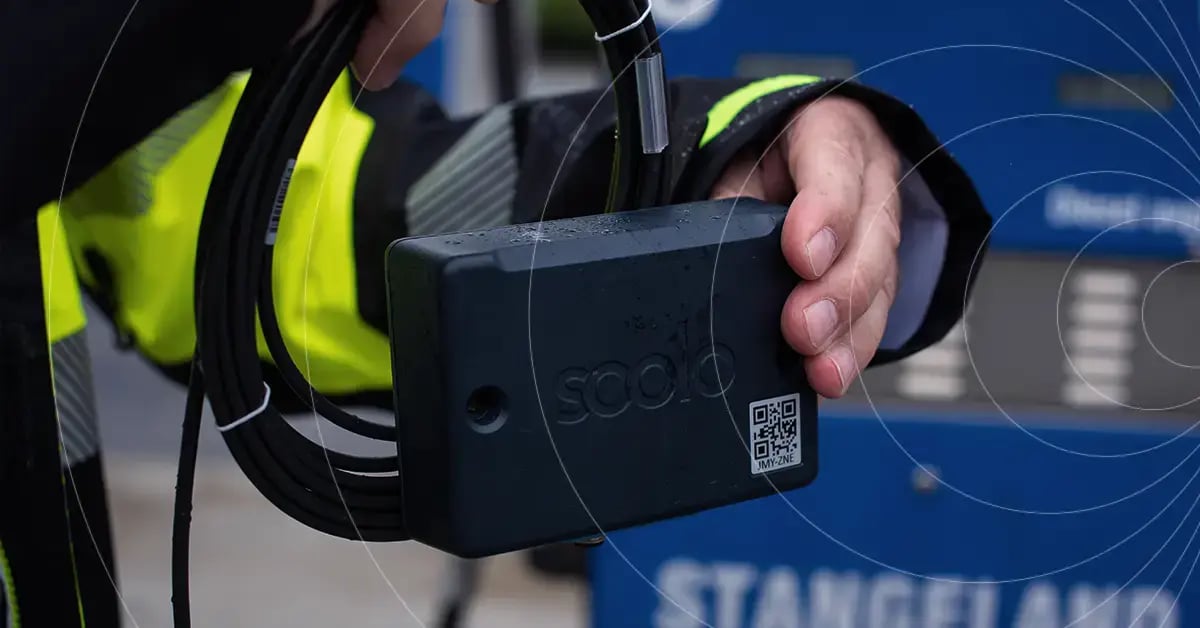
Soolo is a Norwegian technology company that has built a complete tank monitoring platform on top of this connectivity foundation. The solution combines a robust battery-powered pressure sensor, a wireless IoT device with a battery life of five to ten years, and a cloud-based dashboard with live data, historical trends, and automated notifications.
Together, Soolo and Com4 deliver what fuel distributors have always needed but never had: a complete, reliable, and scalable system for knowing exactly what is in every tank at every moment.
"We transmit very little data, but it must be 100% reliable," explains Rein Anders Apeland, System Architect and Co-founder at Soolo. "Our sensors can be buried underground or placed inside containers, so robust coverage is absolutely essential."
"Com4 was the first provider that was both honest about limitations and able to answer our technical questions," he adds.
The partnership has delivered stable communication in challenging environments, multi-IMSI solutions for improved network coverage, and the kind of consistent technical support that keeps operations running smoothly across markets.
Real-World Results Across Industries
The Soolo and Com4 solution is already in use across a wide range of industries and applications in Norway, with results that speak clearly.
Fuel distribution: Knapphus Energi deployed Soolo sensors across its distribution network and immediately reduced unnecessary callouts, cut kilometres driven, and moved to demand-driven route planning. Operations manager Konrad Ree described the service as unmatched.
Machinery and construction: UCO, a machinery rental company, previously relied on manual measurements and guesswork to manage fuel across multiple sites. Since deploying Soolo, tank status updates automatically every day and staff no longer need to think about it. "Previously there was a lot of chaos," says Department Manager Rune Eriksen. "Now I don't even think about them. Soolo just works."
Rail and infrastructure: Bane NOR, the Norwegian state railway operator, uses Soolo sensors to monitor tanks containing lubricants, acids, cleaning agents, and other operational fluids across its workshop facilities. Automated alerts notify staff and suppliers when levels are low, preventing production disruptions and eliminating manual site visits entirely.
These cases illustrate a consistent pattern. Across fuel distribution, industrial operations, and infrastructure management, the shift to real-time tank monitoring delivers lower costs, fewer emergencies, and better planning.
The Business Case for IoT Tank Monitoring
The numbers make the decision straightforward.
Without real-time monitoring, tank truck utilisation in fuel distribution can be as low as 50 percent. That means half of all transport capacity, driver hours, and fuel burned in logistics is wasted. With demand-driven route planning based on live tank data, that utilisation rises sharply and transport costs fall significantly.
At the same time, the cost of getting it wrong is high. A single empty-tank incident at an industrial facility can cost upwards of 50,000 Norwegian kroner. Across a network of sites, the cumulative risk is substantial.
Against this, the cost of a sensor with a five-year battery life, transmitting 100 kilobytes of data per month over a managed IoT connection, is minimal. The return on investment is not a marginal improvement. It is a structural change in how the business operates.
Who Benefits from IoT Connectivity for Tank Monitoring?
Remote tank monitoring with pressure sensors and IoT connectivity is suitable across a wide range of sectors and applications, including diesel tanks on farms and construction sites, water tanks in remote facilities and waterworks, chemical storage in industrial settings, sludge and septic tanks in waste management, lubricant and operational fluid tanks in rail and manufacturing, and heating oil tanks for residential and commercial distribution.
Anywhere that a liquid level matters, and where knowing that level in real time would improve decisions, the case for IoT tank monitoring is clear.
What to Look for in an IoT Connectivity Partner
Deploying tank monitoring at scale requires more than a sensor and a SIM card. The connectivity layer needs to be designed for the specific demands of IoT, including low power consumption, deep penetration in difficult environments, global or regional roaming capability, and reliable technical support.
Com4's IoT connectivity platform is built around these requirements. With support for NB-IoT, LTE-M, and multi-IMSI solutions, Com4 provides the infrastructure that makes real-time tank monitoring work in practice, not just in theory.
For companies operating in the energy and utilities sector, Com4 brings deep sector knowledge alongside technical capability, making it a partner rather than simply a supplier.
The Future of Fuel Distribution Is Data-Driven
The fuel distribution industry is at a turning point. Fixed routes, manual measurements, and reactive logistics are giving way to demand-driven planning, predictive replenishment, and guaranteed service levels. The technology to make this transition is available today, proven in the field, and delivering measurable results.
Soolo and Com4 are at the centre of this shift in Norway and across Europe. Together, they provide the complete stack that fuel distributors, industrial operators, and utilities need to move from uncertainty to control.
The best tank is the one nobody has to think about, because the data is always there, the alert fires before a problem occurs, and the driver arrives exactly when needed.
That is what IoT connectivity for fuel distribution makes possible.

.png)


.webp)
.jpg)