

.jpg?width=720&height=720&name=supply-chain-hero-1%20(1).jpg)
This shift is accelerating fast. According to Grand View Research, The global IoT in warehouse management market was valued at USD 11.26 billion in 2024 and is expected to reach USD 17.93 billion by 2030.
Instead of reacting to issues, warehouses can now predict, automate, and optimize daily operations. From inventory tracking to equipment maintenance, IoT brings visibility and control at a level that was not possible before. In this article, we explore ten real-world use cases of IoT in warehouse management, along with practical examples and business impact.
What is IoT in Warehouse Management and Why It Matters
IoT in warehouse management refers to the use of connected devices and sensors to monitor, track, and manage operations in real time. These devices collect data from across the warehouse and send it to platforms where it is processed and used for decision-making.
The real value lies in how this data improves outcomes. Teams can track inventory accurately, reduce delays, prevent equipment failures, and maintain optimal storage conditions.
A simple way to understand the system is through this flow:
Devices → Connectivity → Cloud → Insights → Actions
Connectivity is the layer that keeps everything running smoothly. Without reliable connectivity, data becomes delayed or lost, which directly affects operations.
According to McKinsey & Company, IoT has the potential to generate trillions in economic value across industries, with supply chains and operations being key contributors.
.jpg?width=720&height=377&name=supply-chain-1%20(1).jpg) How IoT Works in a Warehouse Environment
How IoT Works in a Warehouse Environment
IoT in warehouses follows a simple data flow that connects operations to real-time decisions.
How it works:
- Sensors capture data from inventory, equipment, and environment
- Data is transmitted through networks
- Platforms process and analyze the data
- Insights trigger actions, automated or manual
The network layer keeps it all running. Warehouses typically use three connectivity types:
- Wi-Fi: Suitable for fixed indoor setups
- LPWAN: Works for low-power, long-range devices
- Cellular: Reliable for large and multi-site warehouses
In large facilities, connectivity gaps and network switching can disrupt operations. With our global IoT SIMs and multi-network access, we ensure consistent connectivity across locations.
Real-World Use Cases of IoT in Warehouse Management
1. Real-Time Inventory Tracking
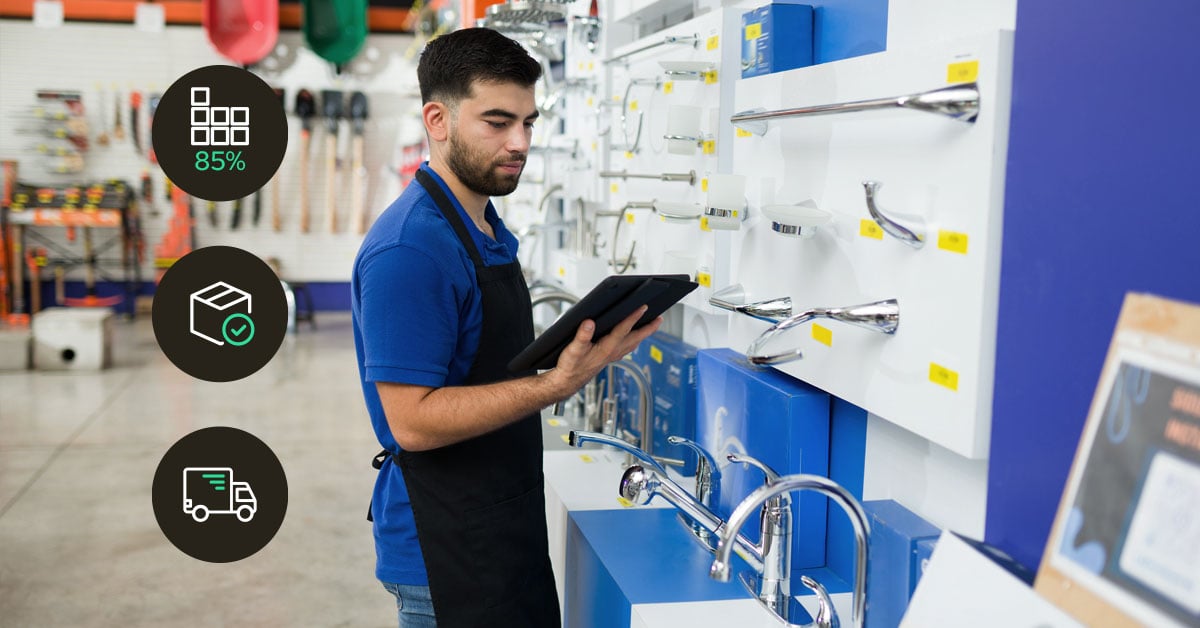
Retailers like Walmart use RFID tags and IoT systems to update stock levels automatically as items move through receiving, storage, and dispatch. Every movement is logged without manual counting. The result is accurate stock visibility across locations, fewer discrepancies, and faster order fulfillment, even across large, multi-site warehouse networks.
2. Dynamic Slotting and Storage Optimization
Companies like Amazon use real-time operational data to continuously adjust where products are stored inside warehouses. Fast-moving items are placed closer to picking zones, while slower items are stored deeper. This reduces travel time for workers, improves picking speed, and helps warehouses handle higher order volumes without expanding physical space.
3. Predictive Maintenance for Warehouse Infrastructure
IoT sensors monitor conveyors, sorting systems, and lifting equipment by tracking usage patterns and performance signals. This allows teams to identify wear and potential failures before breakdowns occur. Maintenance becomes planned instead of reactive, reducing unexpected downtime and ensuring consistent operations during peak periods.
4. Smart Waste and Space Management
In our work with Sensorita, IoT sensors were used to track waste levels in real time and optimize collection schedules. Applied to warehouses, this approach reduces unnecessary pickups, frees up operational space, and keeps storage areas more organized and efficient.
5. Cold Chain Integrity Monitoring
Warehouses handling sensitive goods use IoT sensors to continuously monitor temperature and humidity in storage areas. In our collaboration with Dignio, reliable data transmission ensured critical conditions were consistently tracked. This helps prevent spoilage, maintain product quality, and meet strict compliance requirements.
6. Condition-Based Asset Utilization
Warehouses use IoT sensors to track how assets like forklifts and pallets are used over time. This provides visibility into actual usage patterns.
Teams can identify underused equipment or assets that are overworked. This helps balance workloads, improve utilization, and reduce unnecessary replacements.
It also supports better planning of maintenance and asset allocation across operations.
7. Warehouse Automation with Connected Robotics
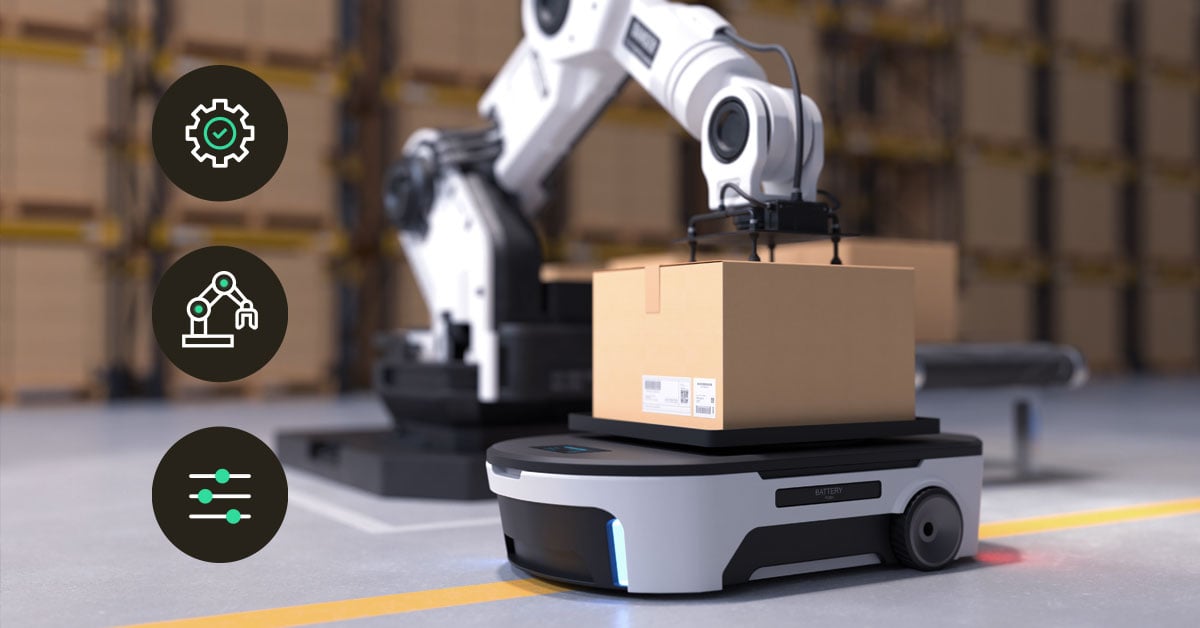
Companies like Amazon use IoT-enabled robots to move goods, assist picking, and optimize workflows inside warehouses. These robots operate based on real-time data from warehouse systems.
This reduces manual handling and improves operational speed. It also allows warehouses to scale efficiently while maintaining consistency in high-volume environments.
8. Worker Safety in High-Risk Zones
IoT wearables and sensors are used to monitor worker movement and detect unsafe conditions. Alerts can be triggered when workers enter restricted zones or face potential hazards.
In industrial environments, connected safety systems help reduce risks and improve compliance. This is especially important in warehouses with heavy machinery and automated systems.
9. Infrastructure Monitoring for Warehouse Facilities
In our work with Soundsensing, IoT sensors were used to detect anomalies in rail infrastructure through continuous monitoring.
A similar approach can be applied in warehouses to monitor structural conditions, vibrations, and system performance. This helps detect issues early and prevent disruptions to operations.
10. Multi-Site Warehouse Visibility and Control
Organizations operating across regions need unified visibility of all warehouse locations. IoT platforms enable centralized monitoring through connected systems.
In projects like Bane NOR, IoT solutions enabled real-time monitoring across distributed infrastructure.
For warehouses, this requires reliable connectivity across locations. With our global IoT SIMs, devices stay connected across networks, enabling consistent data flow and better control at scale.
Key Benefits of IoT in Warehouse Management
IoT brings real-time visibility and control into daily warehouse operations. It helps teams move faster, reduce errors, and make better decisions using live data. Here are some more key benefits of IoT in Warehouse Management:
- Improved inventory accuracy: Real-time tracking reduces manual errors and stock mismatches.
- Faster order fulfillment: Optimized picking and workflows speed up dispatch operations.
- Reduced equipment downtime: Predictive insights help prevent unexpected failures.
- Better space utilization: Data-driven storage improves warehouse layout efficiency.
- Lower operational costs: Automation and optimization reduce waste and manual effort.
- Enhanced worker safety: Connected devices help monitor risks and improve compliance.
- Real-time decision-making: Live data enables faster and more informed actions.
- Scalable operations: Connected systems support growth across multiple warehouse locations.
Challenges of Implementing IoT in Warehouses (And How to Solve Them)
Despite the benefits, implementing IoT comes with challenges. Large warehouses often face connectivity issues due to physical barriers and network limitations. Integrating IoT with legacy systems can also be complex. Data security is another concern, especially with connected devices transmitting sensitive information.
These challenges can be addressed with the right approach. Reliable connectivity solutions help eliminate dead zones and ensure continuous data flow. Secure communication through private APNs and VPNs protects data. Scalable SIM management platforms make it easier to handle large device deployments.
This is where managed IoT connectivity becomes important. It simplifies deployment and ensures consistency across operations.

Future Trends in IoT Warehouse Management
- AI-powered drones: Drones automate inventory checks in high racks, reducing manual effort and improving accuracy.
- Robotics integration: AMRs connect with IoT systems to streamline picking, sorting, and internal transport.
- 5G-enabled operations: Faster and low-latency connectivity supports real-time control of devices and machines.
- Edge computing adoption: Data is processed closer to devices, reducing delays and improving response time.
- AI-driven decision-making: IoT data feeds AI models to optimize inventory, workflows, and demand planning.
- Autonomous warehouses: Facilities operate with minimal human input using connected systems and automation.
IoT is transforming warehouse operations with real-time visibility, automation, and better control. Its impact is visible across inventory, equipment, and daily workflows. To deliver this consistently, connectivity plays a critical role. Without it, data delays and network gaps can disrupt operations.
With our global IoT SIMs, access to 750+ networks, and secure connectivity, we help ensure reliable performance across warehouse locations. This allows IoT deployments to scale with confidence and consistency.



.webp)
.jpg)